
BLOG
A collection of article and ideas that help Smart Marketers to become Smarter

Marketing Canvas - Engagement
Satisfaction and engagement are not the same thing. A customer can score 7/10 on satisfaction and never return. Dimension 140 of the Marketing Canvas explains the difference, how to measure it, and why engagement is the leading indicator that predicts churn before it appears in the revenue line.
About the Marketing Canvas Method
This article covers dimension 140 — Engagement, part of the
Customers meta-category. The Marketing Canvas Method structures
marketing strategy across 24 dimensions and 9 strategic archetypes.
Full framework reference at
marketingcanvas.net →
·
Get the book →
In a nutshell
Engagement (dimension 140) measures the quality and depth of the relationship between brand and customer. Not satisfaction. A customer can be satisfied and completely disengaged.
That distinction is the entire point of this dimension. Satisfaction measures how a customer felt about the last interaction. Engagement measures whether the customer is actively participating in the relationship — recommending the brand unprompted, providing feedback, returning without being asked, defending the brand when challenged. These are different signals, and they require different interventions.
In the Marketing Canvas, Engagement sits within the Customers meta-category alongside Job To Be Done (110), Aspirations (120), and Pains & Gains (130). It is the last of the four Customer dimensions — and the one that translates everything upstream into a measurable, trackable relationship signal.
Engagement as a leading indicator of churn
The most commercially important insight in this dimension is also the least intuitive: engagement is a leading indicator of churn, while revenue is a lagging one.
Churn does not happen suddenly. It is preceded by a sequence of declining engagement signals — fewer referrals, slower response to outreach, silence where there used to be feedback, reduced product usage depth, a shift from promoter to passive. By the time churn appears in the revenue line, the customer made the decision weeks or months earlier. Companies that track engagement signals catch that decision in progress. Companies that track only revenue discover it after the fact.
Research consistently confirms this pattern. A 2025 analysis of customer engagement as a retention predictor found that engagement metrics — frequency of use, depth of feature adoption, responsiveness to outreach — signal churn risk before any revenue indicator does. Customers who begin ignoring key features are significantly more likely to churn; those who maintain consistent usage patterns, even at modest levels, renew at materially higher rates.
The practical implication for the Marketing Canvas: a company that scores Engagement at −1 is not just describing a weak customer relationship today. It is describing a churn problem that will show up in User Lifetime (630) figures within the next 6–12 months.
What engagement actually measures
Engagement is active participation. The four observable forms:
Recommendation — does the customer refer the brand to others without being asked? Unprompted referral is the strongest engagement signal because it requires the customer to put their own reputation behind the brand. Green Clean's 35% referral rate by 2024 was the clearest evidence of high engagement — customers were actively recruiting new ones.
Feedback — does the customer respond to outreach, complete surveys, attend review sessions, and provide input into product or service evolution? A customer who stops providing feedback is not neutral — they have disengaged. Silence is a signal.
Return without prompt — does the customer come back without a campaign, a discount, or a re-engagement effort? Repeat purchase driven by marketing spend is retention. Repeat purchase driven by habit and relationship is engagement.
Defence under challenge — does the customer defend the brand when it is criticised? This is the tribal signal. Customers who have moved from satisfied to engaged will tell a sceptical colleague "actually, here's why I use them" without being asked to.
The NPS instrument
The classic measurement tool for Engagement is the Net Promoter Score — a single question that segments customers into three groups based on their likelihood to recommend:
Promoters (score 9–10): actively recommend the brand to others. The growth engine. Every promoter generates acquisition at zero additional cost. The strategic goal is to grow this group and give them the tools to advocate effectively.
Passives (score 7–8): satisfied but not engaged. They stay until something better comes along or a pain accumulates. They do not recommend, but they do not damage the brand either. The strategic goal is to understand what would move them to promoter status.
Detractors (score 0–6): dissatisfied and potentially vocal. They represent churn risk and reputational risk simultaneously. The strategic goal is not to ignore them — detractor verbatims are the richest source of improvement intelligence in any customer base.
The NPS score itself (% Promoters − % Detractors) is useful as a tracking metric. What matters more in the MCM audit is the ratio between the two groups and whether the company has systems in place to act on what both groups are saying. A high NPS with no feedback loop is a number, not a strategy.
Score negative if engagement is unmeasured, or measured only through satisfaction surveys. Score positive when the company tracks promoter/detractor ratios, acts on the feedback, and can demonstrate a link between engagement scores and business outcomes.

Engagement in the Marketing Canvas
The canonical question
How deeply connected are your customers to your brand?
Engagement appears in the Vital 8 of three archetypes — and the roles span the full range of urgency:
Fatal Brake for A3 (Brand Evangelist): The Brand Evangelist archetype is built entirely on tribal belonging. If the tribe is not engaged, there is no tribe — just customers who happen to have bought the same product. Patagonia's NPS of 70+ and customer retention of 82% by 2022 are not incidental. They are the strategic output of an engagement system built around Worn Wear, environmental activism, and community events that make customers active participants rather than passive purchasers. For A3, a low Engagement score does not mean "improve the relationship." It means the entire archetype is failing.
Primary Accelerator for A4 (Stagnant Leader): A leader experiencing stagnation faces a leaky bucket — churn is rising while acquisition is fighting to refill it. Deepening engagement with the existing customer base is the primary defence. It is cheaper to re-engage a passive customer than to acquire a new one. It is far cheaper to convert a detractor's concern into product improvement than to lose them and acquire a replacement. For A4, Engagement is not a nice-to-have — it is the mechanism that slows the leak while the experience is being fixed.
Primary Accelerator for A7 (Scale-Up Guardian): Hypergrowth tends to destroy the relationships that created growth. As teams scale, as processes become standardised, as the personal touch disappears, early adopters shift from promoters to passives. The Scale-Up Guardian's specific challenge is maintaining engagement quality while growing volume. Tracking engagement signals during rapid growth is the early warning system that tells leadership whether the brand is scaling its relationship — or just scaling its revenue.
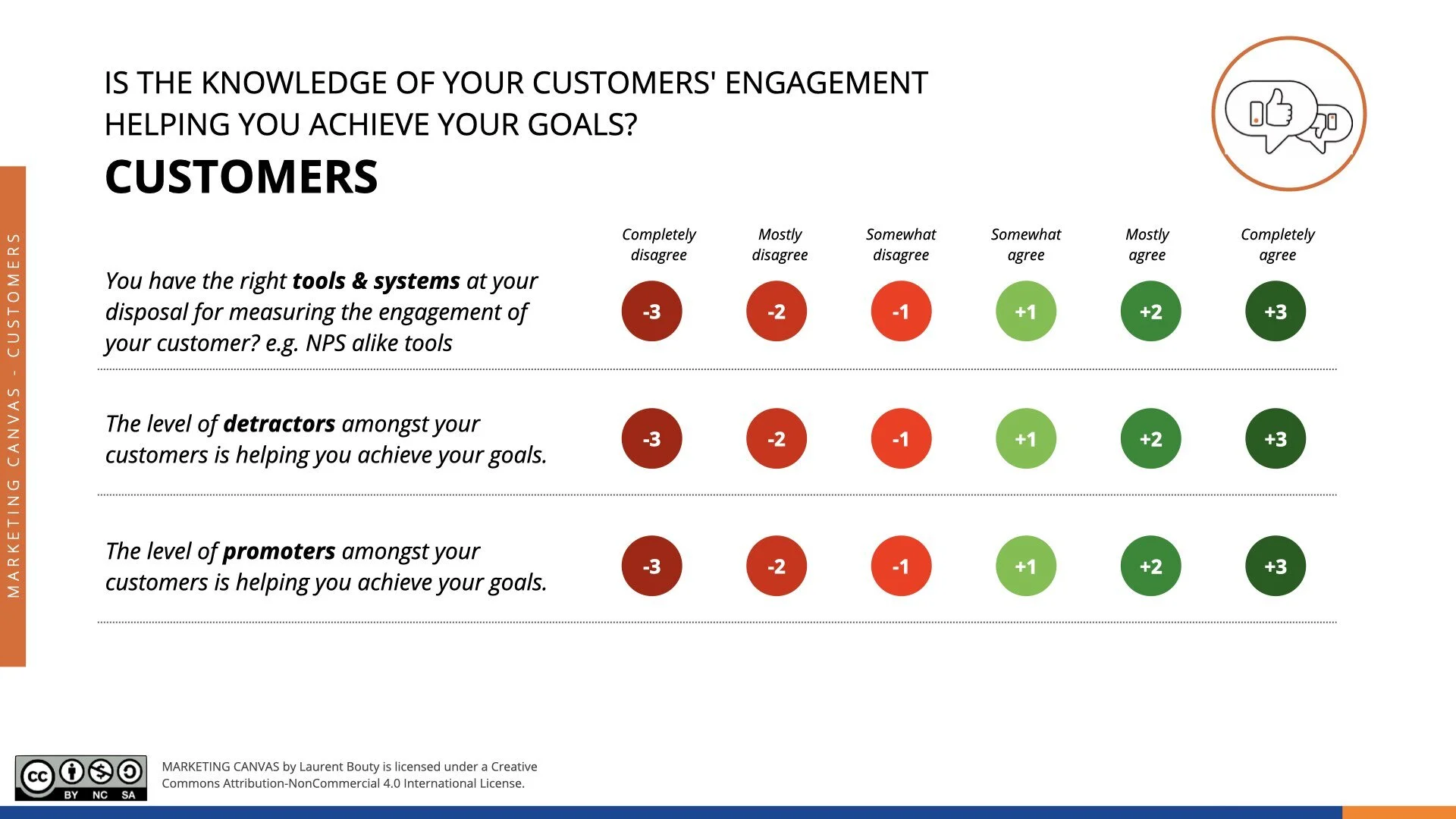
Statements for self-assessment
Rate your agreement on a scale from −3 (completely disagree) to +3 (completely agree). There is no zero — the Marketing Canvas forces a directional position on every dimension.
Note on Detailed Track scoring: if averaging sub-question scores produces a mathematical zero, the method rounds to −1. A split score means the dimension is not clearly helping your goal — and "not clearly helping" requires the same investigation as "hurting."
Interpreting your scores
Negative scores (−1 to −3): Engagement is unmeasured, or measured only through satisfaction surveys that don't distinguish between satisfied-and-disengaged and genuinely loyal. Detractors are not being systematically identified or addressed. Promoters are not being activated. Churn signals are invisible until they appear in the revenue line — by which point the decision has already been made.
Positive scores (+1 to +3): Engagement is tracked systematically through promoter/detractor ratios and behavioural signals. Detractor feedback feeds directly into service and product improvements. Promoters have tools and reasons to advocate. The company can demonstrate a measurable link between engagement scores and retention outcomes. Engagement is functioning as the leading indicator it is designed to be.Case study: Green Clean’s Engagement strategy
Misaligned understanding (-3, -2, -1): Green Clean lacks the tools to measure engagement and struggles to address customer dissatisfaction. Detractors outnumber promoters, harming the brand’s reputation, while sustainability efforts are absent from its engagement strategy.
Surface understanding (0): Green Clean uses basic tools like surveys but lacks a cohesive approach to managing detractors and empowering promoters. Sustainability is a peripheral concern, limiting its appeal to eco-conscious customers.
Deep understanding (+1, +2, +3): Green Clean leverages NPS and behavioral data to track engagement effectively. It proactively resolves detractor concerns, encourages promoters to share positive reviews, and integrates sustainability into its messaging, fostering strong customer relationships.
Case study: Green Clean
Green Clean is a fictional eco-friendly residential cleaning service used as the recurring worked example throughout the Marketing Canvas Method.
Score: −2 to −1 (Weak) Green Clean has no formal engagement measurement. The team sends an annual satisfaction survey — three questions, 22% response rate — and reads the results as confirmation that customers are happy. There is no NPS measurement. No promoter/detractor tracking. No system for capturing or acting on feedback between services. When a customer cancels, the cancellation is processed without any outreach to understand why. The churn rate of 20% in 2021 is treated as an industry benchmark issue, not an engagement signal. The team cannot name a single specific action taken in response to customer feedback in the past twelve months. Engagement is not measured. Engagement is not managed.
Score: +1 to +2 (Developing) By 2022, Green Clean has introduced NPS measurement after each service visit. They have identified a promoter group (score 9–10) representing 38% of customers, and a detractor group (score 0–6) representing 14%. The promoter group is being asked for referrals informally. The detractor group is contacted by the founder within 48 hours of a low score — a process that is recovering approximately 40% of those customers. A quarterly feedback session with a sample of long-term customers is feeding service improvements. But the system is still primarily reactive: engagement is being tracked, but not yet used as a leading churn indicator. The referral rate sits at 18% — growing, but not yet the dominant acquisition channel.
Score: +2 to +3 (Strong) Green Clean's engagement system is proactive and closed-loop. NPS is tracked after every service visit and monthly at the account level. Detractor verbatims are reviewed weekly and feed directly into the service improvement backlog — four product changes in 2023 traced directly to detractor feedback. Promoters receive structured advocacy tools: referral cards, a community group, and the option to share their Family Health Report data publicly with anonymisation. The referral rate reached 35% by 2024, making word-of-mouth the largest single acquisition channel. Churn fell from 20% to 12% between 2021 and 2024 — a decline that correlated directly with the improvement in NPS and the reduction in the detractor-to-promoter ratio. Engagement is the company's most reliable leading indicator of both retention and growth.
Connected dimensions
Engagement does not operate in isolation. Four dimensions connect most directly:
130 — Pains & Gains: Engagement drops when pains accumulate. The most reliable way to convert a promoter into a passive — or a passive into a detractor — is to leave a mapped pain unaddressed. Pains & Gains research identifies what to fix; Engagement measurement tracks whether fixing it is working.
510 — Listening (VOC): VOC systems feed engagement data. The feedback loop that makes engagement actionable requires a systematic listening infrastructure — not just NPS, but the full VOC stack that captures what customers say, where they say it, and at which stage of the journey.
630 — User Lifetime: Engagement predicts lifetime. The correlation between promoter status and customer lifetime value is well-established. A customer who actively recommends the brand has already demonstrated a level of commitment that translates directly into longer retention and higher ARPU.
520 — Stories: Engaged customers become storytellers. The most valuable content the brand can produce is a promoter's authentic account of why they use and recommend it. Engagement measurement identifies who those promoters are. Stories strategy gives them a stage.
Conclusion
Satisfaction is easy to achieve and easy to mistake for something more. A customer who rates the last service 7/10 and never comes back is satisfied. A customer who rates it 6/10, calls to say why, and stays for three more years after the issue is resolved is engaged.
The dimension that distinguishes between those two customers — and builds systems to identify, track, and act on the difference — is Engagement. It is the Customer meta-category's mechanism for translating everything upstream (JTBD clarity, aspiration alignment, pain elimination) into a measurable relationship.
For archetypes where brand loyalty is the strategic imperative — A3, A4, A7 — a low Engagement score is the diagnostic that explains why the strategy is not working, even when the product is sound. Fix Engagement, and the downstream metrics follow. Leave it unmeasured, and the churn signal arrives in the revenue line: accurate, too late, and expensive to reverse.
Sources
Frederick Reichheld, "The One Number You Need to Grow", Harvard Business Review, December 2003 — hbr.org
Stellafai, "6 Leading Indicators to Accurately Predict Renewal and Churn", 2025 — stellafai.com
Marketing Canvas Method, Appendix E — Dimension 140: Engagement, Laurent Bouty, 2026
About this dimension
Dimension 140 — Engagement is part of the Customers meta-category (100) in the Marketing Canvas Method. The Customers meta-category contains four dimensions: Job To Be Done (110), Aspirations (120), Pains & Gains (130), and Engagement (140).
The Marketing Canvas Method is a complete marketing strategy framework built around 6 meta-categories, 24 dimensions, and 9 strategic archetypes. Learn more at marketingcanvas.net or in the book Marketing Strategy, Programmed by Laurent Bouty.

Marketing Canvas - Pains & Gains
A list of customer frustrations is research. A list of frustrations mapped to the journey stages where they occur is strategy. Dimension 130 of the Marketing Canvas explains the difference — and why getting it right determines the reliability of every downstream score.
About the Marketing Canvas Method
This article covers dimension 130 — Pains & Gains, part of the
Customers meta-category. The Marketing Canvas Method structures
marketing strategy across 24 dimensions and 9 strategic archetypes.
Full framework reference at
marketingcanvas.net →
·
Get the book →
In a nutshell
Pains & Gains (dimension 130) maps the obstacles and accelerators along the customer's job journey. Pains are the constraints, annoyances, and anxieties that slow progress. Gains are the moments of delight that exceed expectations — the unexpected experiences that make a customer stop and think: I didn't expect that.
The dimension is borrowed from Alexander Osterwalder's Value Proposition Canvas, but the Marketing Canvas sharpens it with one critical rule: pains and gains must be anchored to specific moments in the customer journey, not listed as abstract attributes. A list of frustrations is research. A list of frustrations mapped to the journey stages where they occur is strategy.
In the Marketing Canvas, Pains & Gains sits within the Customers meta-category alongside Job To Be Done (110), Aspirations (120), and Engagement (140). It is the research foundation that makes every downstream dimension scoreable with evidence rather than assumption.
The canonical distinction: list vs. map
Most companies do some version of pain and gain discovery. They run surveys, read reviews, conduct interviews, and compile a list of what customers find frustrating and what they appreciate. That list has value. But it has a critical limitation: it doesn't tell you when the pain occurs.
A pain that occurs before purchase — "I can't find reliable information about what's actually in the product" — requires a different initiative than a pain during purchase — "the checkout process is confusing" — or after purchase — "I don't know how to dispose of the packaging responsibly." All three are real. All three are different problems. Treating them as a single category of "customer frustrations" produces generic solutions that address none of them precisely.
The same applies to gains. A gain at the moment of first use — "the onboarding made me feel smart, not stupid" — serves a different strategic purpose than a gain during ongoing use — "I discovered a feature I hadn't expected that saved me an hour" — or at the advocacy stage — "the annual impact report made me feel proud enough to share it with my network."
The scoring test: can your team name specific pains at specific journey stages, backed by customer research rather than internal assumption? If yes, the dimension is working. If the team can only produce a generic list, the score cannot exceed +1 regardless of how long that list is.
The three journey stages
The Marketing Canvas structures pain and gain mapping across three stages:
Before purchase — the awareness, research, and consideration phase. Pains here are typically informational: difficulty finding credible information, inability to compare options clearly, uncertainty about whether the product fits the job. Gains here are trust signals: content that makes the customer feel informed rather than sold to, transparent pricing, social proof from people who share the customer's profile.
During — purchase, onboarding, and first use. Pains are typically friction: a complicated checkout, an overwhelming onboarding, a first experience that doesn't deliver the promised outcome quickly enough. Gains are confidence signals: a seamless transaction, an onboarding that makes the customer feel competent, a first result that delivers on the promise.
After — ongoing use, support interactions, renewal, and advocacy. Pains here are the most commercially costly: the confusion that leads to churn, the support interaction that erodes trust, the renewal moment that feels like a trap. Gains here are the highest-leverage: the unexpected delight that converts a satisfied customer into an active advocate.
Most companies over-invest in the "during" phase — the purchase moment — and under-invest in "before" and "after," which is precisely where acquisition and retention are won or lost.
Pains & Gains in the Marketing Canvas
The canonical question
What frustrates your customers and what delights them along their job journey?
The strategic role: foundational, not featured
Pains & Gains is the only dimension in the Customers meta-category that does not appear in any archetype's Vital 8. This is not an oversight — it is a deliberate design decision that reflects the dimension's true nature.
Think of it like gravity: it operates everywhere without being called out as a specific strategic priority. Pains & Gains is the research layer that feeds the scored dimensions above it. When you score Experience (420), the evidence comes from mapped pains. When you design Magic (440), the raw material comes from mapped gains. When you build Moments (410), you are working with the journey stages where pains and gains were discovered.
A company that has never mapped pains and gains rigorously will systematically overrate Experience, Magic, and Moments — because without specific evidence, teams default to optimistic assumptions. The Pains & Gains score is therefore a leading indicator of how reliable the rest of the audit is.
How to research pains and gains
Five methods, used in combination, produce a complete picture:
Customer interviews — the highest-signal source. One-on-one conversations focused on specific journey stages, asking customers to walk through their experience moment by moment. The interviewer's job is to resist explaining and keep probing: "tell me more about that moment," "what were you thinking when that happened," "what would have made that better."
Focus groups — useful for surfacing the language customers use to describe their experiences. The dynamic between participants often reveals shared frustrations that individuals might not articulate alone.
Customer journey mapping workshops — structured sessions where the team maps the journey from the customer's perspective, then validates each stage with customer evidence. The discipline: no stage can be populated with internal assumptions alone.
Social listening and review analysis — review platforms, social media conversations, and support ticket analysis provide unprompted feedback — the pains customers feel strongly enough to write down without being asked.
Feedback loops from existing touchpoints — systematic analysis of support interactions, NPS verbatims, and post-purchase surveys. The key is treating this data as journey-mapped evidence, not as an aggregate score.
Statements for self-assessment
Rate your agreement on a scale from −3 (completely disagree) to +3 (completely agree). There is no zero — the Marketing Canvas forces a directional position on every dimension.
Note on Detailed Track scoring: if averaging sub-question scores produces a mathematical zero, the method rounds to −1. A split score means the dimension is not clearly helping your goal — and "not clearly helping" requires the same investigation as "hurting."
Interpreting your scores
Negative scores (−1 to −3): Your understanding of customer pains and gains is absent, assumed, or not mapped to specific journey stages. The downstream effect is systematic: Experience (420), Moments (410), and Magic (440) scores will be based on internal assumptions rather than customer evidence, producing an audit that flatters rather than diagnoses.
Positive scores (+1 to +3): You have researched pains and gains using multiple methods, mapped them to specific journey stages, and can name specific initiatives that trace back to specific mapped pain or gain moments. The rest of your audit is grounded. Experience, Magic, and Moments scores have an evidence base.
Case study: Green Clean
Green Clean is a fictional eco-friendly residential cleaning service used as the recurring worked example throughout the Marketing Canvas Method.
Score: −2 to −1 (Weak) Green Clean has no formal pain and gain mapping. The team's understanding of customer frustrations comes from occasional informal conversations and their own assumptions about eco-conscious consumers. They believe the main pain is "finding eco-friendly products" — but this is a category-level assumption, not a journey-mapped insight. When asked to name the specific moment where customers most commonly abandon consideration of Green Clean, nobody can answer. When asked what the single biggest gain a new customer experiences at first service is, answers vary widely between team members. The research does not exist. Scores on Experience and Magic are almost certainly inflated.
Score: +1 to +2 (Developing) Green Clean has run a customer survey and conducted six customer interviews. They have identified a significant "before" pain: health-conscious parents spend considerable time researching whether eco-cleaning claims are credible, but Green Clean's website does not make it easy to verify ingredient safety independently. They have identified a strong "during" gain: the first service visit, when the cleaner explains the Family Health Report and what it will show, creates a moment of trust that customers consistently describe as "not what I expected from a cleaning company." The "after" stage is under-mapped — churn drivers are not yet understood. Research is partial but directional.
Score: +2 to +3 (Strong) Green Clean has mapped pains and gains across all three journey stages with customer-validated evidence. Before: the primary pain is "I can't tell which eco-claims are real without spending hours researching" — addressed by the published ingredient list and third-party certifications visible on the website before booking. During: the main pain is "I'm not sure what to expect from the first visit" — addressed by a structured onboarding sequence that sets expectations and delivers the first Family Health Report within 24 hours. After: the primary gain driver is the monthly impact statement showing cumulative toxin load avoided — customers who receive it are 3× more likely to refer Green Clean to a neighbour. Every initiative in Experience (420) and Magic (440) traces back to a specific mapped pain or gain at a specific journey stage.
Connected dimensions
Pains & Gains is the research input for multiple downstream dimensions:
110 — JTBD: Pains block the job; gains accelerate it. The pain map is the obstacle layer sitting between the customer and the job they are trying to accomplish. Understanding pains at journey stages often reveals which aspect of the job is most underserved.
410 — Moments: Pains and gains map to specific journey moments. Dimension 130 is the discovery phase; dimension 410 is the design phase built on that discovery. You cannot score Moments honestly without having completed the Pains & Gains mapping first.
420 — Experience: Experience design eliminates pains. The initiatives that raise an Experience score should trace directly to specific mapped pains at specific journey stages. If they don't, the Experience score is assumption-based.
440 — Magic: Magic creates unexpected gains. The raw material for Magic — the specific moments of delight that exceed expectations — comes from gain mapping. Without it, Magic initiatives are based on what the team finds delightful, not what customers actually experience as exceeding their expectations.
Conclusion
Pains & Gains has a paradoxical position in the Marketing Canvas: it is the most foundational dimension in the Customers meta-category, and the one least likely to appear in headlines about strategy.
That is precisely why it matters. The teams that skip rigorous pain and gain mapping — or treat it as a list-generation exercise rather than a journey-mapping discipline — produce audits built on assumption. They score Experience at +2 because they believe the experience is good, not because they have mapped the journey stage by stage and found evidence that it is.
The scoring test is the same as it has always been: not "do we know what customers find frustrating?" but "can we name specific pains at specific journey stages, backed by research?" The first question has a comfortable answer. The second one is the one that matters.
Sources
Alexander Osterwalder, Yves Pigneur, Greg Bernarda, Alan Smith, Value Proposition Design, Wiley, 2014 — strategyzer.com
Tony Ulwick, Jobs to be Done: Theory to Practice, Strategyn Press, 2016 — strategyn.com
Marketing Canvas Method, Appendix E — Dimension 130: Pains & Gains, Laurent Bouty, 2026
About this dimension
Dimension 130 — Pains & Gains is part of the Customers meta-category (100) in the Marketing Canvas Method. The Customers meta-category contains four dimensions: Job To Be Done (110), Aspirations (120), Pains & Gains (130), and Engagement (140).
The Marketing Canvas Method is a complete marketing strategy framework built around 6 meta-categories, 24 dimensions, and 9 strategic archetypes. Learn more at marketingcanvas.net or in the book Marketing Strategy, Programmed by Laurent Bouty.


Marketing Canvas - Aspirations
Features convert browsers into buyers. Aspirations convert buyers into advocates. Dimension 120 of the Marketing Canvas scores the identity layer — who your customers are trying to become — and explains why brands that connect to it earn loyalty that feature parity cannot replicate.
About the Marketing Canvas Method
This article covers dimension 120 — Aspirations, part of the
Customers meta-category. The Marketing Canvas Method structures
marketing strategy across 24 dimensions and 9 strategic archetypes.
Full framework reference at
marketingcanvas.net →
·
Get the book →
In a nutshell
Aspirations (dimension 120) captures who your customer wants to become. Not what they want to accomplish — that is Job To Be Done (110). Who they want to be as a result of accomplishing it.
This is the identity layer of the Customers meta-category. It maps the gap between the customer's current self and their desired self — across three levels: personal improvement, social contribution, and environmental responsibility. The brands that connect to this layer earn loyalty that feature parity cannot touch, because they are no longer selling a product. They are helping a customer become a better version of themselves.
In the Marketing Canvas, Aspirations sits within the Customers meta-category alongside Job To Be Done (110), Pains & Gains (130), and Engagement (140). It is the dimension that elevates strategy from solving a problem to participating in a customer's story.In the Marketing Canvas
Aspirations vs. Job To Be Done: the critical distinction
These two dimensions are adjacent and easily confused. The distinction is not about time horizon — it is about the level of analysis.
JTBD answers: what is the customer trying to accomplish? Aspirations answers: who is the customer trying to become?
A fitness app solves the functional job of tracking workouts. The emotional job is feeling accomplished after each session. But the aspiration is something longer and deeper: become someone who takes care of their body. That aspiration outlasts any single workout, any single app update, any feature comparison. The brand that connects to it owns a relationship that a competitor with better features cannot simply steal.
This distinction matters for scoring. A company can score +2 on JTBD — they understand the functional and emotional jobs precisely — and still score −1 on Aspirations if they have never researched who their customers are trying to become. The two dimensions are complementary, not redundant.
The three levels of aspiration
Aspirations in the Marketing Canvas operate across three scored levels, each requiring its own research:
Personal improvement — who the customer wants to become as an individual. "I want to be healthier." "I want to be more financially independent." "I want to be someone who makes responsible choices." This is the self-improvement layer. Brands that connect to it become partners in the customer's personal development, not just vendors of solutions.
Social contribution — how the customer wants to be seen and what they want to give back. "I want to be known as someone who sets a good example." "I want to contribute positively to my community." "I want my household to be a model for neighbours." This is the social identity layer. It drives word-of-mouth, public brand advocacy, and the social signalling that makes premium pricing justified.
Environmental responsibility — how the customer wants to reduce their negative impact on the world. "I want to leave less waste." "I want to live consistently with my values about the planet." "I want my family's consumption to be something I'm not ashamed of." This is increasingly a primary aspiration layer, not a peripheral one — research shows 72% of global consumers are willing to pay more for sustainable products, with 55% citing environmental responsibility as extremely important in their brand choices.
Score negative when aspirations are assumed rather than researched, or when the value proposition addresses only functional needs without connecting to identity. Score positive when marketing, product design, and service delivery all reference who the customer is becoming, not just what they are buying.
Aspirations in the Marketing Canvas
The canonical question
Who does your customer want to become?
Aspirations appears in the Vital 8 of two archetypes — in roles that reflect the identity-driven nature of the dimension:
Primary Accelerator for A8 (Niche Expert): Deep aspiration understanding is precisely what separates a niche authority from a narrow generalist. A niche expert's audience has specific, well-developed aspirations — they want to become a serious practitioner, a recognised authority, a member of an expert community. The brand that understands those aspirations at depth can serve them in ways a generalist never could: curating the exact knowledge, the exact proof standards, the exact community signals that matter to this audience. Shallow aspiration understanding produces generic "premium" positioning. Deep aspiration understanding produces authority that commands both pricing power and advocacy.
Secondary Brake for A5 (Pivot Pioneer): A company executing a strategic pivot is translating itself from one identity to another. The risk is misreading what its customers aspire to in the new direction. Customers who followed the brand through the old aspiration may not share the new one. New customers may have aspirations the brand doesn't yet understand. A Pivot Pioneer that moves without mapping the aspiration landscape of both groups risks building a new strategy on assumed demand. The aspiration score acts as a reality check: has the team actually researched who the new customer wants to become, or are they projecting?
Why aspirations create loyalty features cannot
Customers can evaluate features rationally. They can compare specifications, read reviews, and switch to a better-performing alternative. Features create preference. They rarely create commitment.
Aspirations create commitment because they operate at the identity level. When a brand helps a customer become who they want to be, leaving the brand feels like abandoning progress on that identity. The customer does not just lose a product — they lose a partner in their story.
Research on brand identity and consumer behaviour consistently confirms this mechanism: brand-lifestyle congruence — the degree to which a brand aligns with who the customer is trying to become — significantly affects repurchase intention and brand advocacy, independent of product satisfaction scores. Consumers who feel a brand reflects their aspirational identity stay loyal even when cheaper or functionally equivalent alternatives exist.
This is why aspiration-connected customers behave differently: they refer more, defend the brand when challenged, and tolerate imperfection more readily. They are not just loyal to the product. They are invested in the brand as part of their own story.
Brand examples: aspirations at work
Patagonia — customers are not buying outdoor clothing. They aspire to be people who live according to environmental values, who make choices consistent with their beliefs about the planet. Patagonia earns that aspiration connection not through product claims but through actions: donating 1% of sales to environmental causes, suing the US government over national monument reductions, giving the company to a climate trust. Each action reinforces the customer's aspiration. The product is almost incidental.
Tesla — the aspiration is not "drive an electric car." It is "be part of the transition to a sustainable future" and "be seen as someone who acts on their values, not just talks about them." Early Tesla buyers were not just making a transport decision. They were making an identity statement. That aspiration premium is why Tesla commanded a waiting list when competitors offered comparable EVs at lower prices.
Dove — the "Real Beauty" campaign worked because it connected to a widespread aspiration: "be a person who defines beauty on their own terms, not on society's." Customers were not just buying moisturiser. They were participating in a statement about who they wanted to be and what kind of world they wanted to build.
In each case, the aspiration outlasted any single product version, price change, or competitive threat.

Statements for self-assessment
Rate your agreement on a scale from −3 (completely disagree) to +3 (completely agree). There is no zero — the Marketing Canvas forces a directional position on every dimension.
Note on Detailed Track scoring: if averaging sub-question scores produces a mathematical zero, the method rounds to −1. A split score means the dimension is not clearly helping your goal — and "not clearly helping" requires the same investigation as "hurting."
Interpreting your scores
Negative scores (−1 to −3): Your understanding of customer aspirations is absent, assumed, or limited to the functional layer. The likely result: marketing and products address what customers want to do, not who they want to become. Identity-connected loyalty remains inaccessible. The most vocal and valuable customer segment — those who aspire actively and advocate publicly — does not recognise themselves in your brand.
Positive scores (+1 to +3): You understand what your customers are trying to become, at all three levels, and that understanding comes from research. Your marketing, product design, and service delivery all reference the customer's identity journey — not just the task they hired you to complete. Aspiration-connected customers are engaging, advocating, and remaining loyal beyond what feature comparisons alone would predict.
Case study: Green Clean
Green Clean is a fictional eco-friendly residential cleaning service used as the recurring worked example throughout the Marketing Canvas Method.
Score: −2 to −1 (Weak) Green Clean's marketing speaks entirely to the functional job: "clean your home safely." The team has never formally researched who their customers aspire to become. When asked, they assume: "our customers want eco-friendly products." That is a product preference, not an aspiration. No marketing materials reference the customer's identity. There is no language about what kind of household, parent, or community member Green Clean helps customers become. Customers who share deep personal, social, or environmental aspirations do not recognise themselves in any Green Clean communication. The brand is invisible to the aspiration layer where the most loyal and vocal customers live.
Score: +1 to +2 (Developing) Green Clean has begun to connect to the personal aspiration layer. Customer research has surfaced a clear personal aspiration: "be a parent who genuinely protects their family, not just one who tries." Some marketing has shifted toward this — the Family Health Report was designed partly to give customers evidence of who they are becoming ("a household that actively reduces toxin exposure"). But the social aspiration layer is underexplored: Green Clean does not yet help customers express their choices to others or become visible models in their community. The environmental aspiration layer is present in brand values but not yet in customer-facing language. Aspiration understanding is partial, and only one of the three levels is actively served.
Score: +2 to +3 (Strong) Green Clean's value proposition connects to all three aspiration levels with precision drawn from research, not assumption. Personal: "be the parent who actually protects their family's health, not just the one who means to." Social: "be the household your neighbours ask about — the one that proved you can live without compromise." Environmental: "be part of the generation that changed what 'clean' means, for homes and for the planet." Each initiative traces back to a specific aspiration level. The Family Health Report serves personal aspiration. The referral programme ("invite a neighbour") serves social aspiration. The annual impact statement serves environmental aspiration. Customer acquisition through word-of-mouth grew to 35% of new customers by 2024 — the direct commercial evidence that aspiration-connected customers advocate actively.
Connected dimensions
Aspirations does not operate in isolation. Five dimensions connect most directly:
110 — JTBD: The job feeds the aspiration. The customer who hires Green Clean to "protect indoor health" (the job) aspires to "be a parent who doesn't compromise on what their family breathes" (the aspiration). Understanding the job is the prerequisite for understanding the aspiration that drives it.
140 — Engagement: Aspiration-connected customers engage more deeply. The link between aspiration understanding and engagement is direct — when a brand participates in a customer's identity story, every touchpoint becomes meaningful rather than transactional.
210 — Purpose: Brand purpose should mirror customer aspiration. If customers aspire to be people who make environmentally responsible choices, a brand whose purpose is "eliminate indoor toxins" is speaking the same language. A brand whose purpose is "deliver cleaning excellence" is not.
230 — Values: Values operationalise aspiration alignment. The values a brand lives out daily are the signals that tell aspiration-driven customers whether this brand is genuinely part of their story or just claiming to be.
320 — Emotions: Emotional benefits serve the aspiration. The emotional payoff a customer feels during and after using a product is the moment-to-moment evidence that the aspiration is being fulfilled. Design the emotional experience backward from the aspiration.
Conclusion
Aspiration is the dimension that converts customers into advocates. Features convert browsers into buyers. Aspirations convert buyers into members of something.
The scoring question is not "do we know what our customers want?" Most companies do. It is whether the team can articulate who their customers are trying to become — at the personal, social, and environmental levels — based on research rather than assumption. When that answer is yes, the marketing almost writes itself: it speaks directly to the customer's story, not the product's features.
The brands that dominate in mature markets — where features converge and price wars erode margins — almost always have one structural advantage: they understand the aspiration layer. Patagonia, Tesla, and Dove did not win on product. They won on identity.
Sources
Clayton Christensen, Taddy Hall, Karen Dillon, David S. Duncan, Competing Against Luck, Harper Business, 2016
Pham et al., "The role of brand identity, brand lifestyle congruence, and brand satisfaction on repurchase intention", Humanities and Social Sciences Communications, Nature, 2024 — nature.com
DAC Group, "Beyond Points: How Brand Loyalty Is Being Redefined in 2025", DAC, 2025 — dacgroup.com
Marketing Canvas Method, Appendix E — Dimension 120: Aspirations, Laurent Bouty, 2026
About this dimension
Dimension 120 — Aspirations is part of the Customers meta-category (100) in the Marketing Canvas Method. The Customers meta-category contains four dimensions: Job To Be Done (110), Aspirations (120), Pains & Gains (130), and Engagement (140).
The Marketing Canvas Method is a complete marketing strategy framework built around 6 meta-categories, 24 dimensions, and 9 strategic archetypes. Learn more at marketingcanvas.net or in the book Marketing Strategy, Programmed by Laurent Bouty.
Hack: Marketing Canvas and Triple Bottom Line
As Marketers, we are not excused for being complaisant with the world around us. It should have been always the case but today the situation is so critical that we need to take action.
REVISIT STEP 2 - SET YOUR GOAL
The original approach at Step 2 was profit oriented. Indeed, during this step, we recommend to set a financial goal (revenue) before starting step 3 which is the assessment.
The triple bottom line approach (wikipedia) as proposed by John Elkington consists of extending the bottom line concept with sustainable elements. In addition to Profit, Elkington proposed to add Planet and People. The Marketing Canvas Method can be easily hacked for integrating the Triple Bottom Line concept by simply changing the way Goals are set during step 2.
HOW?
At Step 2, you can define goal for Profit (original approach) but also goal for Planet and People. It is not fully clear for me whether a standard framework exists with clear KPIs linking Marketing Strategy and Planet/People elements. You can chose the goals that would specifically work for you when discussing Planet and People topics. Based on a very quick desk research, I identified few topics that could be used for defining objectives for Planet and People. It would be interesting to have your point of views and make this list more robust. Don’t hesitate to comment this post.
LIST OF GOALS FOR PEOPLE AND PLANET
Energy Management: How could you reduce your energy consumption and use more renewable energy when executing your marketing strategy? Goal?
Resource Management: How could you make use of resources for your marketing strategy in such a way that our next generation or in future there are no effects on the resource? Goal?
Waste Management: How could you collect, transport, process or dispose of, manage and monitor various waste materials generated by your marketing strategy? Goal?
Employee Welfare: How could you reinforce employee welfare when executing your marketing strategy? Goal?
Fair Trade: How could you reinforce fairness in your marketing strategy through dialogue, transparency and respect, that seeks greater equity in international trade? Goal?
Cause Marketing: How can you better the society while executing your marketing strategy? Goal?
PROCESS
When you have defined these goals (e.g. CO2), you can apply the Marketing Canvas Method for assessing your current situation (STEP 3). Let’s take 2 examples from the 24 dimensions.:
JOB TO BE DONE (CUSTOMERS): Is the knowledge of your customers’ job to be done helping you from achieving your goals?
FEATURES (VALUE PROPOSITION): Are the features of your value proposition helping you achieve your goals?
By asking these questions, you have interesting discussions about your current ability to achieve these goals (like CO2) or not (Brake or Accelerator).
NEW TEMPLATE
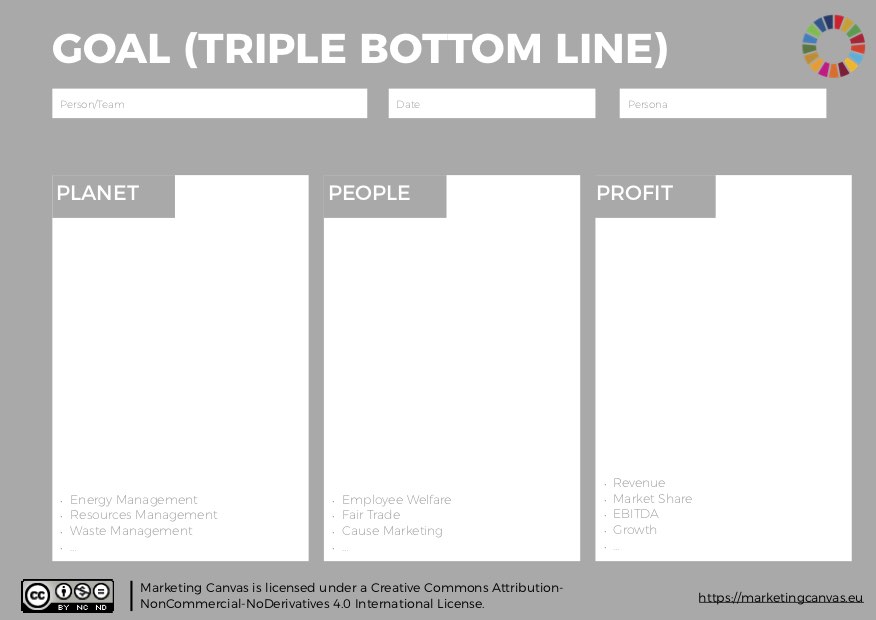
Marketing Canvas Method and Triple Bottom Line
Marketing Canvas - Market and Economic Value
Economic value can be described as a measure of the benefit from a good or service to an economic agent. It is typically measured in units of currency. Another interpretation is that economic value represents the maximum amount of money an agent is willing and able to pay for a good or service.
Economic value: what is it?
Economic value can be described as a measure of the benefit from a good or service to an economic agent. It is typically measured in units of currency. Another interpretation is that economic value represents the maximum amount of money an agent is willing and able to pay for a good or service. The economic value should not be confused with market value, which is the minimum amount a consumer will pay for a good or service. Thus, economic value is often greater than the market value. (Investopedia)
So in simple words, this notion of economic value will help you defining your price and indirectly your benefit. It is a subjective notion (except for past economists like Karl Marx) as it contains tangible and intangible value of the product. A coffee in beans as less value than drinking a coffee with your partner on a romantic place. Nespresso created more economic value by creating a new experience for coffee lover at home.
5 different economic values

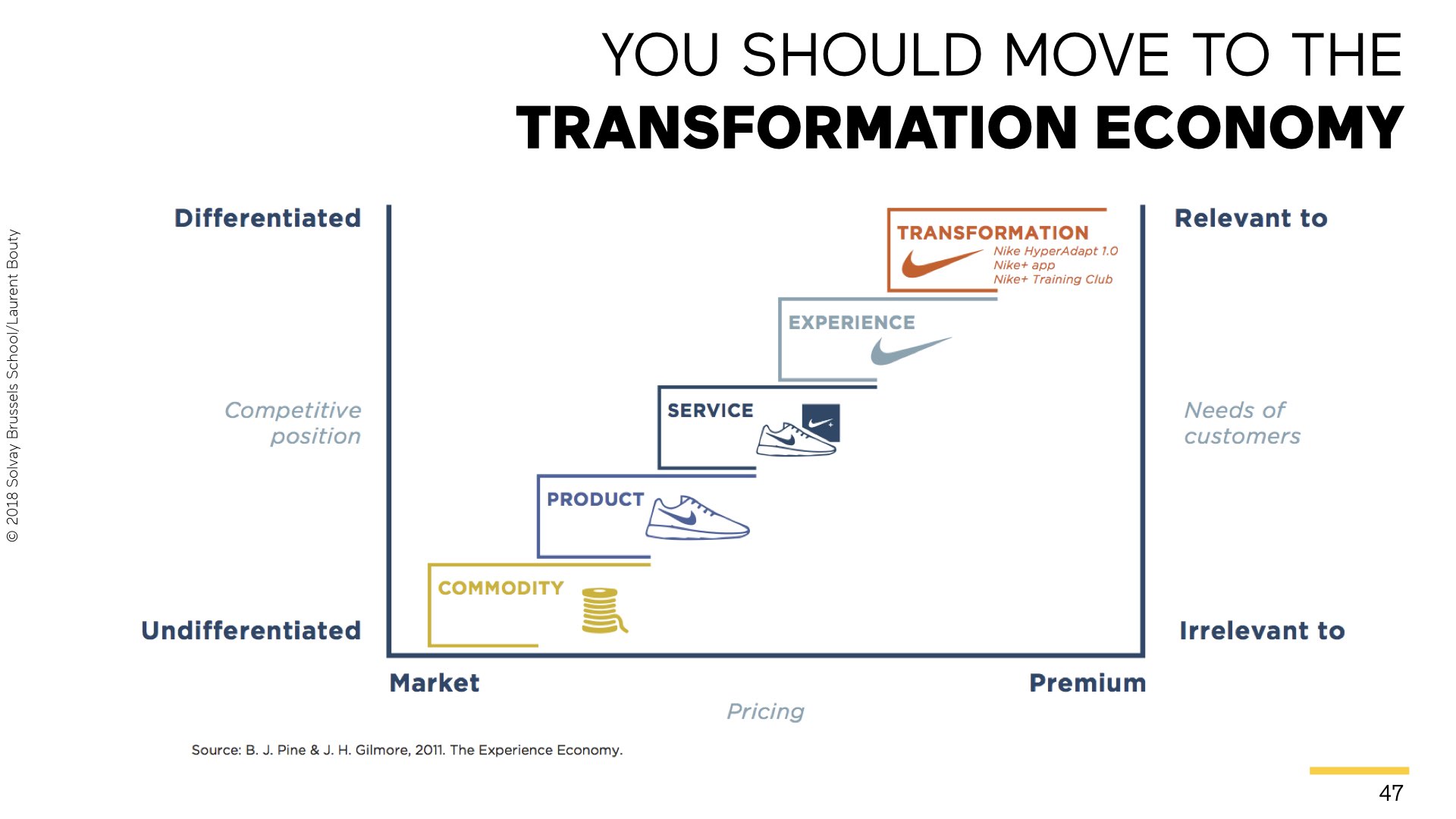
Before deciding on your own marketing strategy, you should understand what the market is currently proposing to buyers! Based on the work done by Pine and Gilmore (HBR, The experience economy), we can identified 5 different types of offer:
Commodity: Buyers cannot differentiate between offers. It is often referred as commodity. The cheapest takes it all. I buy it because I need this (benzine, sugar, flour, …).
Product: Buyers have multiple offers that differentiate themselves on features (more of that, less of this, …) that can even create emotional differences for the buyer (make me younger, smarter, …). This is what we where and still use to see for fast moving consumer goods (chocolate, drinks, …) even if some brands are trying to elevate their product to experience by organising multiple stages (think about RedBull). I buy it because i use it.
Service: Buyers receive a service in addition to the product they bought. Competitors differentiate themselves with these services (after-sales, analytics, …). I buy it because I need it and they help me using it.
Experience: Buyers are going through stages which are personal and potentially sensational. Products and services becomes commodities (we can find similar offer everywhere). Competitors differentiate themselves with experience (before, during and after purchase). Most of the companies are trying to build experience but few are really successful to achieve long term sustainable differentiation on this. I enjoy buying and using it and it is the reason why I bought it.
Transformational: Experiences are elevated from mere enjoyment to actual personal transformation. Buyers are looking to be different after the purchase and use of it. I am not buying running shoes, I become a runner! I buy it because it helps me to become someone different.
What does it mean for the Marketing Canvas Method?
When you analyse the context, just define where the market is today. The higher the market is on this curve, the higher the economic value is. When looking at your context (please use Market cards):
Identify where your market is on the curve (1-5)
Identify if one competitor is trying to move upward (game changer, challenger)?
Identify where the market is on the product life cycle curve (Introduction to Decline)?
Curious
More on the method here
Buy our cards and discover our templates for your workshop here

Le Marché dans le Marketing Canvas
Dans l’enthousiasme de travailler sur sa stratégie marketing, on se précipite souvent et oublie l’importance de ce que je considère comme la première étape: la compréhension du marché dans lequel nous allons opérer (startup) ou nous opérons déjà (entreprise existante). Il y a 3 questions importantes à se poser lorsqu’on analyse le marché. C’est questions sont: …

Marketing Strategy Design Cards
Dans l’enthousiasme de travailler sur sa stratégie marketing, on se précipite souvent et oublie l’importance de ce que je considère comme la première étape: la compréhension du marché dans lequel nous allons opérer (startup) ou nous opérons déjà (entreprise existante).
Les questions qu’il faut se poser sont les suivantes:
Comment définir le marché?
Comment mesurer le marché?
Comment qualifier le marché?
Comment définir le marché?
Bien que la question puisse paraître simple et évidente, elle ne l’est pas.
Petit exemple: dans quel marché TESLA a-t-il décidé de se lancer avec son modèle S? La majorité des voitures électriques avant TESLA se situait dans un marché d’acheteurs urbains avec des petits déplacements. TESLA a privilégié le marché du luxe et plus particulièrement le marché des voitures sportives luxueuses dont la référence est … Porsche. En choisissant le marché, certaines constantes sont fixées telles que: le prix moyen (100k€ pour une voiture de sport de luxe) ou certaines caractéristiques clés du marché (performance, design, vitesse, …).
Comme illustré dans mon exemple, le marché conditionne certaines hypothèses de départ. On peut bien sur être un game changer et redéfinir ces règles toutefois elles restent pour l’acheteur un cadre de référence qu’il va utilisé pour comparer votre produit (lorsque vous louez une chambre chez AirbnB, vous comparez votre achat à une location dans un hotel, un gite ou un bed & breakfast).
Bien qu’il existe de nombreuses définitions d’un marché, celle que je préfère vient de Bill Aulet [1]. Il définit le marché en 3 règles:
Les clients dans le marché achètent tous des produits similaires.
Les clients dans le marché ont le même cycle d’achat et s’attendent à ce que les produits fournissent de la valeur d’une façon similaire.
Il y a du bouche à oreille entre les clients d’un même marché.
La première question est donc: Dans quel marché comptez-vous opérer?
Comment mesurer le marché?
Après avoir défini le marché dans le lequel vous allez opérer, il faut essayer de le mesurer afin de définir son potentiel et votre ambition. Une méthode provenant encore de l’entrepreneuriat s’appelle le TAM (pour Total Available Market), SAM (pour Serviceable Available Market) et SOM (Serviceable Obtainable Market) .
Derrière ces acronymes, ce cache des concepts assez simples:
Le TAM correspond au marché total possible. Si on prend l’exemple de Airbnb cela correspondrait à toutes les locations de chambres dans le monde pour une année.
le SAM correspond à la partie du marché où vous êtes actif (ou allez être actif si vous lancer votre activité). Le passage du TAM au SAM dépend de vos critères: géographique (là où vous êtes actifs), type de produit (ioS ou Android, premium ou cost), ...
le SOM est votre objectif en part de marché. Combien de % du SAM voulez vous obtenir?
la seconde question est donc: quelle est la taille du marché ?
Comment qualifier le marché?
Finalement, il vous reste à qualifier le marché. Qu’est ce que cela veut dire? Le marché a une vie et est dynamique comme un organisme vivant (il apparaît, grandit, se stabilise puis décline). Si vous ne comprenez pas l’etat du marché SAM dans lequel vous entrez, vous risquez de mal définir votre stratégie commerciale (le volume des ventes diffère entre chaque état).

Source: Wikipedia
La description ci-dessous provient de Wikipedia (https://fr.wikipedia.org/wiki/Cycle_de_vie_(commerce))
Stade de lancement: Introduction du produit sur le marché
coûts élevés de production et de développement
faible volume de vente
pertes pour l'entreprise
prix élevés
Stade de croissance
coûts réduits par les économies d'échelles
croissance importante des volumes de vente
profits croissants pour l'entreprise et marges élevées
prix assurant une large part de marché
début de simplification du marché: les grandes entreprises achètent les PME innovantes
Stade de maturité
marges réduites, disparition des compétiteurs incapables d'économies d'échelle (absorption, retrait, faillite, oligopoles, stabilisation des parts de marché)coûts de production faibles, mais coûts de promotion commerciale et de services à la clientèle élevés
maximum des volumes de vente
forte sensibilité à la conjoncture
profits encore très importants mais stagnants
fortes segmentations : les gammes de produits se sont diversifiées pour répondre à une demande exigeante
tendance à la baisse des prix en raison de la concurrence
anticipation de produits de remplacement par la recherche et le développement
Stade de déclin
diminution des ventes
diminution des profits
diminution des prix
apparition de produits de remplacement
La dernière question est: quel est l’état du marché ?
Conclusion
En répondant à ces 3 questions clairement, vous aurez plus facile lorsque vous définirez votre stratégie commerciale. L’étape suivante dans l’exercice du Marketing Canvas est de définir la compétition.
Référence
Bill Aulet, Disciplined Entrepreneurship : 24 Steps to a Successful Startup, John Wiley & Sons (30 août 2013)
Cycle de vie, Wikipedia

6 simple principles for your marketing strategy
6 simple principles that could help you when working on your Marketing Strategy. Some companies are trying to be perfect before moving to step 4. While we should always do our best at step 1-3, I believe the most important are 4-6.
6 simple principles that could help you when working on your Marketing Strategy
Goal: You should always start with a quantitative goal
Target: Who is your ideal buyer/user/persona you will be targeting with your action?
Action: Define the action you should do to for achieving your goal with your target
Execution & measure: Build, launch and measure your action.
Corrective action: fix the original action based on what you have learned from the execution.
Amplification (scaling): when you have fixed the action, you can scale it (growth hacking philosophy) and reach your goal.
Some companies are trying to be perfect before moving to step 4. While we should always do our best at step 1-3, I believe the most important are 4-6. Time is key and if you are agile, work in sprint and define a time limit for steps 1-3.

How to connect your ambition with your operations
I had an interesting discussion with @nicolasdebray (Semetis, Academic Director) about the Ambition in the Marketing Canvas Process…
I had an interesting discussion with @nicolasdebray (Semetis, Academic Director) about the Ambition in the Marketing Canvas Process. He made the following comment:
Having a high-level financial objective is definitely important but often people in the field have difficulties to link this high-level objective (generate a revenue growth of 5% thus 1M€ more) with what they could do!
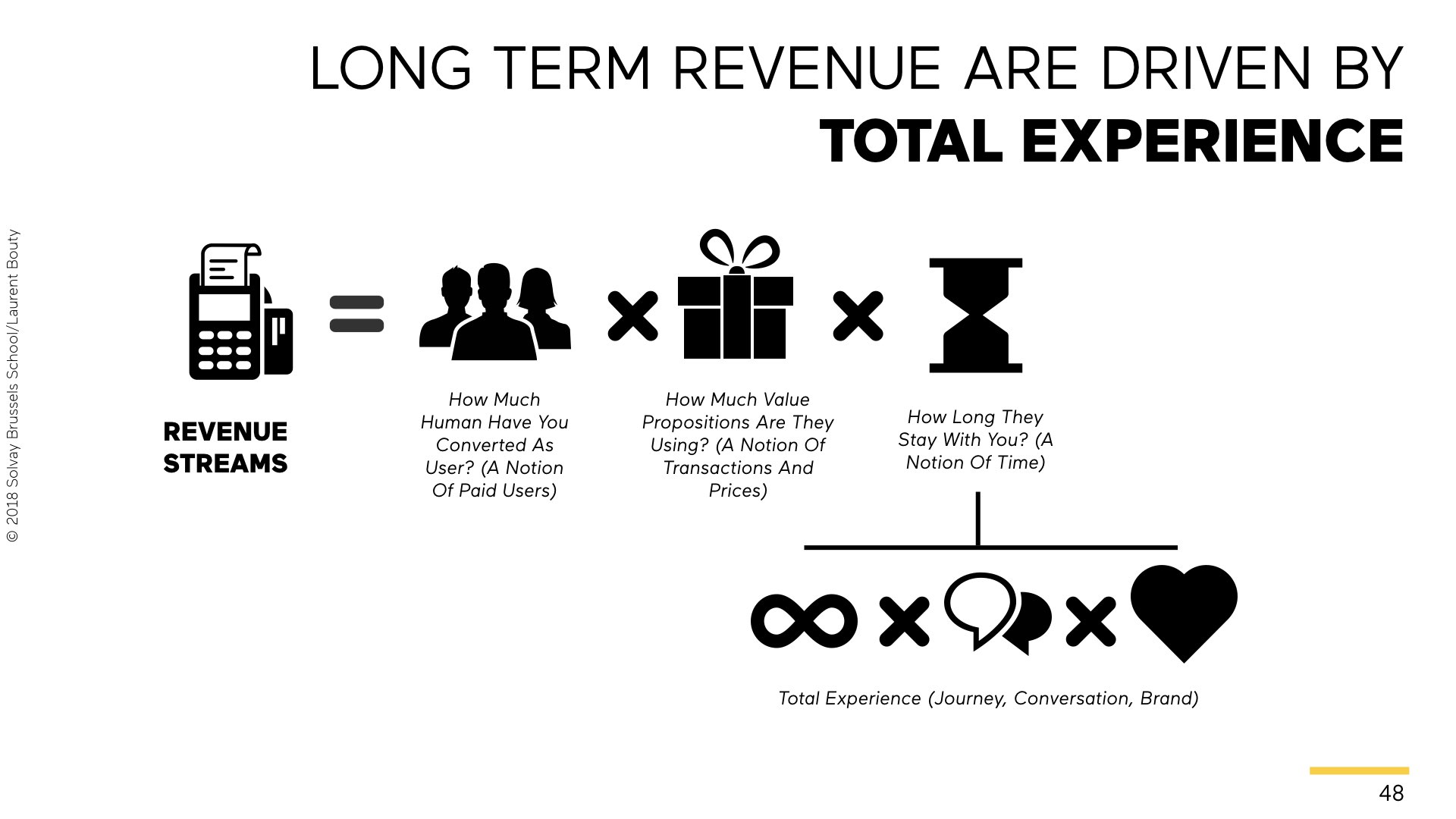
There are multiple ways to potentially connect this ambition with your operations: (1) either you attract more users, (2) either you retain more users; they stay longer, (3) either they buy more often (ARPU) or (4) they buy more products and/or services. This is connected with the notion of Customer Lifetime Value (CLV).
The discussion you should have in the Marketing Canvas will help you to make this connection. How? By understanding which driver(s) could help you.
Q1 - Is your MARKET helping you to achieve your ambition?
For answering this question, we can refer to the product-lifecycle approach using the 4 stages definition of a market:
Market Development or Introduction: Personas are not yet used to buy this kind of product or service. They need a lot of explanations and trust is not installed on the market, yet the volume of potential buyers is huge as the market hasn’t been addressed. It is clearly an Accelerator because the market orientation is positive (growth of sales but not in terms of profit).
Growth: Personas are getting used to buy this kind of products/services. They now understand the benefits of the products/services and trust providers. There is still a huge volume of buyers available on the market and traction is high. It is definitely an Accelerator because the market orientation is positive (growth of sales and profit).
Maturity: This often means that your market will be saturated and you may find that you need to change your marketing tactics to prolong the life cycle of your product. It is a Brake as most of the market has already bought a solution to their problem. Sales are flat.
Decline: During the end stages of your product, you will see declining sales and profits. This can be fuelled by changes in consumer preferences, technological advances and alternatives on the market. It is a Brake as the market is declining.
Q2 - Is your Customer Acquisition helping you to achieve your ambition?
For answering this question, you can use 2 important concepts: Customer Acquisition Rate (CAR) and Cost of Customer Acquisition (COCA).
If Customer Acquisition Rate is below market average, then it is a Brake because it takes more time to get new customers than your competitors;
If Customer Acquisition Rate is above market average, then it is an Accelerator because you attract faster new customers than your competitors.
If COCA is above market average it is a Brake.
If COCA is below market average it is an Accelerator.
CAR has the priority on COCA and therefore the final status for User is defined by CAR; COCA is telling how effective you are.
Q3 - Is your users’ ARPU helping you to achieve your ambition?
For answering this question, you need to understand if you have an optimisation strategy in place for your ARPU:
If your ARPU is below market average, it means that you are either attracting low value customers and/or not fully stimulating existing customers. It is therefore a Brake.
If your ARPU is above market average, it means that you are either attracting high value customers and/or fully stimulating existing customers (recurrent revenue, up sell, cross sell). It is therefore an Accelerator.
Q4 - Is your users’ Lifetime helping you to achieve your ambition?
For answering this questionnaires, you need to understanding of you have a retention strategy in Place for your users:
If the lifetime is below market average, it means that you are not capable to keep your existing users as long as your competitors. It is a Brake.
If the lifetime is above market average, it means that you are capable to keep your existing users longer than your competitors. It is an Accelerator.
A second concept worth looking is the Cost of Customer Retention:
If COCR is above market average it is a Brake.
If COCR is below market average it is an Accelerator.
Conclusion
At the end of the exercise, you will have a better view on how you will achieve your ambition. It will also help your team in charge of the operation to understand what they have to do:
And/Or Getting more clients on board
And/Or Developing and/or selling more products to their existing client base
And/Or Keeping their clients longer (satisfaction, retention)
Definition
Customer Acquisition Rate (CAR)=Number of customer acquired/Length of time period.
Cost of Customer Acquisition (COCA)=All the costs spent on acquiring more customers (marketing expenses) by the number of customers acquired in the period the money was spent.

Marketing Strategy Execution - How to start a movement?
Most of the time, I am facing the situation where I need to engage people in executing the strategy. Easy to say but probably the most difficult part of being a CMO (make it happen).
Most of the time, I am facing the situation where I need to engage people in executing the strategy. Easy to say but probably the most difficult part of being a CMO (make it happen). One of my friend (@alainthys) showed me this video few years ago and it is so true!
When working on an innovative project or on a new commercial activity, who might be your first follower? Your existing client (a co-creation model)? Your sponsor (classical Corporate Model)? Your peers (collaborative model)? Anyone, that trust your idea?
So my question is: have you found your first follower? could you tell us what is his/her usual profile?
source: https://www.ted.com/talks/derek_sivers_how_to_start_a_movement?language=en

Marketing Canvas - Ambition
Dans le cadre d'une Marketing canvas, il est important de démarrer le processus à partir d'une question claire et simple basée sur l'ambition que vous souhaitez atteindre à l'aide de votre stratégie marketing. Une vidéo simple pour expliquer ce concept.
Dans le cadre d'une Marketing canvas, il est important de démarrer le processus à partir d'une question claire et simple basée sur l'ambition que vous souhaitez atteindre à l'aide de votre stratégie marketing. Une vidéo simple pour expliquer ce concept.

Marketing Strategy for Millennials from Marketing Cloud
Interesting Infographic from Marketing Cloud proposing 5 steps to creating your Marketing Strategy for Millennials. As you might have noticed, I am advocating the use of the Marketing Canvas for designing your Marketing Strategy. Let's check whether these steps fit into the process?
Interesting Infographic from Marketing Cloud proposing 5 steps to creating your Marketing Strategy for Millennials. As you might have noticed, I am advocating the use of the Marketing Canvas for designing your Marketing Strategy. Let's check whether these steps fit into the process?
- Step 1 is definitely a no-brainer. Data and customer knowledge will help you to be very specific when discussing canvas. Dimensions like Humans (if you want to uncover key insights and customer preferences), Journey (if you want to design great customer experience), Value proposition (if you want to design the most relevant offers) and conversation (if you want to be at the right place, right time with the right subject) will help you.
- Step 2 is clearly identified in the canvas: Channel (in Journey), Content & Stories (Conversation), Media (Shared and Earned) and finally the global topic of conversations.
- Step 3 is also covered in Engagement (word of mouth), Influencers (Conversations), Proofs (Value Proposition) and Moment of Truth (Journey)
- Step 4 mentions that technology is key for millennials. It is true and it will influence preferred Channels (Journey), Media (Conversation) and Features (Value Proposition) but don't forget that Job To Be Done is why they engage with you and what problem they are trying to solve.
- Step 5 is all about your Purpose (Brand) and Listening (conversation). I am not a fan about education as I believe we don't educate customers but we engage them.
The conclusion is that the Marketing Canvas fits perfectly with these steps and can be applied for Millennials. Finally, I would like to mention that in the Budget dimensions, they are 2 important topics (capabilities and people) where you should invest for having the required tools and skills in your company if you want to do all of this.

More on Marketing Cloud: https://www.salesforce.com/products/marketing-cloud/best-practices/millenial-marketing-strategy/

3 Cs in a Digital World
Interesting article from Roland Berger Consultants about Sales in a Digital World. Their thesis is that you need to master 3 Cs if you want to have a voice in this new world:
- Develop the Customer Base: It is definitely in line with what I am preaching. You should not only focus on acquisition but also on stimulation and retention. The CLV dimension of the Marketing Canvas is telling you how much you perform versus your ambition;
- Orchestrate the Channel: I also agree but I would extend this to Orchestrate the Customer Journey as it is much broader than channel and it is integrating elements like Brand experience, touch-points, emotions and wow moments.
- Manage the complexity: it is maybe fluffy as notion. We all know that we should manage the complexity, the question is how should I do that. One possible answer is in the article when they discussed centralisation. I think the key element there is to automate your processes (BPM, scripting, algorithms, ...) in order to reduce the chaos and uncertainty. but don't forget to keep the human part.
Source: Roland Berger, Think Act, The digital future of B2B sales
Vos clients sont peut-être dangereux pour votre croissance?
Pensée du jour sur la tension qu’il existe entre les clients et l’innovation. Sont-ils antagonistes ou non? Les clients peuvent-ils être dangereux, ce qui est assez illogique pour un marketer?
Pensée du jour!
Je constate lorsque je discute innovations commerciales (provenant de nouvelles technologies ou de nouveaux modèles commerciaux) que la plupart des entreprises répondent de la même façon: c'est intéressant MAIS nos clients ne nous le demandent pas et donc nous préférons nous concentrer sur les affaires ... urgentes ... qui bien évidemment ont un impact direct sur les finances.
Oui mais ces mêmes clients demanderont un jour une réponse rapide de votre part lorsque ces innovations deviendront accessibles pour eux et à ce moment-là, il sera probablement trop tard. Ces clients chercheront une réponse rapide et plus que probablement se tourneront vers un autre fournisseur si vous n'êtes pas capable de réagir rapidement.
Si on suit cette logique, les clients seraient donc la priorité court terme et en même temps, souvent, l'ennemi de l'innovation long-terme!

Vos clients sont peut-être dangereux pour votre croissance?
Marketing Canvas, some tips about the process
Canvas works really well if:
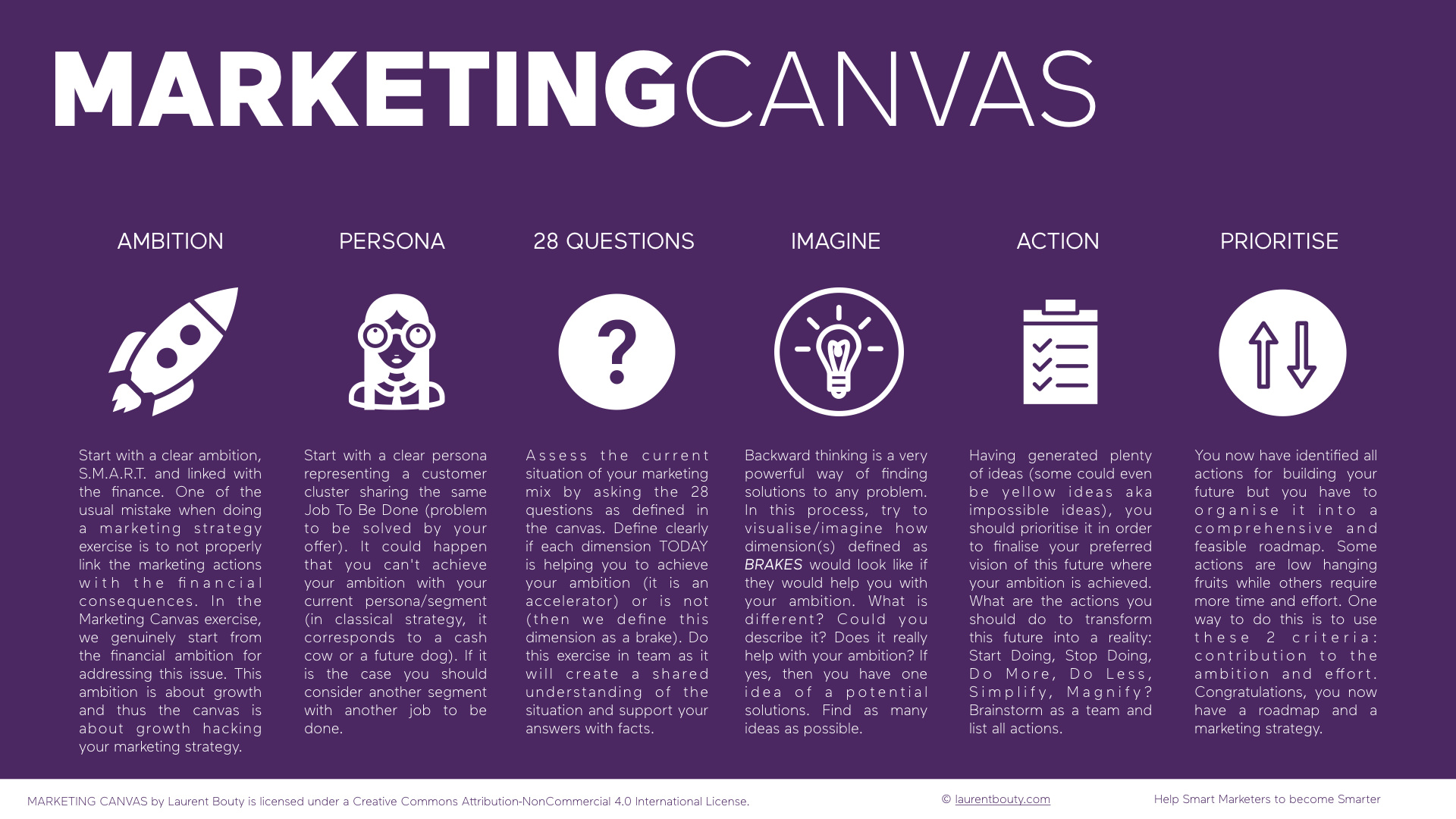
- Start with a clear ambition, S.M.A.R.T. and linked with the finance. One of the usual mistake when doing a marketing strategy exercise is to not properly link the marketing actions with the financial consequences. In the Marketing Canvas exercise, we genuinely start from the financial ambition for addressing this issue. This ambition is about growth and thus the canvas is about growth hacking your marketing strategy.
- Start with a clear persona representing a customer cluster sharing the same Job To Be Done (problem to be solved by your offer). It could happen that you can't achieve your ambition with your current persona/segment (in classical strategy, it corresponds to a cash cow or a future dog). If it is the case you should consider another segment with another job to be done.
- Assess the current situation of your marketing mix by asking the 28 questions as defined in the canvas. Define clearly if each dimension TODAY is helping you to achieve your ambition (it is an accelerator) or is not (then we define this dimension as a brake). Do this exercise in team as it will create a shared understanding of the situation and support your answers with facts.
- Backward thinking is a very powerful way of finding solutions to any problem. In this process, try to visualise/imagine how dimension(s) defined as BRAKES would look like if they would help you with your ambition. What is different? Could you describe it? Does it really help with your ambition? If yes, then you have one idea of potential solutions. Find as many ideas as possible.
- Having generated plenty of ideas (some could even be yellow ideas aka impossible ideas), you should prioritise it in order to finalise your preferred vision of this future where your ambition is achieved. What are the actions you should do to transform this future into a reality: Start Doing, Stop Doing, Do More, Do Less, Simplify, Magnify? Brainstorm as a team and list all actions.
You now have identified all actions for building your future but you have to organise it into a comprehensive and feasible roadmap. Some actions are low hanging fruits while others require more time and effort. One way to do this is to use these 2 criteria: contribution to the ambition and effort. Congratulations, you now have a roadmap and a marketing strategy.
New Business Models in a Digital Future
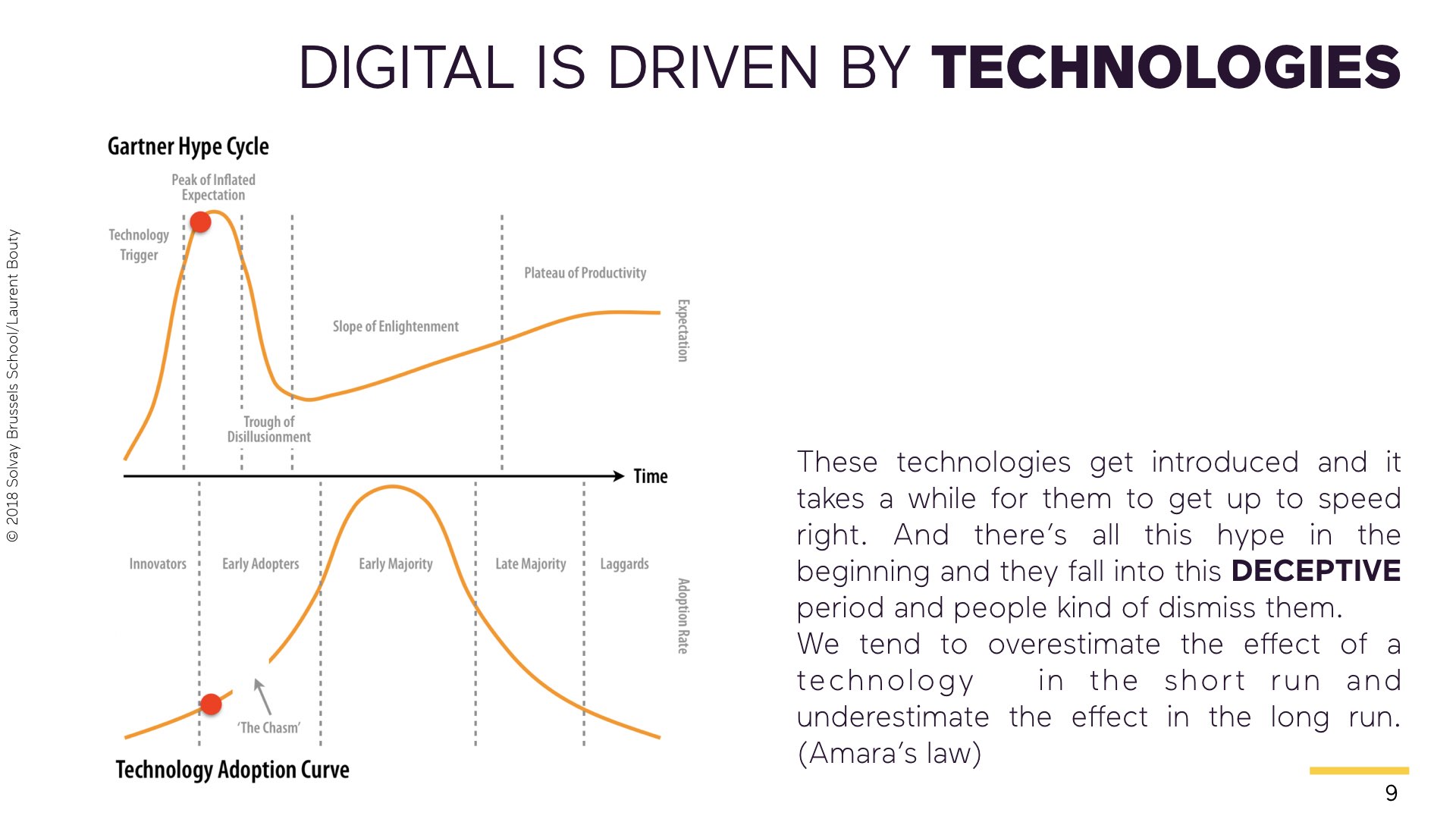
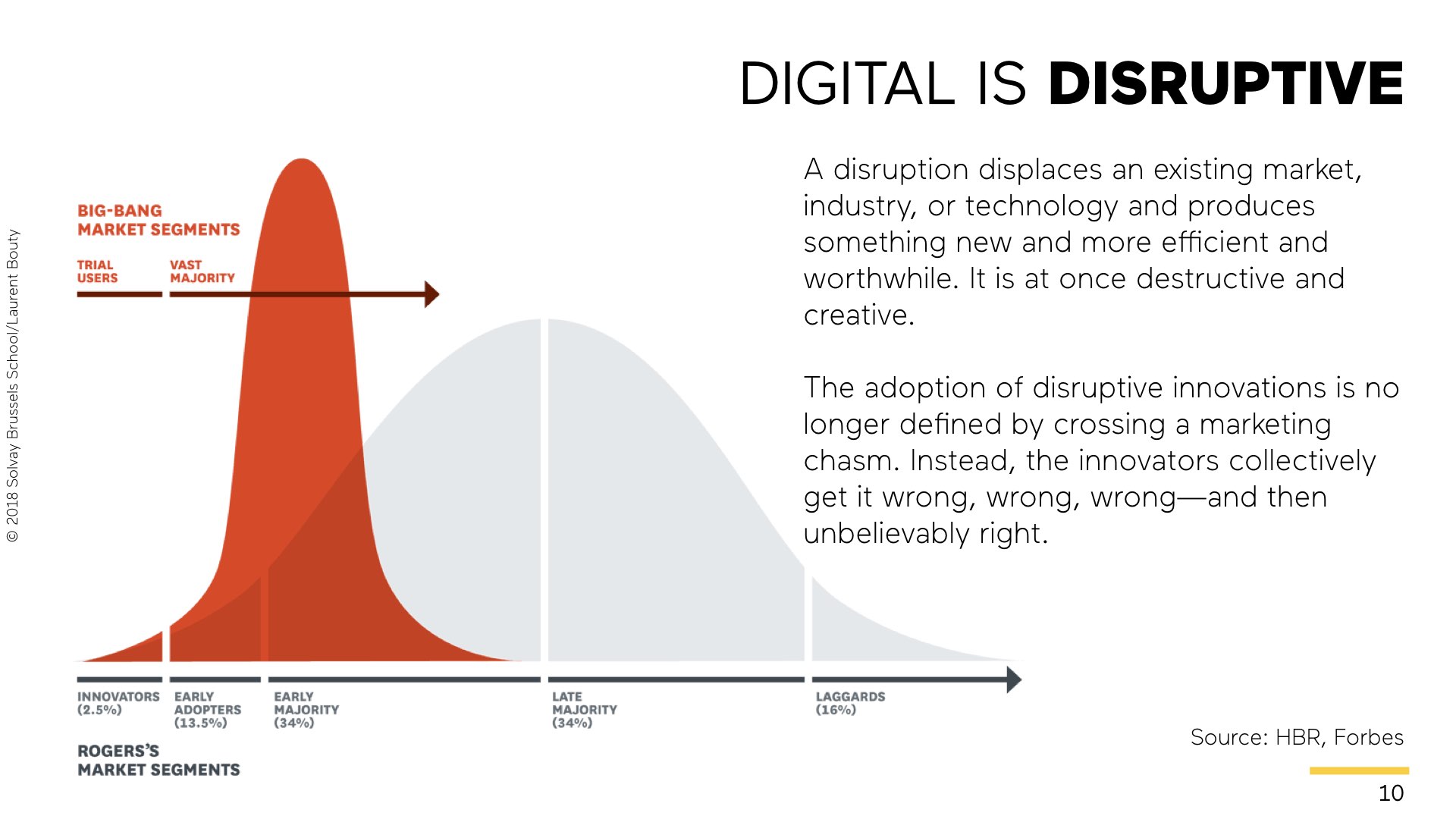
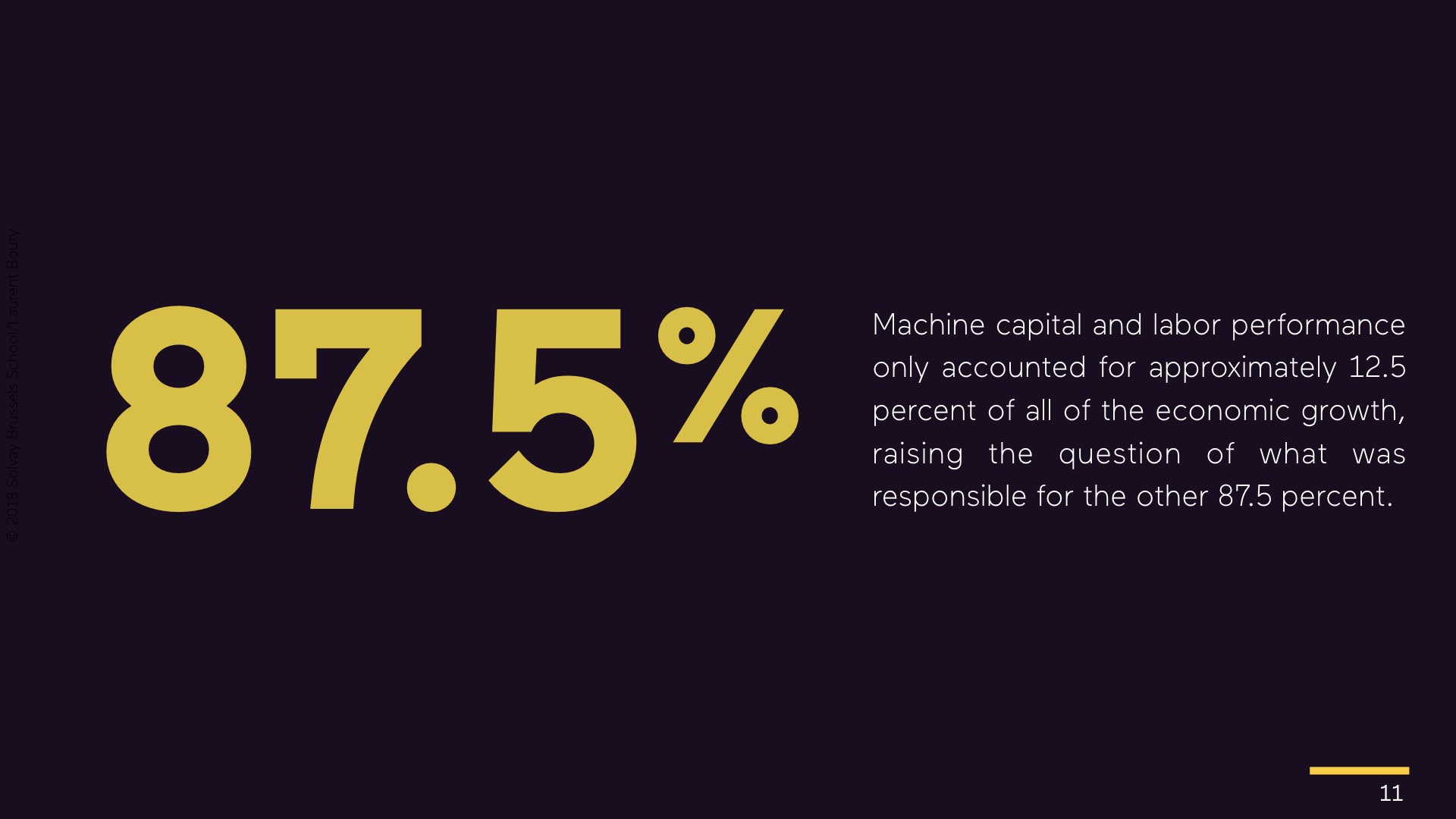
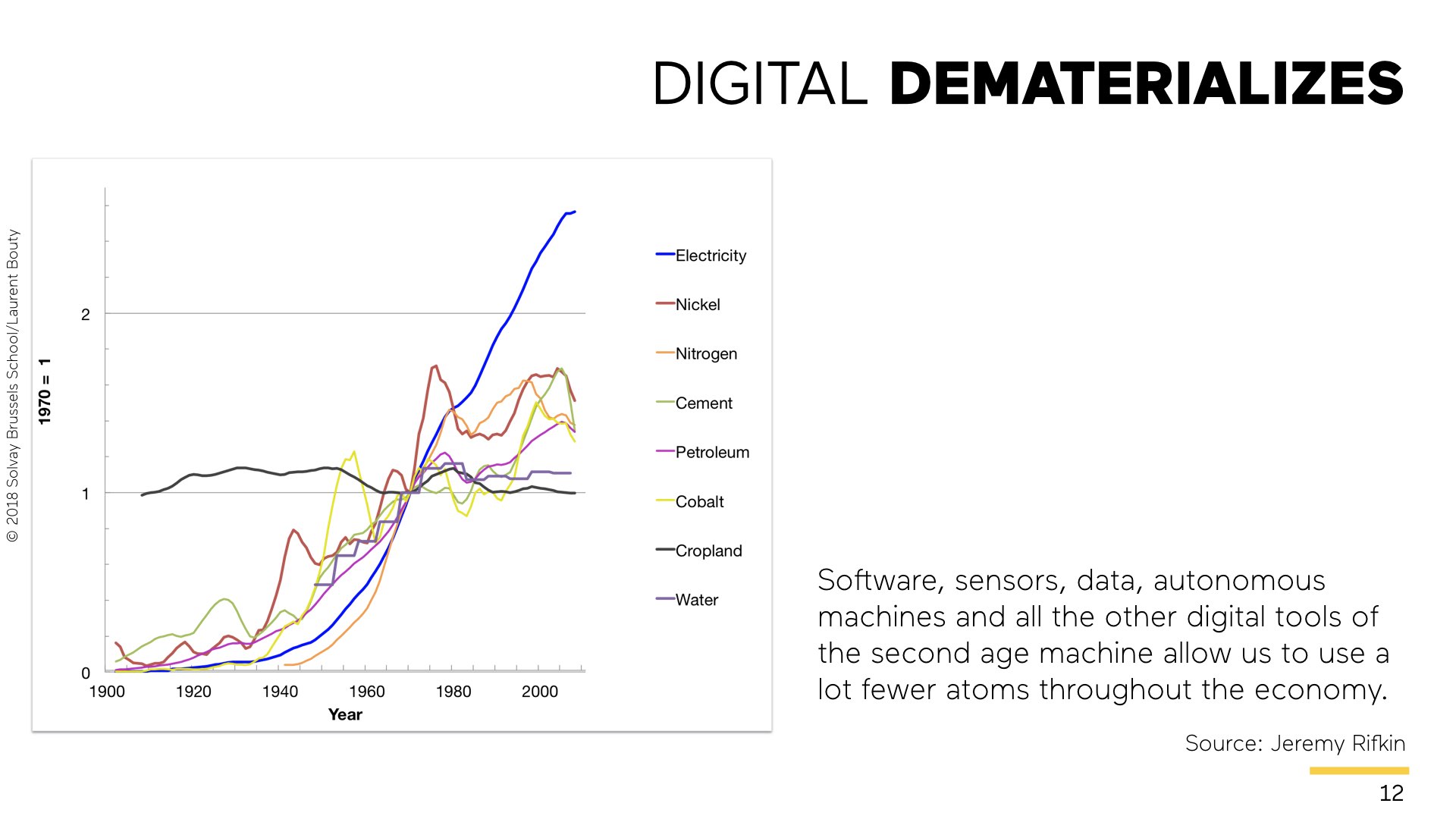
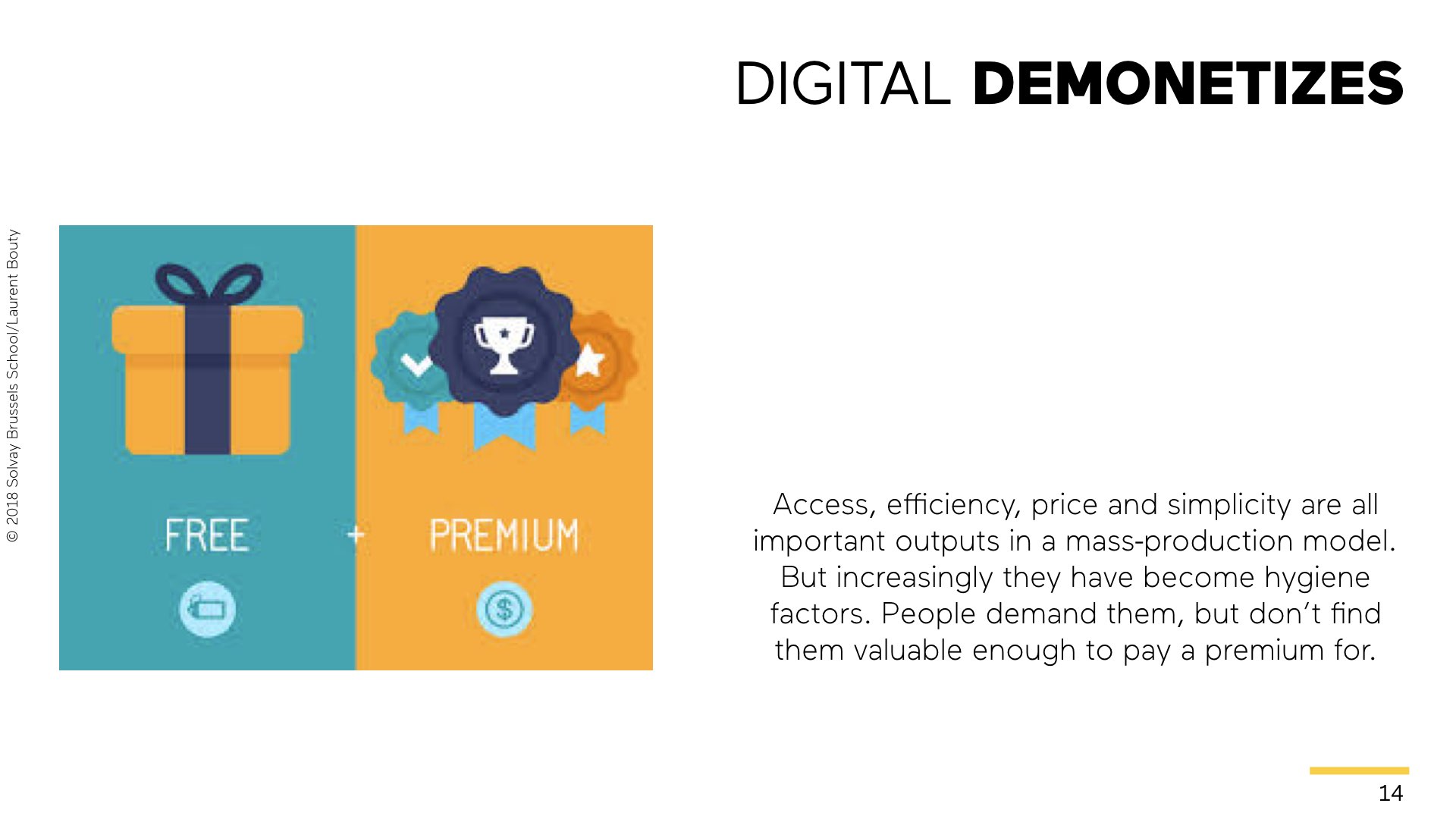
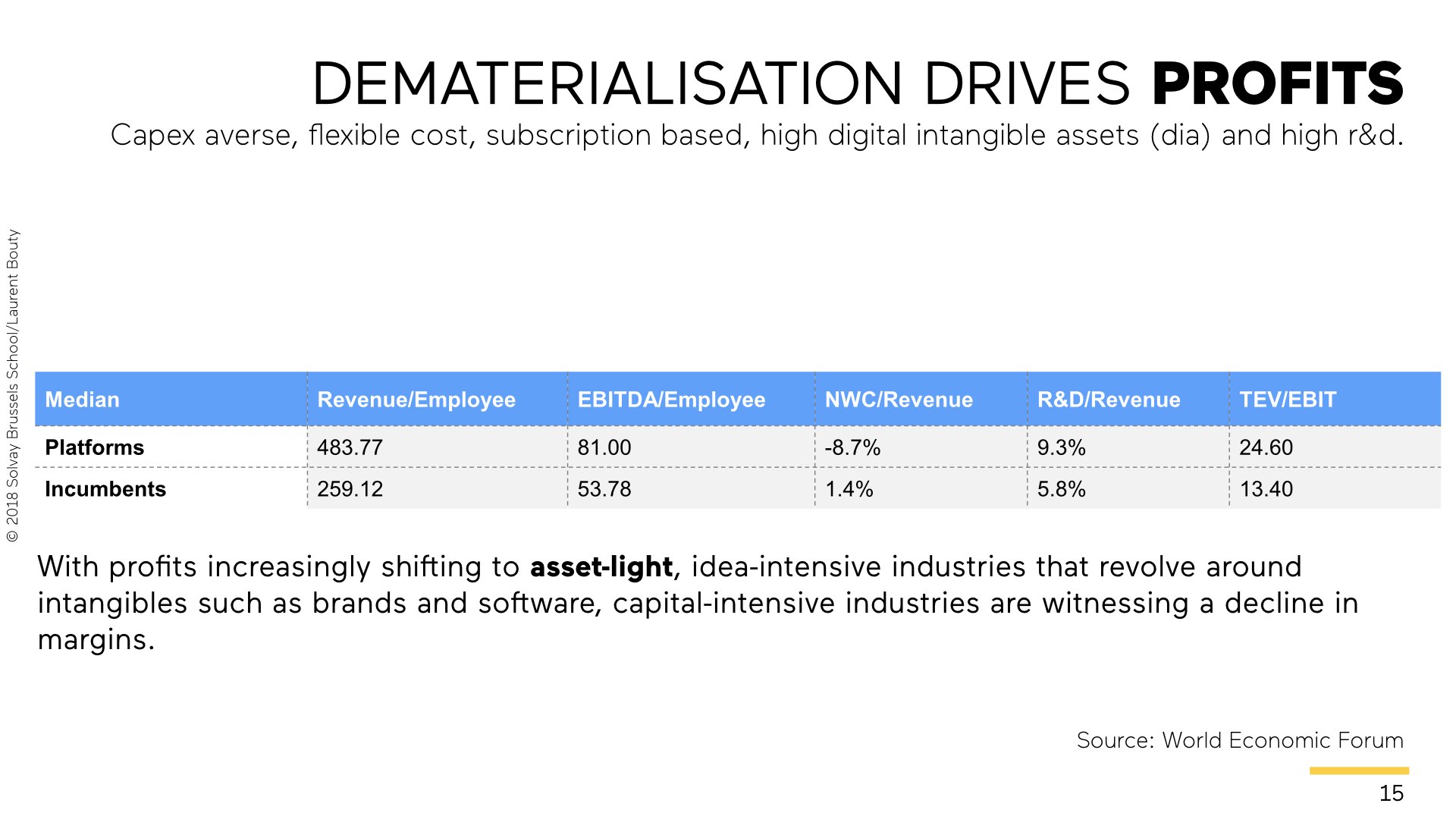
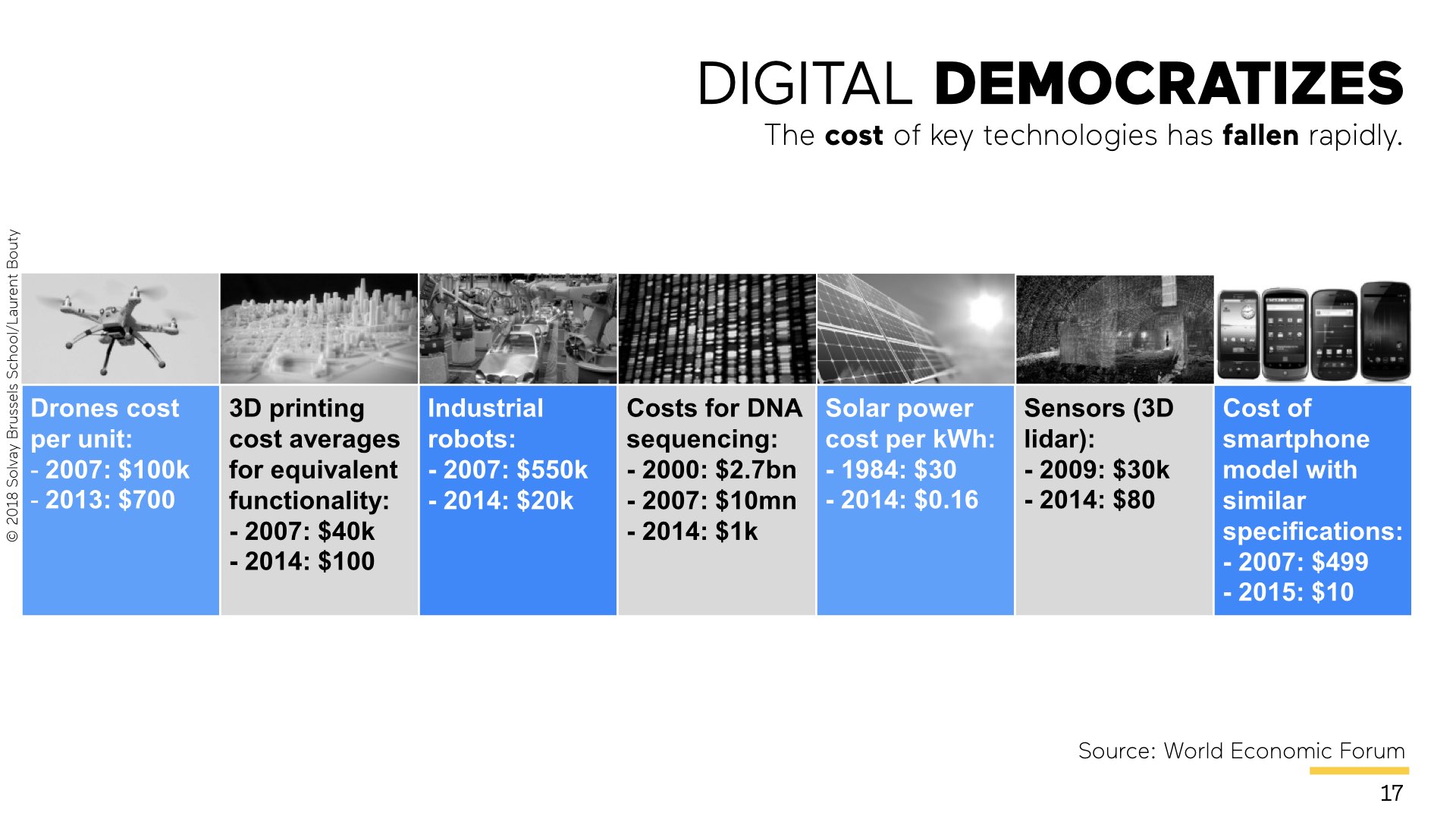
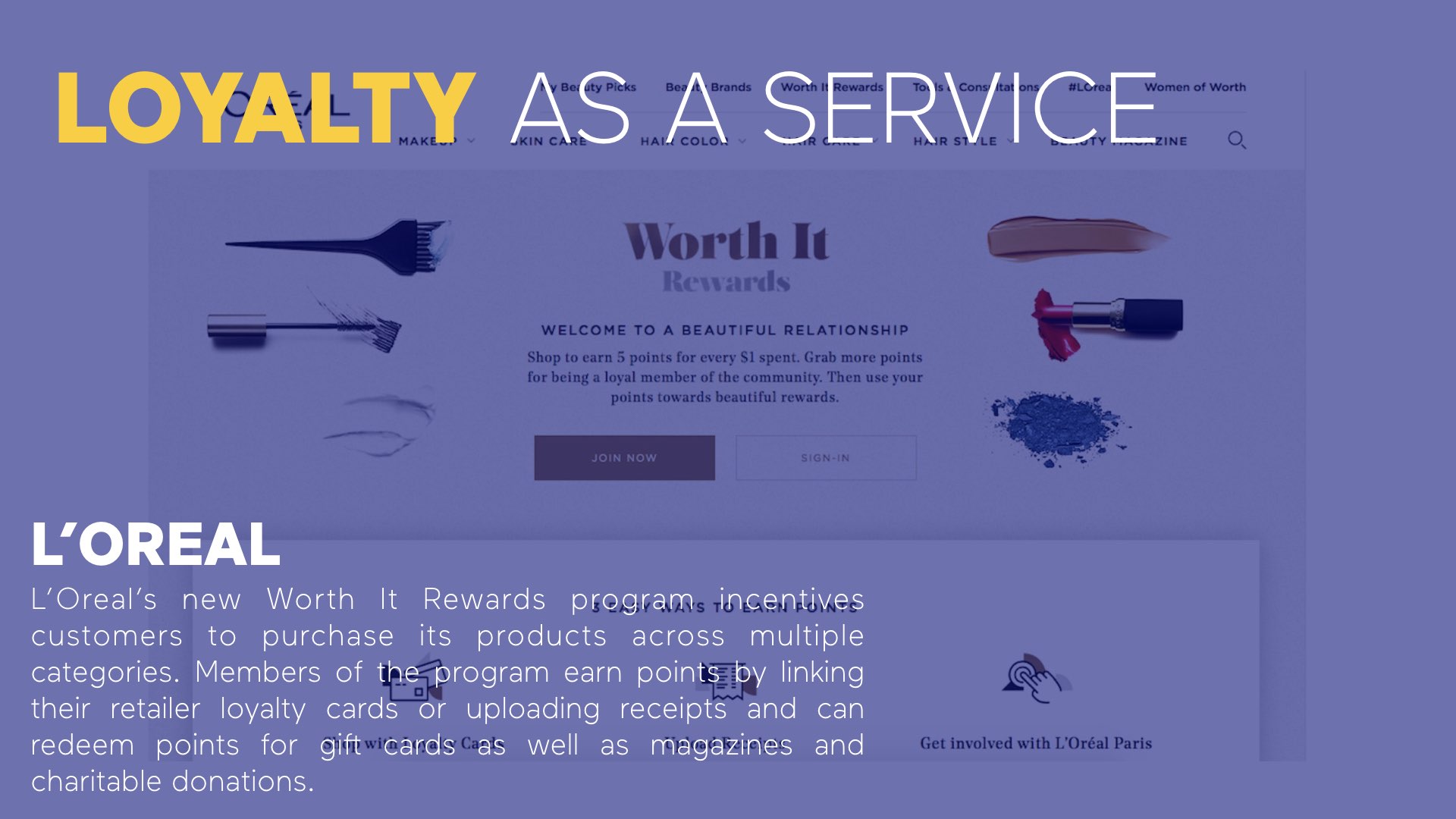
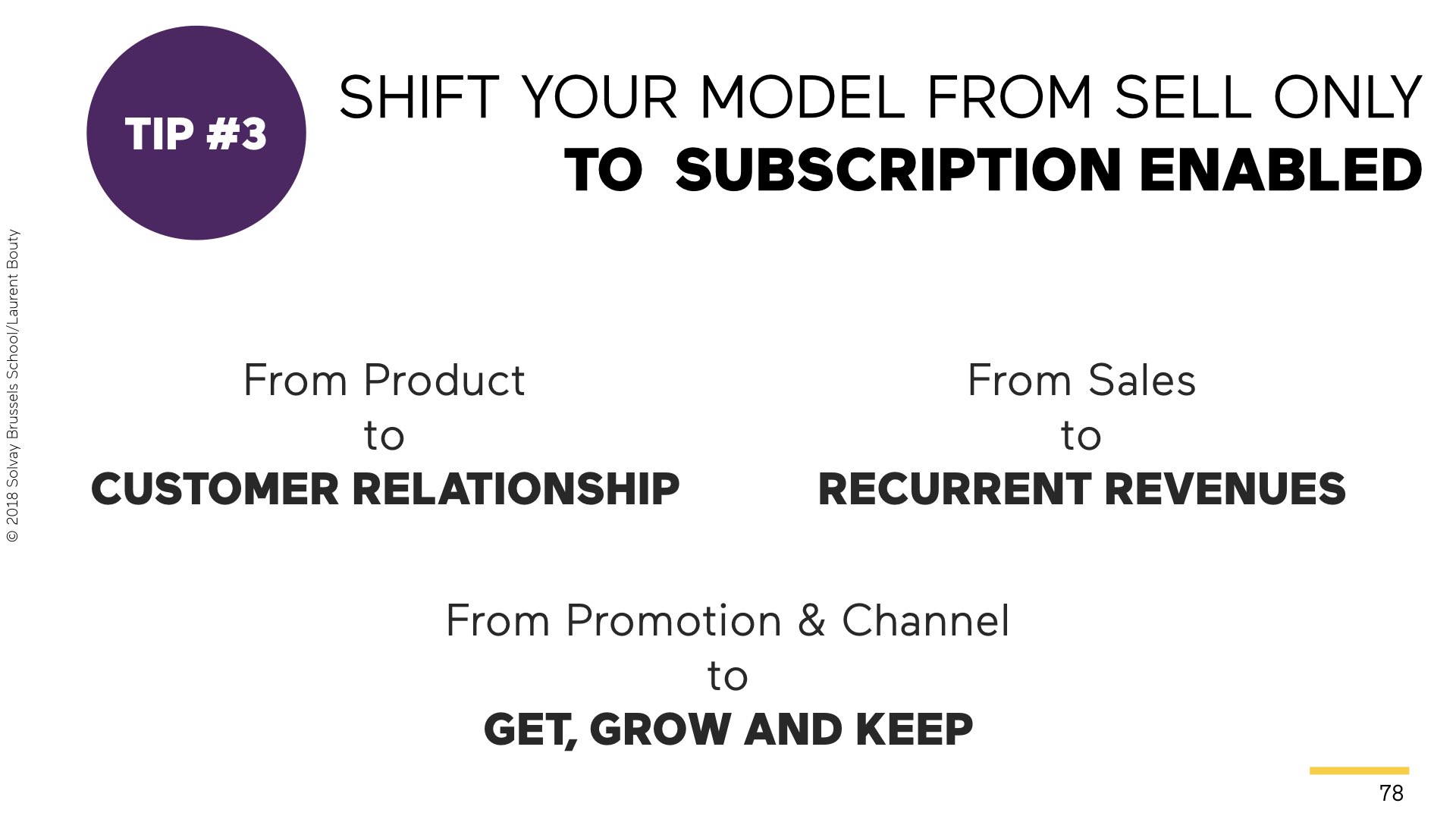
In a world strongly influenced by new technologies, new business models are emerging for brands. We usually defined this new world as a digital world but what digital really means? In this presentation, I explore the impact of digital and propose some recommandations that could help defining new ways of creating and capturing value.
In a world strongly influenced by new technologies, new business models are emerging for brands. We usually defined this new world as a digital world but what digital really means? In this presentation, I explore the impact of digital and propose some recommandations that could help defining new ways of creating and capturing value.


































You need a SHARP Value Proposition
When developing your Value Proposition and Brand Positioning, it has to be S.H.A.R.P. What does it mean?
When developing your Value Proposition and Brand Positioning, it has to be S.H.A.R.P.
What does it mean?
SHARP stands for:
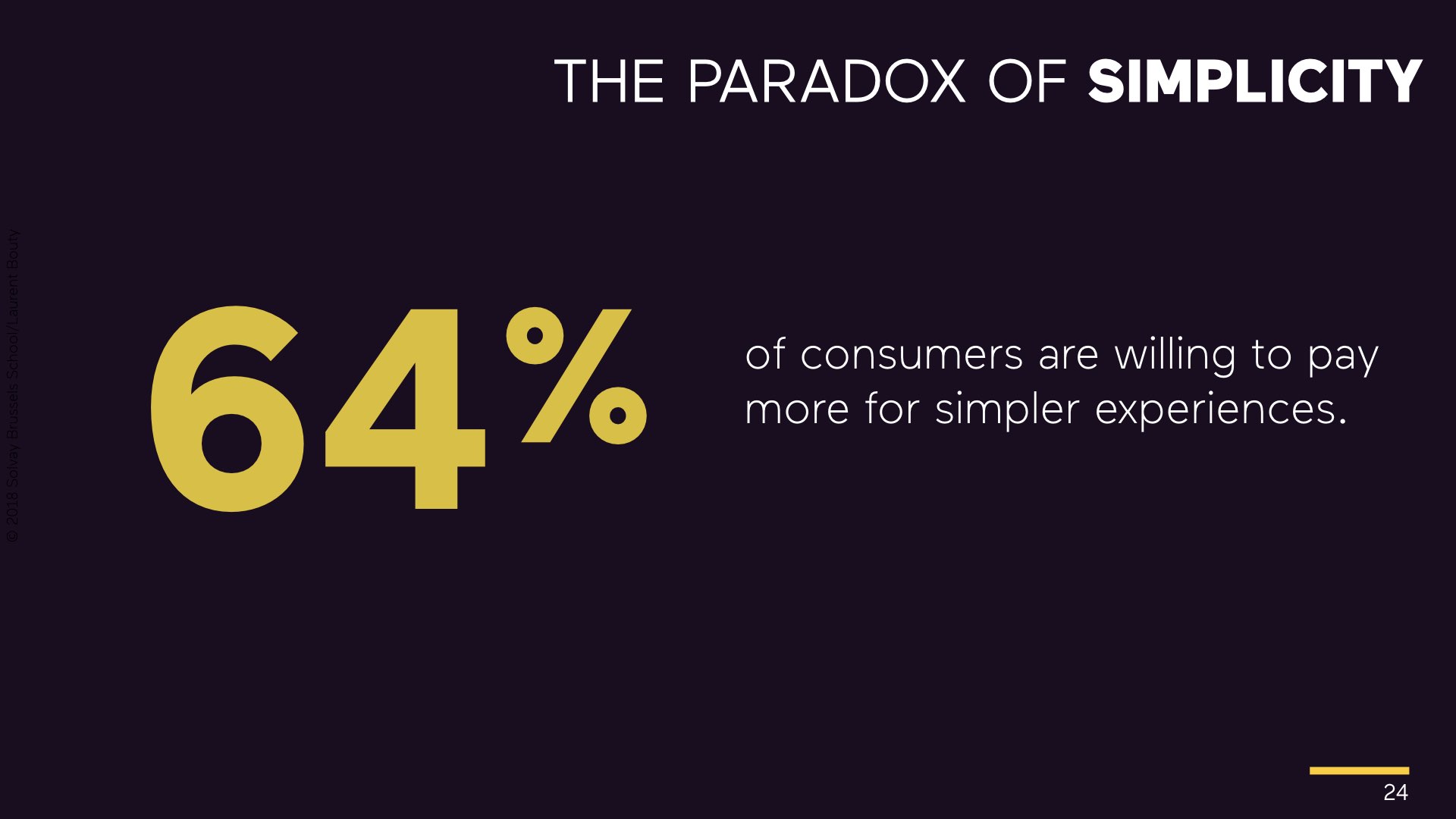
- S for Simple. At the end Simplicity is the winner. You have a doubt, have a look at the Simplicity Index
- H for Human-Centric. Being able to develop your strategy around the human will open new doors and untapped values. Be inspired by Human-Centered Design
- A for Ambitious. Your VP has to be ambitious if you want to stand out from the others.
- R for Relevant. You should build it with competitors and alternatives in mind.
- P for Purposeful. I am a strong believer in purpose driven strategy (reason why I created with friends thebeyonders.agency). Curious what it means, read this article on hbr.
Do you have a S.H.A.R.P. Value Proposition ?

Questions you should ask with the Marketing Canvas
Marketing canvas is an easy yet powerful tool you can use for assessing your Marketing Strategy. It works for small and very large companies. It can be used by novices or experts. A list of key questions to be asked can be found in this article. Enjoy!
Below you will find a list of questions that will help you during the assessment of your marketing strategy with the Marketing Canvas. How does it work? You take the Canvas and go through all dimensions (after having defined your ambition - see article) asking all questions. You can have 2 potential answers for each question:
- I don't know or No then it is playing against your ambition. It is a Brake and the colour is RED. This is something you should improve or change if you want to achieve your ambition.
- Yes then it is playing in favour of your ambition. It is an Accelerator and the colour is GREEN. This is something you can leverage for achieving your ambition.

Customer Life Time Value
- Is your MARKET growing? The market situation plays an important role when you are trying to grow. A saturated market will play against you while a new and growing market will play for you. Understanding this will help you when building your marketing strategy.
- Is it easy and/or cheap to attract new USER ? Getting new customers has a price and could take time. If your customer acquisition is cheap and easy it will most probably play for you while if it takes time and/or it is expensive it will play against you when building your marketing strategy.
- Are you maximizing the ARPU of your user? ARPU stands for Average Revenue Per User. It is a combination of transactions (how frequent people buy products/services) and prices (how much they pay when they buy something). If you believe you are maximizing the ARPU of your users, it will play for you. If not (or worst if it will decrease), it will play against you.
- Is it easy to extend the LIFETIME (reduce churn) of your user? Keeping your users will generally play an important role in your financials. The more users you have, the more revenues are at stake. If keeping your users is expensive and difficult, it will play against you. If it is easy and/or cheap, it will play for you.
Human
- Is your current understanding of the JOB TO BE DONE of your users helping you to achieve your ambition? Knowing the Job To Be Done of your future and existing users is fundamental. This might help you to identify the untapped area or new insights that you could leverage. Could you leverage it for your ambition? If yes, it means that you can create value by addressing the job to be done.
- Is your current understanding of the ASPIRATIONS of your users helping you to achieve your ambition? Knowing the aspirations of your future and existing users will help you to offer more than products or services and contribute to their lives. Do you know them? Can you leverage it?
- Is your current understanding of the PAINS & GAINS of your users helping you to achieve your ambition? Getting the Job The Done has some pains (negative emotions) but also gains (positive emotions). If you have identified them and you are capable to leverage it, it will play for you. Otherwise, it will play against you.
- Is the ENGAGEMENT of your users helping you to achieve your ambition? Knowing how much your users are engaged (NPS could help you) and being able to leverage it will certainly play in your favor.
Brand
- Is the PURPOSE of your Brand helping you to achieve your ambition? Having a purpose is probably the most important asset for your long-term business. Great companies are crystal clear about why they exist! Do you know your purpose? Is it robust enough and clear enough? Can you leverage it further for creating value? Not knowing or having a weak purpose will certainly play against your ambition. A strong purpose will help you when looking for extra value!
- Is the POSITIONING of your Brand helping you to achieve your ambition? How to address your category will help you make choices and clarify how to stand out from the competition. Are you a leader (setting the standards), are you a challenger (playing the leader game but challenging it) or are you a game changer (redefining the game)? Can you leverage your positioning further (be more leader, challenger or game changer)? Not knowing this or answering no means that you need to revisit your current positioning for creating value.
- Are the VALUES of your Brand helping you to achieve your ambition? Your values are your translation of your purpose into key behaviors. Most of the commercial activities are delivered through behaviors (from people or from systems). Do you know your values? Are they helping you for creating more value?
- Is the IDENTITY of your Brand helping you to achieve your ambition? Your identity is how you translate your purpose into an image. Not having a clear identity or having an identity that couldn't be leveraged will block you when trying to create more value.
Value Proposition
- Are the FEATURES of your Value Proposition helping you to achieve your ambition? Do you address the right functional features? are they aligned with your humans? Can you answer this question? Can you become more unique and different from the competitions? Not knowing if your features (functional characteristics of your products and services) could help you to create more value or answering no means that it will not help you when you will look for extra value.
- Are the EMOTIONS of your Value Proposition helping you to achieve your ambition? Today, differentiation comes through emotions and not functional features. Do you know if you deliver the right emotional features? Can you leverage more the emotional dimensions in your value proposition for creating value? Answering yes means that you can create extra value through the emotional dimension of your value proposition.
- Are the PRICES of your Value Proposition helping you to achieve your ambition? Your pricing can be a strong brake for creating extra value or a strong enabler. Do you know where your current pricing is creating value? Can you leverage it further? Being able to leverage your pricing for creating new value is a key asset for your future.
- Are the PROOFS of your Value Proposition helping you to achieve your ambition? Do you have enough evidence that helps people understanding the value you create with your value proposition? Can you leverage your value proposition with more or better proofs?
Journey
- Are the MOMENTS of your user journey helping you to achieve your ambition? Moments are the different steps a user is going through when he is trying to solve his problem. When using Mental Models, we can identify all key moments a user is going through and try to formulate the best brand experience possible. Do you know all moments of your users? Can you capture more value through these moments?
- Is the EXPERIENCE of your user's journey helping you to achieve your ambition? As a Brand, you need to formulate a clear and articulated answer at each moment. These answers should reflect customer identity, satisfy the objectives and meet expectation. Do you have orchestrated answer (or is it random)? Can you capture more value through the experience of your user's journey?
- Are the CHANNELS of your user journey helping you to achieve your ambition? The number of channels that can be used for transacting with a brand is growing. And each user is free to use channel(s) of his choice. Do you have an answer for all potential channels? Do you orchestrate these channels? Can you capture more value through these channels?
- Are the MOMENTS OF TRUTH of your user journey helping you to achieve your ambition? Providing an orchestrated experience is already a great achievement. Next step is to transform some moments into Moments of Truth (also referred as like moments or wow moments). Do you know if you offer Moments of Truth? Can you capture more value through these moments of truth?
Conversation
- Is the way you are currently LISTENING TO your users helping you to achieve your ambition? How can you have great conversations with your users if you don't listen to their voices? Do you systematically capture the voice of your users? Do you capture more value by listening to your users?
- Are your CONTENT & STORIES for your users helping you to achieve your ambition? Monologues are no more working for engaging users with your brand. Should you have contents and stories? Do you know if you have content & stories? Do you capture as much as you can value through content & stories?
- Is the current use of your MEDIA helping you to achieve your ambition? You can place your content & stories through different media: Paid, Owned, Earned or Shared? Do you know which media you are using? Do you capture as much as you can value through your media?
- Are your INFLUENCERS helping you to achieve your ambition? People are trusting people. Do you know if you are using influencers? Do you capture as much as you can value through influencers?
Budget
- Is your budget for Marketing FEES helping you to achieve your ambition? If you want to propagate your content, stories, and offers, you should balance your media investment between Owned, Paid, Earned and Shared. Have you well balanced your investments amongst these media? Is it enough for your ambition (have you compared this investment with your competitors) ?
- Is your budget for Marketing PEOPLE (internal & external) helping you to achieve your ambition? To make things happening, you need a team (either insourced or outsourced). Do you have enough people for achieving your ambition?
- Is your budget for Marketing KNOWLEDGE helping you to achieve your ambition? It is important to collect systematically enough knowledge through research, training, bootcamp or even consulting projects for achieving your target. Do you have properly invest in these topics for your ambition.
- Is your budget for Marketing CAPABILITIES helping you to achieve your ambition? More and more marketers have a leading role when defining the technical roadmap of the company because of the impact on the customers (web site, mobile applications, automation, CRM and lead generation software, database, ...) Do you have invested enough in these topics for your ambition?
Why you need a bold question for your Marketing Strategy?
What is the best way to start defining the marketing strategy of your company, business or activity? My proposal is to start with a bold strategic question! Why?
What is the best way to start defining the marketing strategy of your company, business or activity? My proposal is to start with a bold strategic question! Why?
Because the objective of your strategy is to achieve an ambition and most probably a financial ambition. Whether you are a startup or a stock listed company, you have to achieve a financial ambition if you want to stay in business. Thus first hypothesis is to have a financial ambition and preferably S.M.A.R.T. one.

Financial Ambition of Your Strategy
Then let's imagine, you don't do any strategy and you let the business in free wheel (no plan). Most probably you will face problems and situations (external or internal) that will block you to achieve your ambition. I suggest that you highlight the biggest problem, your #1 fear for your business. Thus second hypothesis is that you need to define your biggest fear as the context where you will do your strategy.

Biggest commercial fear you have
Question
HOW CAN I (FINANCIAL AMBITION) IN (TOP #1 FEAR) ?
Examples
HOW CAN I GROWTH MY REVENUE BY 5% IN AN AUTOMATED AND DIGITAL ENVIRONMENT? (Shoe Store)
HOW CAN I PROTECT MY REVENUE NEXT YEAR IN A MARKET WHERE UBER IS ARRIVING? (Taxi company)
HOW CAN I BE PROFITABLE AFTER 1 YEAR IN A MARKET WHERE NOBODY KNOWS ME YET ? (Startup company)
Quote

Marketing Strategy should start with a bold question

Innovation Bootcamp @Besix
Please find below a video about the Innovation Bootcamp I co-created and facilitated with Solvay Brussels School for a great Belgian Company (they built the highest tower in the world in Dubai). Great team, great people, great energy and fantastic ideas.
Please find below a video about the Innovation Bootcamp I co-created and facilitated with Solvay Brussels School for a great Belgian Company (they built the highest tower in the world in Dubai). Great team, great people, great energy and fantastic ideas.
Innovation Bootcamp

Resources for Course on Customer Experience
List of resources (books, articles, video, website) that I recommend you to visit if you are interested in the Customer Experience topic. I am using these resources during my classes @SolvayBrusselsSchool and during workshops.
In this post, you will find a collection of resources that I am using and maintaining for my different classes and workshops on this topic. Unfortunately I couldn't list everything that I am reading or watching and I have only selected some vital fews that mights inspired you. It is also a good start if you are interested by this topic. The list contains websites, books, articles and videos.
Cheers
Laurent
Recommended WebSites
- Adaptive Path: Adaptive Map, Discover the four steps of experience mapping
- Mental Models: Why are mental models important?
- Service Design: Customer Journey Map Tool
- Brian Solis: The Futur of Customer Experience
- Think With Google: Experience & Design
- Strategy-Business: Customer Strategy
- Deloitte Insights: Articles and Multimedia on Customer Experience
Recommended Books


Easy to read and a good start if you are curious about Customer Experience from a Marketing Perspective. A lot of good tools and and a powerful process.
Customers are powerful. They have a loud voice, a wealth of choice and their expectations are higher than ever.
This book covers ten principles you can use to make real world improvements to your customers’ experiences, whatever your business does and whoever you are.
One step further on this subject with the notion of Moments of Truth. Brian Solis is a though leader on Digital Transformation.
In his new book X: The Experience When Business Meets Design bestselling author Brian Solis shares why great products are no longer good enough to win with customers and why creative marketing and delightful customer service too are not enough to succeed. In X, he shares why the future of business is experiential and how to create and cultivate meaningful experiences.


Recommended Articles
1998 - Harvard Business Review - Welcome to the Experience Economy
First there was agriculture, then manufactured goods, and eventually services. Each change represented a step up in economic value--a way for producers to distinguish their products from increasingly undifferentiated competitive offerings. Now, as services are in their turn becoming commoditized, companies are looking for the next higher value in an economic offering. Leading-edge companies are finding that it lies in staging experiences. To reach this higher level of competition, companies will have to learn how to design, sell, and deliver experiences that customers will readily pay for. An experience occurs when a company uses services as the stage--and goods as props--for engaging individuals in a way that creates a memorable event. And while experiences have always been at the heart of the entertainment business, any company stages an experience when it engages customers in a personal, memorable way. The lessons of pioneering experience providers, including the Walt Disney Company, can help companies learn how to compete in the experience economy. The authors offer five design principles that drive the creation of memorable experiences. First, create a consistent theme, one that resonates throughout the entire experience. Second, layer the theme with positive cues--for example, easy-to-follow signs. Third, eliminate negative cues, those visual or aural messages that distract or contradict the theme. Fourth, offer memorabilia that commemorate the experience for the user. Finally, engage all five senses--through sights, sounds, and so on--to heighten the experience and thus make it more memorable.
Read on HBR here
2002 - Harvard Business Review - The One Number You Need to Grow
Companies spend lots of time and money on complex tools to assess customer satisfaction. But they're measuring the wrong thing. The best predictor of top-line growth can usually be captured in a single survey question: Would you recommend this company to a friend? This finding is based on two years of research in which a variety of survey questions were tested by linking the responses with actual customer behavior--purchasing patterns and referrals--and ultimately with company growth. Surprisingly, the most effective question wasn't about customer satisfaction or even loyalty per se. In most of the industries studied, the percentage of customers enthusiastic enough about a company to refer it to a friend or colleague directly correlated with growth rates among competitors. Willingness to talk up a company or product to friends, family, and colleagues is one of the best indicators of loyalty because of the customer's sacrifice in making the recommendation. When customers act as references, they do more than indicate they've received good economic value from a company; they put their own reputations on the line. And they will risk their reputations only if they feel intense loyalty. The findings point to a new, simpler approach to customer research, one directly linked to a company's results. By substituting a single question--blunt tool though it may appear to be--for the complex black box of the customer satisfaction survey, companies can actually put consumer survey results to use and focus employees on the task of stimulating growth.
Read on HBR here
2007 - Harvard Business Review - Understanding Customer Experience
The article discusses the importance of monitoring customer experience. Several examples are presented demonstrating customer dissatisfaction in a variety of situations. Customer experience is defined, and several methods for measuring it are discussed. The results of a recent Bain & Company survey of customers of 362 companies is presented. Methods of collecting customer data at "touch points," instances of direct contact either with the product or service itself or with representations of it, are detailed.
Read on HBR here
2016 - McKinsey - Customer Experiences
Collection of ideas, articles, thoughts and interviews about Customer Experience. Currently 2 entire collections examining how companies can create competitive advantage by putting customers first and managing their journeys.
Read on McKinsey here
2016 - PWC - 10 Principles of Customer Strategy
It’s no longer enough to target your chosen customers. To stay ahead, you need to create distinctive value and experiences for them.
Read on Strategy-Business here
2017 - Altimeter - The Customer Experience of AI
This report explores the impact of AI on the customer experience, lays out a set of operating principles, and includes insight from technology users, developers, academics, designers, and other experts on how to design customer-centric experiences in the age of AI. More than anything, business leaders today should begin to treat AI as fundamental to the customer experience. This means thinking about the values it perpetuates as an essential and eventually indistinguishable expression of product, services and the brand experience.
Read on Altimeter here
Recommended Videos
This is a full keynote based on the story of my latest book 'when digital becomes human'. Presented this on the biggest retail conference in Istanbul. Enjoy! More about Steven Steven is an expert in customer focus in a digital world.