FREE RESOURCES

In complement of the Marketing Canvas cards, you can use a more detailed scoring grid helping you to define whether your conversation’s dimensions are brakes or accelerators.


Brand is not a logo or a colour palette. In the Marketing Canvas Method, Brand is a strategic architecture: the system of decisions that determines why customers choose you over a competitor. This assessment scores whether that architecture is operational.
The 100 Brand Standard Assessment covers four sub-dimensions: Purpose (210), Positioning (220), Values (230), and Visual Identity (240). For each, you score one canonical statement on a −3 to +3 scale. The results are immediate: a negative score on Positioning means your brand occupies no specific mental real estate. A negative score on Values means your stated principles are wall decor, not decision-making tools.
Use this if:
You suspect your brand is not doing strategic work — or you want to validate that it is before investing in campaigns, a rebrand, or a new market entry.
What you'll know after completing it:
- Whether your Positioning is specific enough to exclude competitors, or generic enough for any of them to claim
- Whether your Values have changed at least one decision in the last 12 months
- Which Brand sub-dimension is most likely to be blocking your archetype's primary goal
WHAT'S INCLUDED
- 4-page A4 portrait PPTX (print-ready, editable)
- Page 2: Orientation — scoring scale, 4 sub-dimensions, all 11 Vital 8 Brand appearances, role legend
- Page 3: Assessment Grid — one statement per sub-dimension, score boxes, evidence lines
- Page 4: Interpretation Guide — score ranges, 3 Brand-specific warning patterns, next steps

Having a Value Proposition is not the same as having a differentiating one. Most teams score their VP on presence — "we have features, we have pricing, we have testimonials." The Marketing Canvas Method scores on differentiation: do you have a unique feature competitors cannot claim? Is your pricing anchored to what customers are willing to pay, not what competitors charge? Can you prove your claims?
The 300 Value Proposition Standard Assessment scores four sub-dimensions: Features (310), Emotions (320), Pricing (330), and Proof (340). One canonical statement per sub-dimension. A score of +1 means functional but not differentiating. A score of +2 means you have a genuine edge. The gap between those two scores is the most common source of wasted marketing spend.
Use this if:
You are questioning why your marketing is not converting, why customers choose competitors despite similar features, or whether your pricing strategy is actually a strategy.
What you'll know after completing it:
- Whether you have a unique feature — not just differentiating ones — that eliminates the comparison decision
- Whether your pricing is based on customer Willingness To Pay or on what seemed reasonable internally
- Whether your claims are backed by proof types customers actually trust
WHAT'S INCLUDED
- 4-page A4 portrait PPTX (print-ready, editable)
- Page 2: Orientation — scoring scale, 4 sub-dimensions, all 16 Vital 8 VP appearances, compact 2-column grid
- Page 3: Assessment Grid — one statement per sub-dimension, score boxes, evidence lines
- Page 4: Interpretation Guide — score ranges, 3 VP-specific warning patterns, next steps

A quick assessment guide (one pager) allowing you to do a first assessment of your marketing strategy (one target group, one line of product). In case of interest, you can deep dive in one or multiple dimensions using the scoring grid that can be downloaded.

In complement of the Marketing Canvas cards, you can use a more detailed scoring grid helping you to define whether your Metrics’s dimensions are brakes or accelerators.

In complement of the Marketing Canvas cards, you can use a more detailed scoring grid helping you to define the market you are analysing.
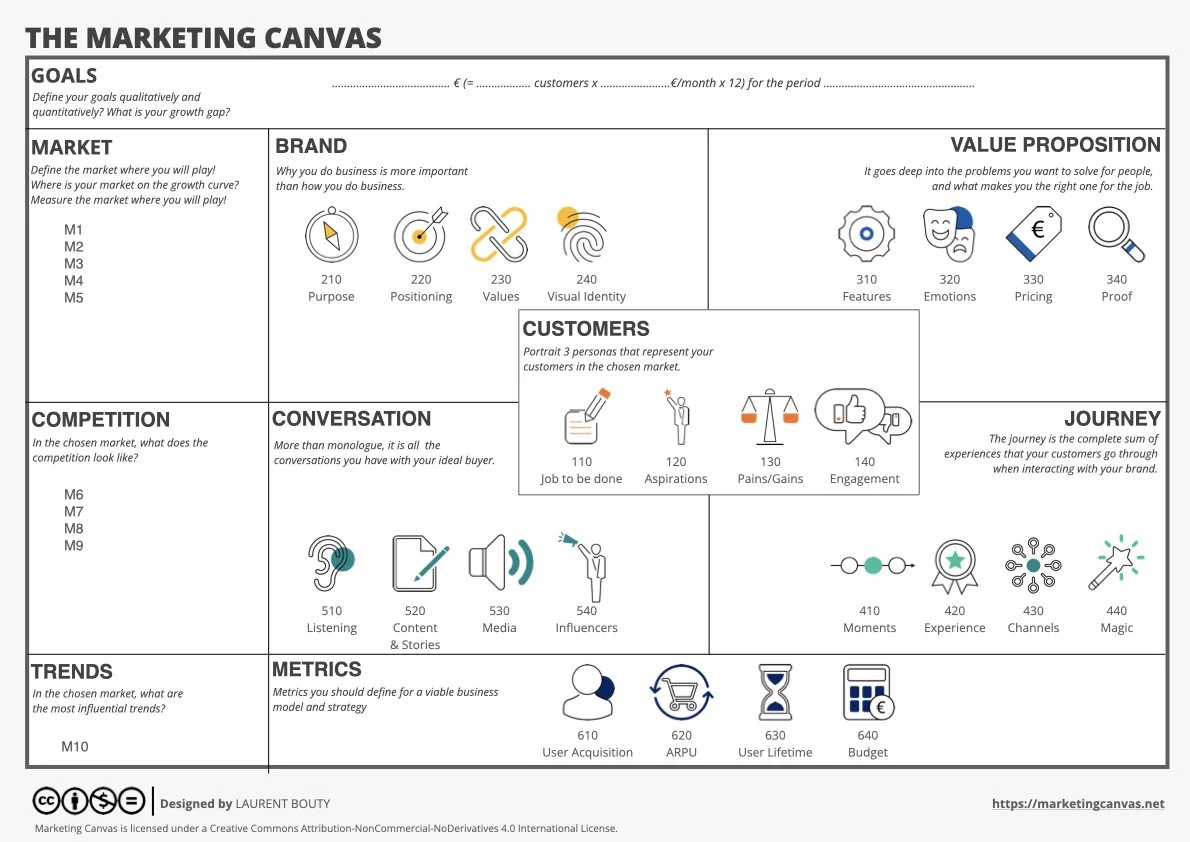

Score your customer understanding in 15 minutes. A free 3-page diagnostic that tells you whether your knowledge of customer jobs, aspirations, pains, and engagement is helping or hurting your marketing goals.
Most marketing strategies fail at the first step: they assume they know the customer. This assessment forces you to score what you actually know — not what you believe.
The 100 Customers Standard Assessment is a 3-page A4 diagnostic built on the Marketing Canvas Method. It covers the four sub-dimensions that define customer understanding: Job To Be Done (110), Aspirations (120), Pains & Gains (130), and Engagement (140).
For each sub-dimension, you score one canonical statement on a −3 to +3 scale. No zero is permitted — you commit to either helping or hurting your goal. The result is four scores that immediately show you where your customer knowledge is an asset and where it is a liability.
Use this if: You want a fast, honest audit of your customer understanding before investing in campaigns, positioning, or product decisions. Works as a team exercise or a solo self-assessment.
What you'll know after completing it:
Whether your customer research is deep enough to drive strategic decisions
Which customer sub-dimension is your weakest — and which archetype that gap affects
Whether to prioritise a FIX, ALIGN, or SCALE cycle in your next planning round
WHAT'S INCLUDED
4-page A4 portrait PDF
Page 1: Cover
Page 2: Orientation — scoring scale, 4 sub-dimensions, Vital 8 appearances, role legend
Page 3: Assessment Grid — one statement per sub-dimension, score boxes, evidence lines
Page 4: Interpretation Guide — score ranges, warning patterns, next steps
CARDS
The method in the room" mirrors the existing page hero ("The method in your hands") — consistent voice, different emphasis

A physical deck of 60 cards designed to guide you during the method. In this deck, you have 3 different categories of cards.
As a trainer or consultant, you may be interested in offering or reselling Marketing Canvas Decks to your clients. Please take a look at our special offer for trainers.
A physical deck of 60 cards designed to guide you during the method. In this deck, you have 3 different categories of cards.
ARTICLES

Most AI market commentary frames competition as a three-way race between Anthropic, OpenAI, and Google. The Marketing Canvas Method reveals a different picture: six players across four economic-value positions, running four different strategic archetypes, pressuring Anthropic along three axes simultaneously. The most consequential competitor is not who you think.
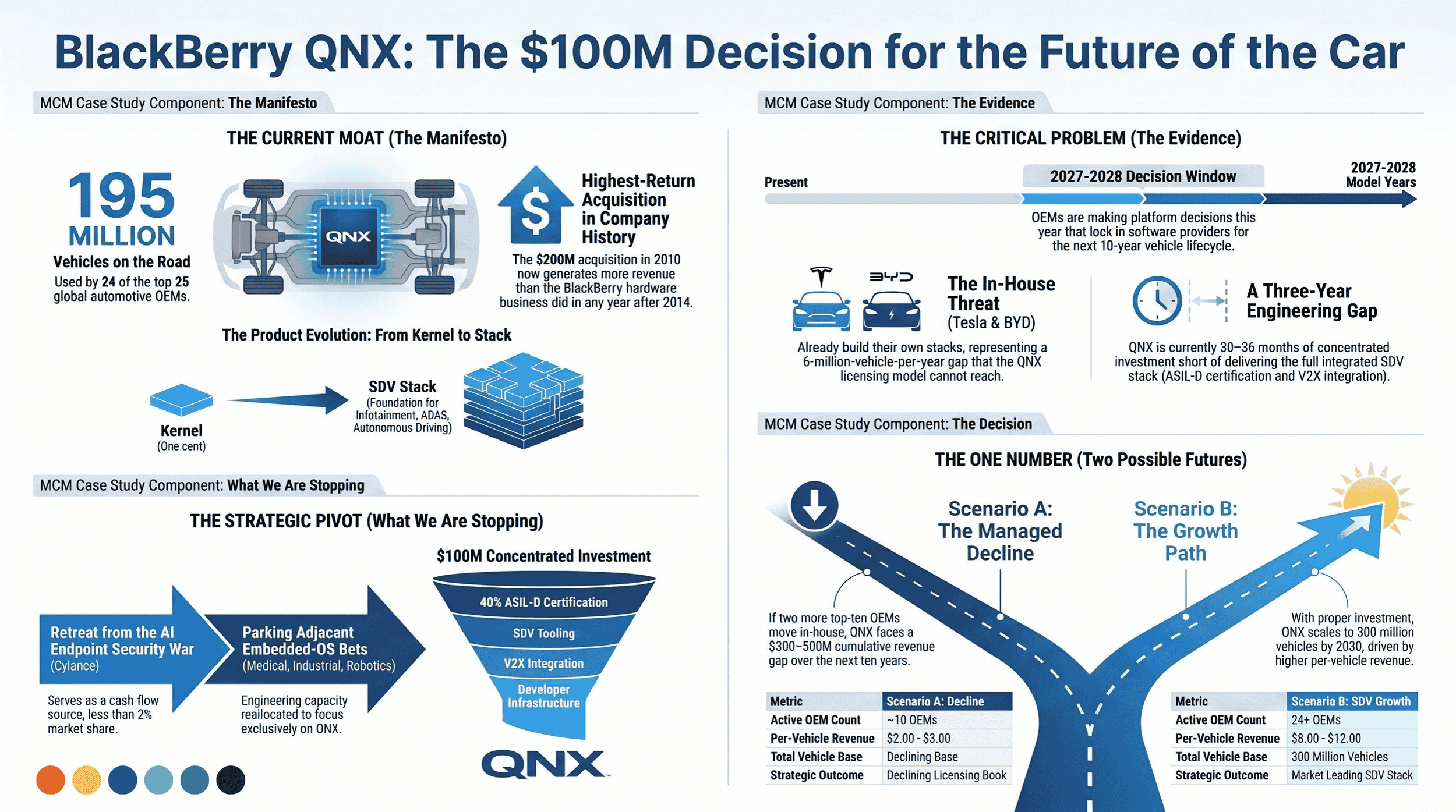
BlackBerry's QNX operating system runs in 195 million cars and is licensed by 24 of the top 25 automotive OEMs. Tesla and BYD chose to build their own. Three of the top ten OEMs are deciding right now whether to follow them. A two-page board memo on the $100M capital-allocation decision that cannot wait.
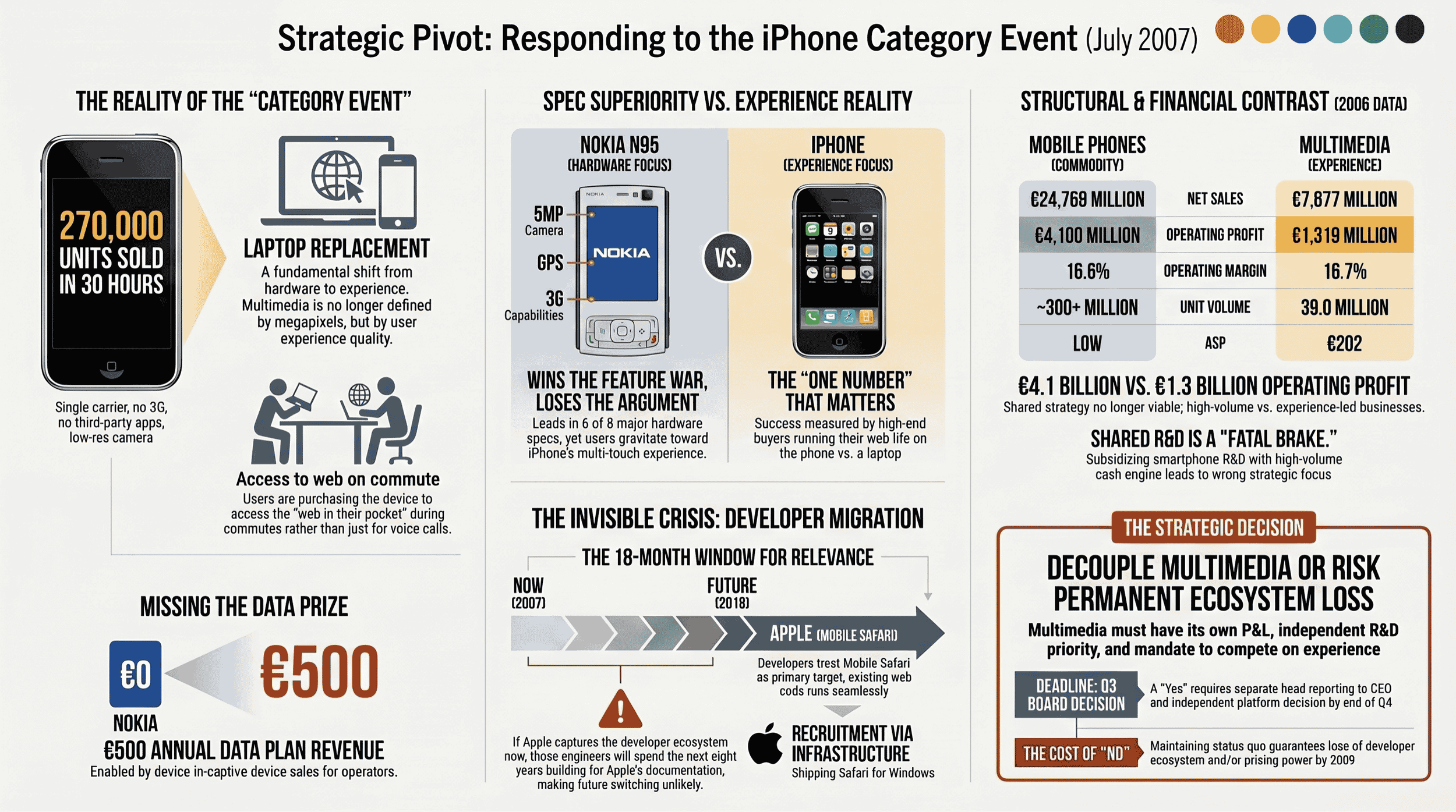
What Nokia's CEO should have read on 30 July 2007 — one month after the iPhone launch. A Brutal Clarity Memo written using only data publicly available at the time. No hindsight permitted.
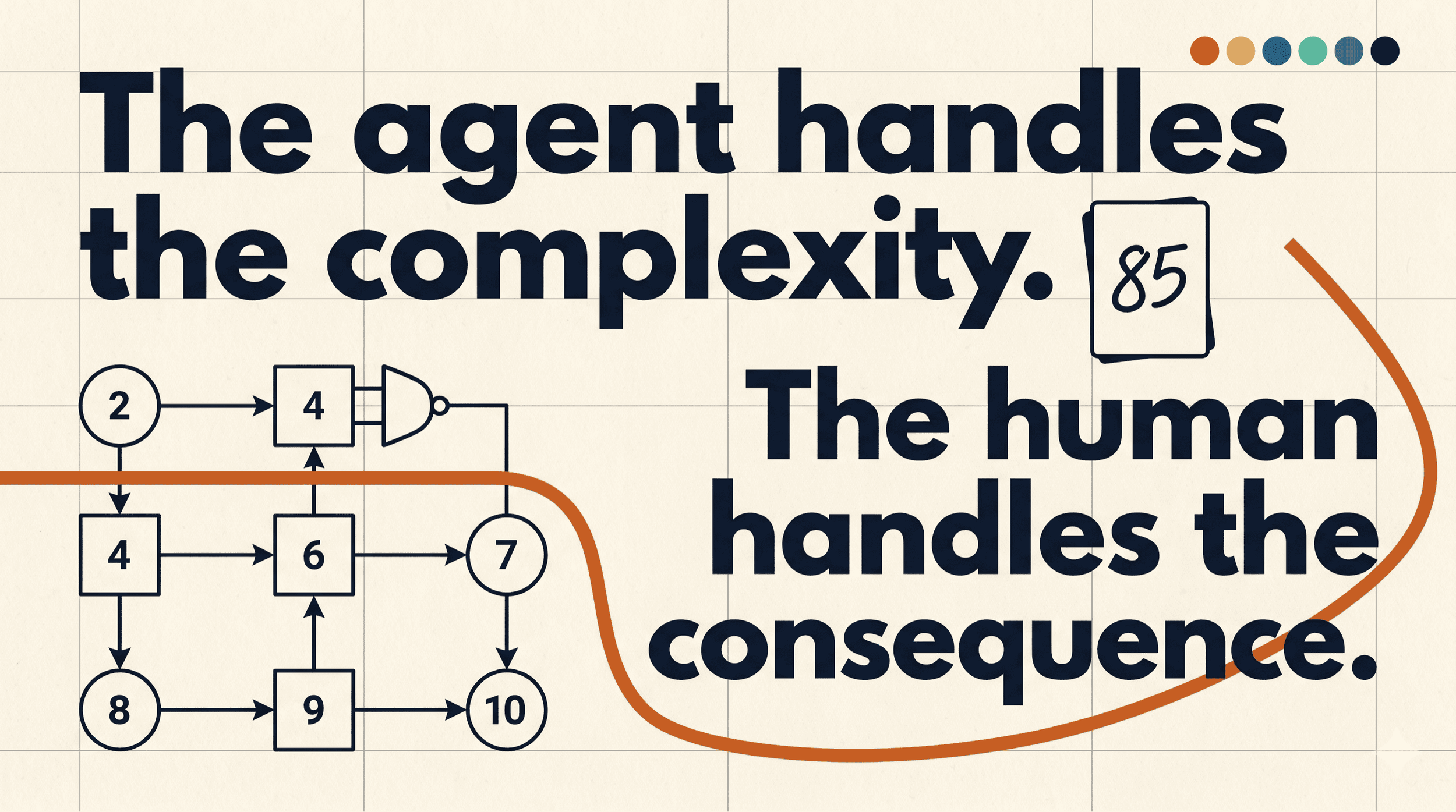
AI agents are now completing transactions on behalf of consumers — without visiting your website, reading your reviews, or seeing your ads. Your brand is being represented, recommended, or overlooked by systems you don't control. Most marketing frameworks weren't built for that. The Marketing Canvas Method was.
DIMENSIONS

Budget is the 24th Marketing Canvas dimension — scoring not how much you spend, but how deliberately. Learn the four properties, the 3-Cycle allocation logic, and the 90/10 innovation reserve principle.

Lifetime measures how long customers stay — scored as 1/churn rate. Learn the four properties, the CRC/CAC benchmark, and why a leaky bucket makes every other marketing investment less efficient.
ARPU measures whether you are maximising revenue from each customer through frequency, spend, and value growth. Learn the four properties, the revenue equation, and why measurement capability is the prerequisite everything else depends on.

Acquisition scores four metrics — CAC, conversion rate, CLTV/CAC ratio, and time to conversion. Learn the canonical diagnostic range and why the ratio matters more than the absolute number.

The Influencers dimension of the Marketing Canvas scores four properties — purpose alignment, goal clarity, authenticity, and long-term measurement. Learn why follower count is the wrong selection criterion.

Media is the distribution layer of the Marketing Canvas. Learn how the four media types — owned, earned, shared, paid — work as a system, not silos, and why sequence matters.

Most companies listen reactively — processing complaints, running annual surveys, reading reviews when they arrive. The Marketing Canvas demands proactive listening. Dimension 510 explains the difference, why it is a Fatal Brake for Pivot Pioneers, and the most expensive sentence in marketing.
Satisfaction keeps customers. Magic turns them into advocates. Dimension 440 of the Marketing Canvas scores four components — effortless, stress-free, sensory pleasure, and social pleasure — and explains why exceeding expectations on something the customer doesn't care about isn't magic, it's waste.
Most companies have channels. Few have orchestrated channels. Dimension 430 of the Marketing Canvas scores the difference — and explains why a brand with three connected channels outperforms one with eight siloed ones.
Experience is a Fatal Brake for three archetypes. In every case the mechanism is the same: experience failure is the proximate cause of churn. Dimension 420 of the Marketing Canvas scores consistency — not brilliance — and explains why "leaving nothing to chance" is a scored criterion, not an aspiration.
Every brand makes claims. Few build proof systems. Dimension 340 of the Marketing Canvas identifies four types of proof — demonstration, logical explanation, endorsement, and reputation — and explains why stacking all four is the only way to convert sceptical prospects into convinced ones.
Pricing errors run in both directions. Underpricing signals low quality and leaves margin on the table. Overpricing creates resentment no feature list can fix. Dimension 330 of the Marketing Canvas scores whether your pricing actively supports your positioning — or quietly contradicts it.
Features bring customers in. Emotions keep them and make them advocate. Dimension 320 of the Marketing Canvas distinguishes between the emotional job customers want to feel in their lives and the emotional benefit your product actually delivers — and explains why B2B brands skip this distinction at their peril.
Having twenty features means nothing if none of them is the definitive reason to buy. Dimension 310 of the Marketing Canvas scores features on three levels — core, differentiating, unique — and explains why it appears in seven of the nine strategic archetypes.
Visual identity is the only Brand dimension customers score before any interaction begins. The first impression formed from a colour, a typeface, or a photography style is a scoring event — rapid and largely subconscious. Dimension 240 of the Marketing Canvas applies four tests to determine whether what customers see matches what the brand stands for.
Most brands have values on a wall. Very few have values that change decisions. Dimension 230 of the Marketing Canvas scores the difference — and the acid test is a single question: can you name a decision made in the last year because of a stated value, even when a different decision would have been more profitable?
Demystify brand positioning with the Marketing Canvas methodology. Understand its significance, different types, and evaluation process. Enhance your brand's market presence with effective positioning strategies.
Purpose is the only strategic dimension that earns its authority by ruling things out. If your brand's purpose permits every decision, it isn't a purpose — it's a slogan. Dimension 210 of the Marketing Canvas explains what authentic purpose actually is, how to score it, and why it drives strategy for Brand Evangelist, Stagnant Leader, and Pivot Pioneer archetypes.
Satisfaction and engagement are not the same thing. A customer can score 7/10 on satisfaction and never return. Dimension 140 of the Marketing Canvas explains the difference, how to measure it, and why engagement is the leading indicator that predicts churn before it appears in the revenue line.
A list of customer frustrations is research. A list of frustrations mapped to the journey stages where they occur is strategy. Dimension 130 of the Marketing Canvas explains the difference — and why getting it right determines the reliability of every downstream score.
Features convert browsers into buyers. Aspirations convert buyers into advocates. Dimension 120 of the Marketing Canvas scores the identity layer — who your customers are trying to become — and explains why brands that connect to it earn loyalty that feature parity cannot replicate.
Customers don't buy products — they hire them to make progress. Dimension 110 of the Marketing Canvas explains how to define the job at all three layers (functional, emotional personal, emotional social), why it is a Fatal Brake for Category Creators, and the single diagnostic sentence that exposes whether your team actually knows it.
A customer journey that was never designed cannot be improved. If your team built the journey map in an internal meeting — without customer observations, without mapping what customers think, feel, and do at each moment — you have a process map, not a journey. This assessment scores the difference.
The 400 Journey Standard Assessment covers four sub-dimensions: Moments (410), Experience (420), Channels (430), and Magic (440). One statement per sub-dimension. A negative score on Experience (420) — the most common Fatal Brake in the method, appearing in 3 archetypes — means your brand's response to customer moments is actively driving churn. A negative score on Magic means your experience generates no word-of-mouth.
Use this if:
You are investigating why NPS is flat, why customers are churning despite a strong product, or whether your channel strategy is creating silos rather than seamless experiences.
What you'll know after completing it:
- Whether your customer journey is research-based or assumption-based
- Whether your experience is consistent across all moments — or just some of them
- Whether the magic in your journey is designed or accidental (and therefore unscalable)
WHAT'S INCLUDED
- 4-page A4 portrait PPTX (print-ready, editable)
- Page 2: Orientation — scoring scale, 4 sub-dimensions, all 11 Vital 8 Journey appearances (including SA roles), compact 2-column grid
- Page 3: Assessment Grid — one statement per sub-dimension, score boxes, evidence lines
- Page 4: Interpretation Guide — score ranges, 3 Journey-specific warning patterns, next steps