
BLOG
A collection of article and ideas that help Smart Marketers to become Smarter

Quick Assessment Guide
Happy to announce that a one-pager quick assessment guide is now available for download. Sometimes before doing a full assessment which is really what the method is all about, some persons or companies might appreciate a first quick assessment for opening the discussion. Even though we are missing the nuances provided by the full version, it can be a nice conversation starter.
Happy to announce that a one-pager quick assessment guide is now available for download. Sometimes before doing a full assessment which is really what the method is all about, some persons or companies might appreciate a first quick assessment for opening the discussion. Even though we are missing the nuances provided by the full version, it can be a nice conversation starter.

Marketing Canvas - Market and Economic Value
Economic value can be described as a measure of the benefit from a good or service to an economic agent. It is typically measured in units of currency. Another interpretation is that economic value represents the maximum amount of money an agent is willing and able to pay for a good or service.
Economic value: what is it?
Economic value can be described as a measure of the benefit from a good or service to an economic agent. It is typically measured in units of currency. Another interpretation is that economic value represents the maximum amount of money an agent is willing and able to pay for a good or service. The economic value should not be confused with market value, which is the minimum amount a consumer will pay for a good or service. Thus, economic value is often greater than the market value. (Investopedia)
So in simple words, this notion of economic value will help you defining your price and indirectly your benefit. It is a subjective notion (except for past economists like Karl Marx) as it contains tangible and intangible value of the product. A coffee in beans as less value than drinking a coffee with your partner on a romantic place. Nespresso created more economic value by creating a new experience for coffee lover at home.
5 different economic values

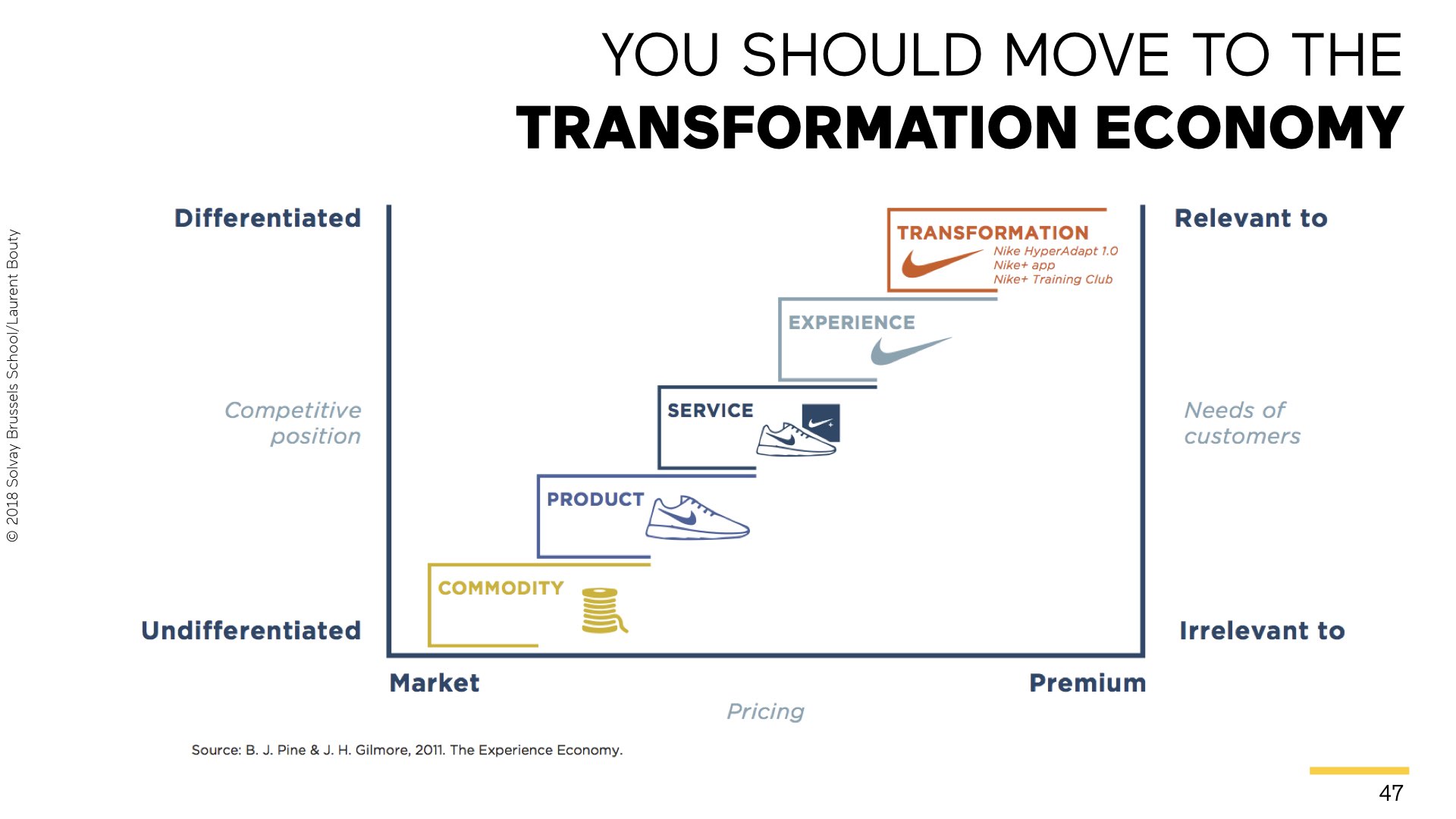
Before deciding on your own marketing strategy, you should understand what the market is currently proposing to buyers! Based on the work done by Pine and Gilmore (HBR, The experience economy), we can identified 5 different types of offer:
Commodity: Buyers cannot differentiate between offers. It is often referred as commodity. The cheapest takes it all. I buy it because I need this (benzine, sugar, flour, …).
Product: Buyers have multiple offers that differentiate themselves on features (more of that, less of this, …) that can even create emotional differences for the buyer (make me younger, smarter, …). This is what we where and still use to see for fast moving consumer goods (chocolate, drinks, …) even if some brands are trying to elevate their product to experience by organising multiple stages (think about RedBull). I buy it because i use it.
Service: Buyers receive a service in addition to the product they bought. Competitors differentiate themselves with these services (after-sales, analytics, …). I buy it because I need it and they help me using it.
Experience: Buyers are going through stages which are personal and potentially sensational. Products and services becomes commodities (we can find similar offer everywhere). Competitors differentiate themselves with experience (before, during and after purchase). Most of the companies are trying to build experience but few are really successful to achieve long term sustainable differentiation on this. I enjoy buying and using it and it is the reason why I bought it.
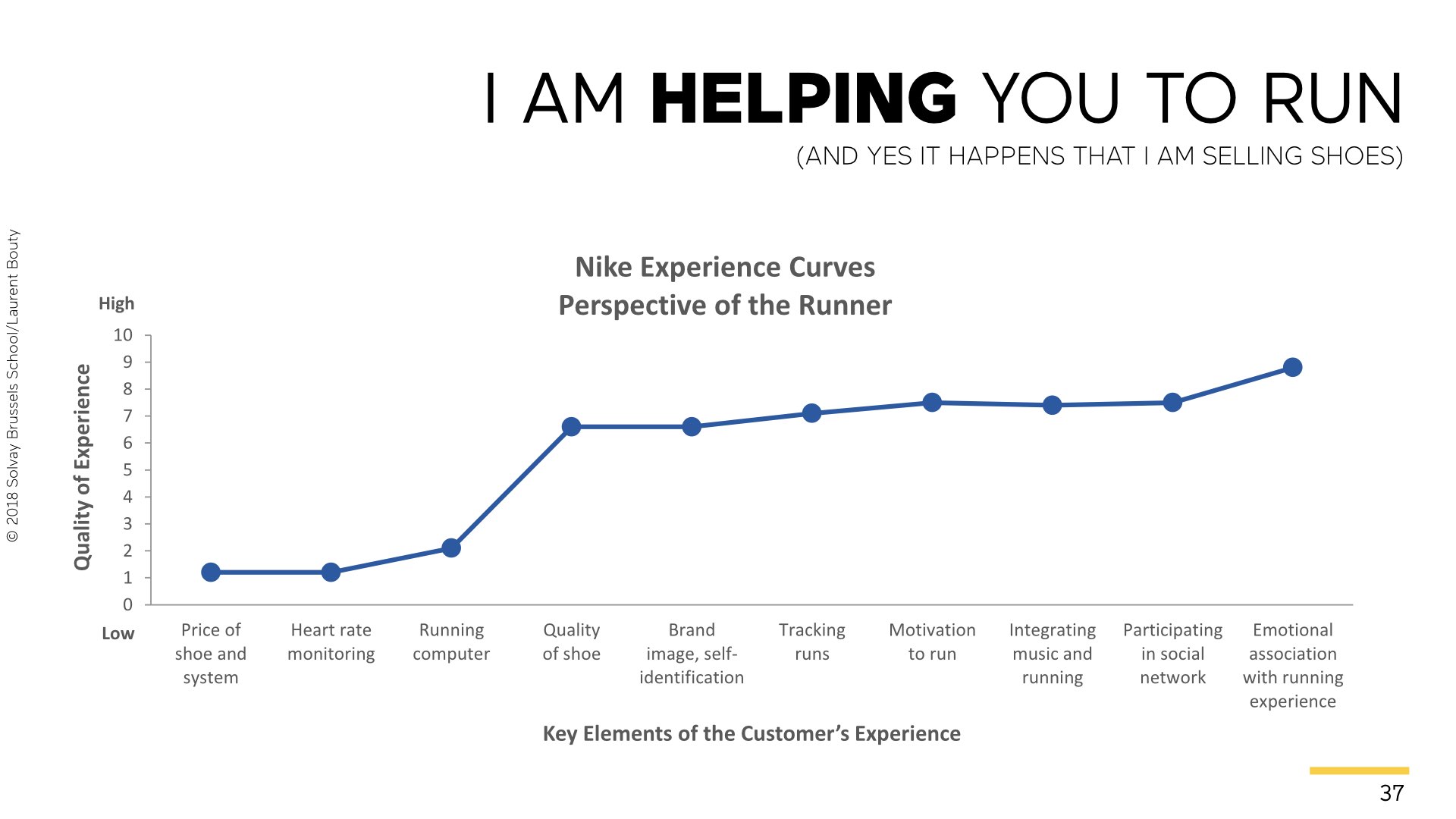
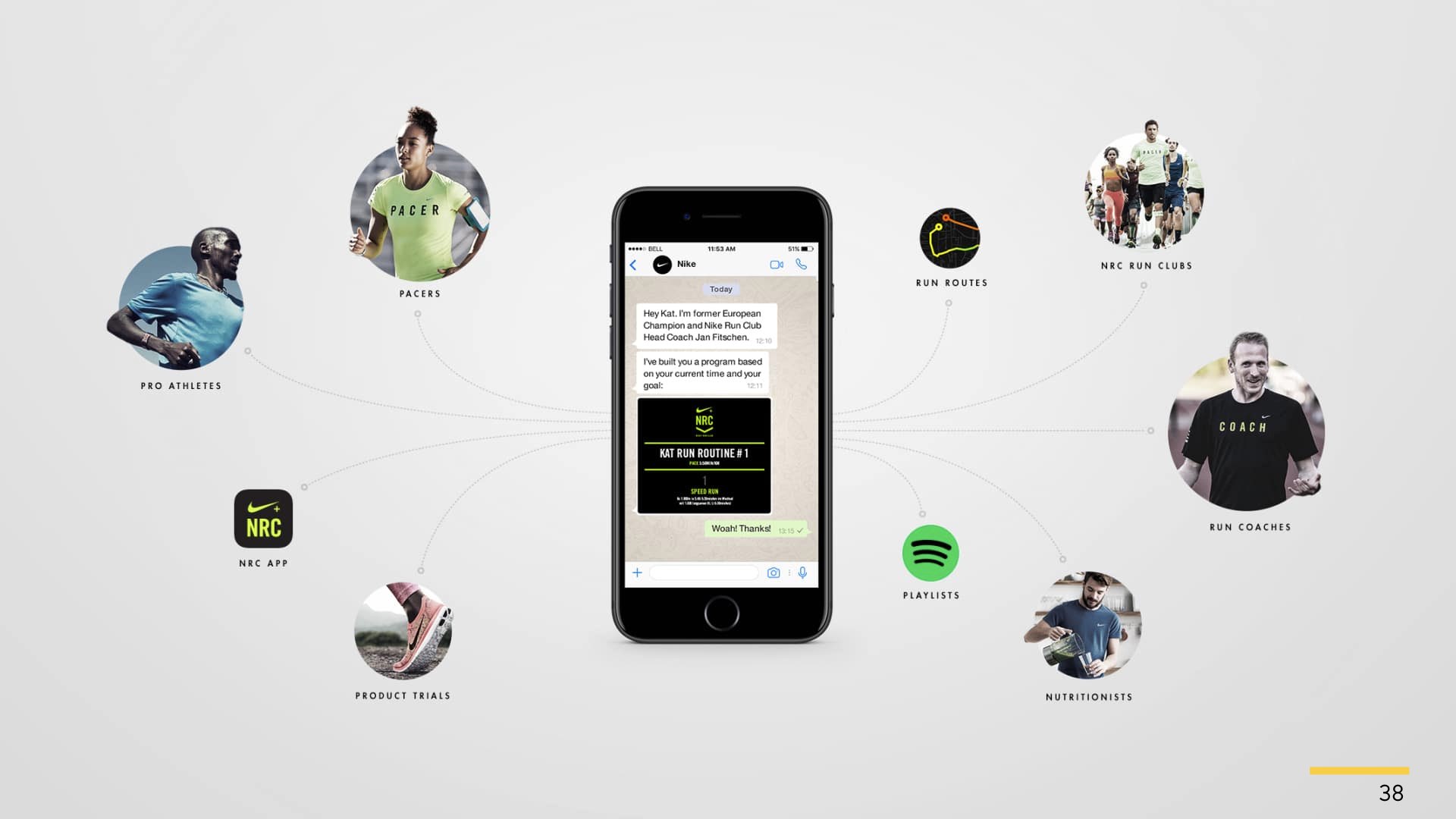
Transformational: Experiences are elevated from mere enjoyment to actual personal transformation. Buyers are looking to be different after the purchase and use of it. I am not buying running shoes, I become a runner! I buy it because it helps me to become someone different.
What does it mean for the Marketing Canvas Method?
When you analyse the context, just define where the market is today. The higher the market is on this curve, the higher the economic value is. When looking at your context (please use Market cards):
Identify where your market is on the curve (1-5)
Identify if one competitor is trying to move upward (game changer, challenger)?
Identify where the market is on the product life cycle curve (Introduction to Decline)?
Curious
More on the method here
Buy our cards and discover our templates for your workshop here

Le Marché dans le Marketing Canvas
Dans l’enthousiasme de travailler sur sa stratégie marketing, on se précipite souvent et oublie l’importance de ce que je considère comme la première étape: la compréhension du marché dans lequel nous allons opérer (startup) ou nous opérons déjà (entreprise existante). Il y a 3 questions importantes à se poser lorsqu’on analyse le marché. C’est questions sont: …

Marketing Strategy Design Cards
Dans l’enthousiasme de travailler sur sa stratégie marketing, on se précipite souvent et oublie l’importance de ce que je considère comme la première étape: la compréhension du marché dans lequel nous allons opérer (startup) ou nous opérons déjà (entreprise existante).
Les questions qu’il faut se poser sont les suivantes:
Comment définir le marché?
Comment mesurer le marché?
Comment qualifier le marché?
Comment définir le marché?
Bien que la question puisse paraître simple et évidente, elle ne l’est pas.
Petit exemple: dans quel marché TESLA a-t-il décidé de se lancer avec son modèle S? La majorité des voitures électriques avant TESLA se situait dans un marché d’acheteurs urbains avec des petits déplacements. TESLA a privilégié le marché du luxe et plus particulièrement le marché des voitures sportives luxueuses dont la référence est … Porsche. En choisissant le marché, certaines constantes sont fixées telles que: le prix moyen (100k€ pour une voiture de sport de luxe) ou certaines caractéristiques clés du marché (performance, design, vitesse, …).
Comme illustré dans mon exemple, le marché conditionne certaines hypothèses de départ. On peut bien sur être un game changer et redéfinir ces règles toutefois elles restent pour l’acheteur un cadre de référence qu’il va utilisé pour comparer votre produit (lorsque vous louez une chambre chez AirbnB, vous comparez votre achat à une location dans un hotel, un gite ou un bed & breakfast).
Bien qu’il existe de nombreuses définitions d’un marché, celle que je préfère vient de Bill Aulet [1]. Il définit le marché en 3 règles:
Les clients dans le marché achètent tous des produits similaires.
Les clients dans le marché ont le même cycle d’achat et s’attendent à ce que les produits fournissent de la valeur d’une façon similaire.
Il y a du bouche à oreille entre les clients d’un même marché.
La première question est donc: Dans quel marché comptez-vous opérer?
Comment mesurer le marché?
Après avoir défini le marché dans le lequel vous allez opérer, il faut essayer de le mesurer afin de définir son potentiel et votre ambition. Une méthode provenant encore de l’entrepreneuriat s’appelle le TAM (pour Total Available Market), SAM (pour Serviceable Available Market) et SOM (Serviceable Obtainable Market) .
Derrière ces acronymes, ce cache des concepts assez simples:
Le TAM correspond au marché total possible. Si on prend l’exemple de Airbnb cela correspondrait à toutes les locations de chambres dans le monde pour une année.
le SAM correspond à la partie du marché où vous êtes actif (ou allez être actif si vous lancer votre activité). Le passage du TAM au SAM dépend de vos critères: géographique (là où vous êtes actifs), type de produit (ioS ou Android, premium ou cost), ...
le SOM est votre objectif en part de marché. Combien de % du SAM voulez vous obtenir?
la seconde question est donc: quelle est la taille du marché ?
Comment qualifier le marché?
Finalement, il vous reste à qualifier le marché. Qu’est ce que cela veut dire? Le marché a une vie et est dynamique comme un organisme vivant (il apparaît, grandit, se stabilise puis décline). Si vous ne comprenez pas l’etat du marché SAM dans lequel vous entrez, vous risquez de mal définir votre stratégie commerciale (le volume des ventes diffère entre chaque état).

Source: Wikipedia
La description ci-dessous provient de Wikipedia (https://fr.wikipedia.org/wiki/Cycle_de_vie_(commerce))
Stade de lancement: Introduction du produit sur le marché
coûts élevés de production et de développement
faible volume de vente
pertes pour l'entreprise
prix élevés
Stade de croissance
coûts réduits par les économies d'échelles
croissance importante des volumes de vente
profits croissants pour l'entreprise et marges élevées
prix assurant une large part de marché
début de simplification du marché: les grandes entreprises achètent les PME innovantes
Stade de maturité
marges réduites, disparition des compétiteurs incapables d'économies d'échelle (absorption, retrait, faillite, oligopoles, stabilisation des parts de marché)coûts de production faibles, mais coûts de promotion commerciale et de services à la clientèle élevés
maximum des volumes de vente
forte sensibilité à la conjoncture
profits encore très importants mais stagnants
fortes segmentations : les gammes de produits se sont diversifiées pour répondre à une demande exigeante
tendance à la baisse des prix en raison de la concurrence
anticipation de produits de remplacement par la recherche et le développement
Stade de déclin
diminution des ventes
diminution des profits
diminution des prix
apparition de produits de remplacement
La dernière question est: quel est l’état du marché ?
Conclusion
En répondant à ces 3 questions clairement, vous aurez plus facile lorsque vous définirez votre stratégie commerciale. L’étape suivante dans l’exercice du Marketing Canvas est de définir la compétition.
Référence
Bill Aulet, Disciplined Entrepreneurship : 24 Steps to a Successful Startup, John Wiley & Sons (30 août 2013)
Cycle de vie, Wikipedia

6 simple principles for your marketing strategy
6 simple principles that could help you when working on your Marketing Strategy. Some companies are trying to be perfect before moving to step 4. While we should always do our best at step 1-3, I believe the most important are 4-6.
6 simple principles that could help you when working on your Marketing Strategy
Goal: You should always start with a quantitative goal
Target: Who is your ideal buyer/user/persona you will be targeting with your action?
Action: Define the action you should do to for achieving your goal with your target
Execution & measure: Build, launch and measure your action.
Corrective action: fix the original action based on what you have learned from the execution.
Amplification (scaling): when you have fixed the action, you can scale it (growth hacking philosophy) and reach your goal.
Some companies are trying to be perfect before moving to step 4. While we should always do our best at step 1-3, I believe the most important are 4-6. Time is key and if you are agile, work in sprint and define a time limit for steps 1-3.

Marketing Strategy Execution - How to start a movement?
Most of the time, I am facing the situation where I need to engage people in executing the strategy. Easy to say but probably the most difficult part of being a CMO (make it happen).
Most of the time, I am facing the situation where I need to engage people in executing the strategy. Easy to say but probably the most difficult part of being a CMO (make it happen). One of my friend (@alainthys) showed me this video few years ago and it is so true!
When working on an innovative project or on a new commercial activity, who might be your first follower? Your existing client (a co-creation model)? Your sponsor (classical Corporate Model)? Your peers (collaborative model)? Anyone, that trust your idea?
So my question is: have you found your first follower? could you tell us what is his/her usual profile?
source: https://www.ted.com/talks/derek_sivers_how_to_start_a_movement?language=en

Marketing Strategy for Millennials from Marketing Cloud
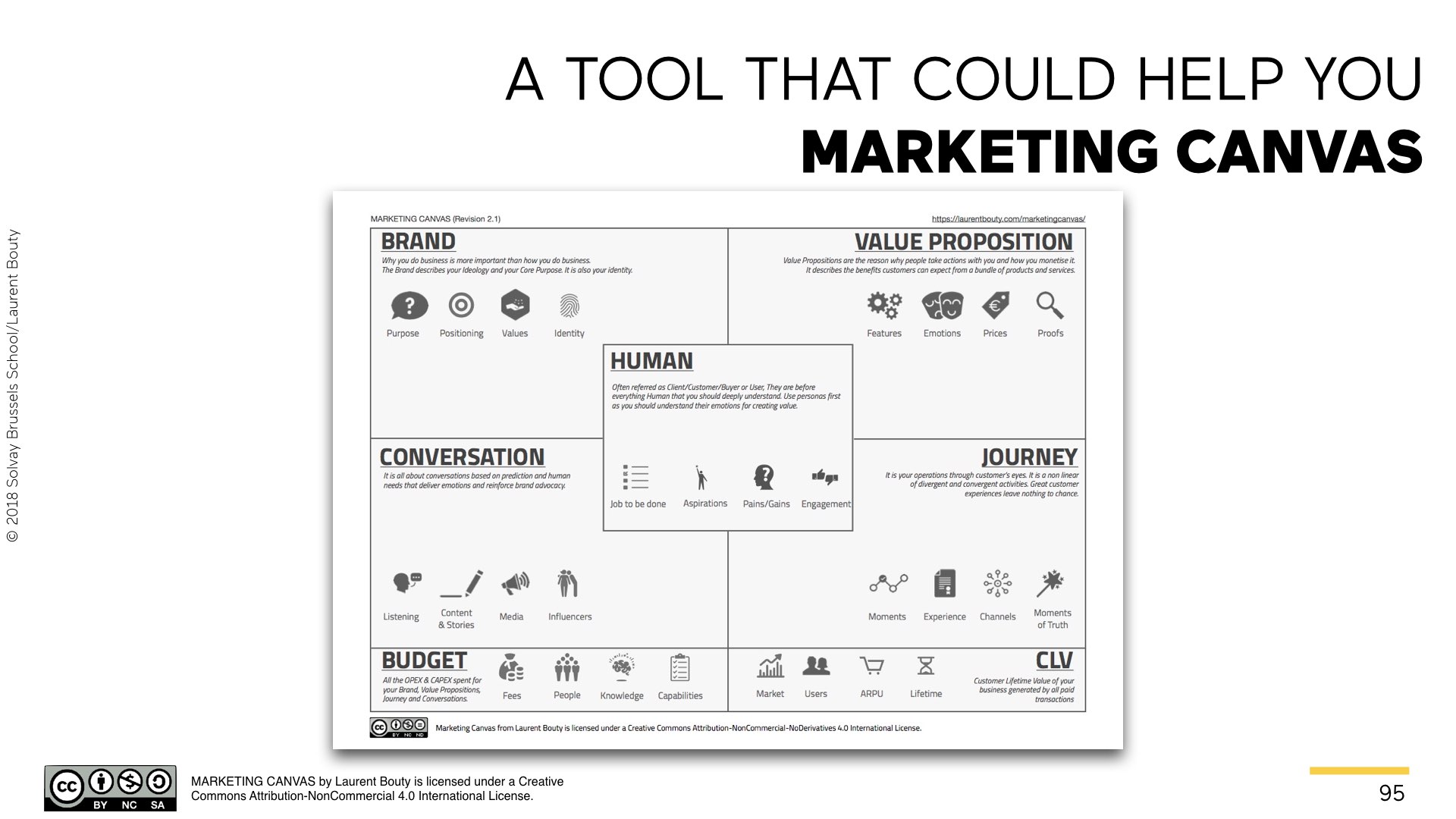
Interesting Infographic from Marketing Cloud proposing 5 steps to creating your Marketing Strategy for Millennials. As you might have noticed, I am advocating the use of the Marketing Canvas for designing your Marketing Strategy. Let's check whether these steps fit into the process?
Interesting Infographic from Marketing Cloud proposing 5 steps to creating your Marketing Strategy for Millennials. As you might have noticed, I am advocating the use of the Marketing Canvas for designing your Marketing Strategy. Let's check whether these steps fit into the process?
- Step 1 is definitely a no-brainer. Data and customer knowledge will help you to be very specific when discussing canvas. Dimensions like Humans (if you want to uncover key insights and customer preferences), Journey (if you want to design great customer experience), Value proposition (if you want to design the most relevant offers) and conversation (if you want to be at the right place, right time with the right subject) will help you.
- Step 2 is clearly identified in the canvas: Channel (in Journey), Content & Stories (Conversation), Media (Shared and Earned) and finally the global topic of conversations.
- Step 3 is also covered in Engagement (word of mouth), Influencers (Conversations), Proofs (Value Proposition) and Moment of Truth (Journey)
- Step 4 mentions that technology is key for millennials. It is true and it will influence preferred Channels (Journey), Media (Conversation) and Features (Value Proposition) but don't forget that Job To Be Done is why they engage with you and what problem they are trying to solve.
- Step 5 is all about your Purpose (Brand) and Listening (conversation). I am not a fan about education as I believe we don't educate customers but we engage them.
The conclusion is that the Marketing Canvas fits perfectly with these steps and can be applied for Millennials. Finally, I would like to mention that in the Budget dimensions, they are 2 important topics (capabilities and people) where you should invest for having the required tools and skills in your company if you want to do all of this.

More on Marketing Cloud: https://www.salesforce.com/products/marketing-cloud/best-practices/millenial-marketing-strategy/

3 Cs in a Digital World
Interesting article from Roland Berger Consultants about Sales in a Digital World. Their thesis is that you need to master 3 Cs if you want to have a voice in this new world:
- Develop the Customer Base: It is definitely in line with what I am preaching. You should not only focus on acquisition but also on stimulation and retention. The CLV dimension of the Marketing Canvas is telling you how much you perform versus your ambition;
- Orchestrate the Channel: I also agree but I would extend this to Orchestrate the Customer Journey as it is much broader than channel and it is integrating elements like Brand experience, touch-points, emotions and wow moments.
- Manage the complexity: it is maybe fluffy as notion. We all know that we should manage the complexity, the question is how should I do that. One possible answer is in the article when they discussed centralisation. I think the key element there is to automate your processes (BPM, scripting, algorithms, ...) in order to reduce the chaos and uncertainty. but don't forget to keep the human part.
Source: Roland Berger, Think Act, The digital future of B2B sales
New Business Models in a Digital Future
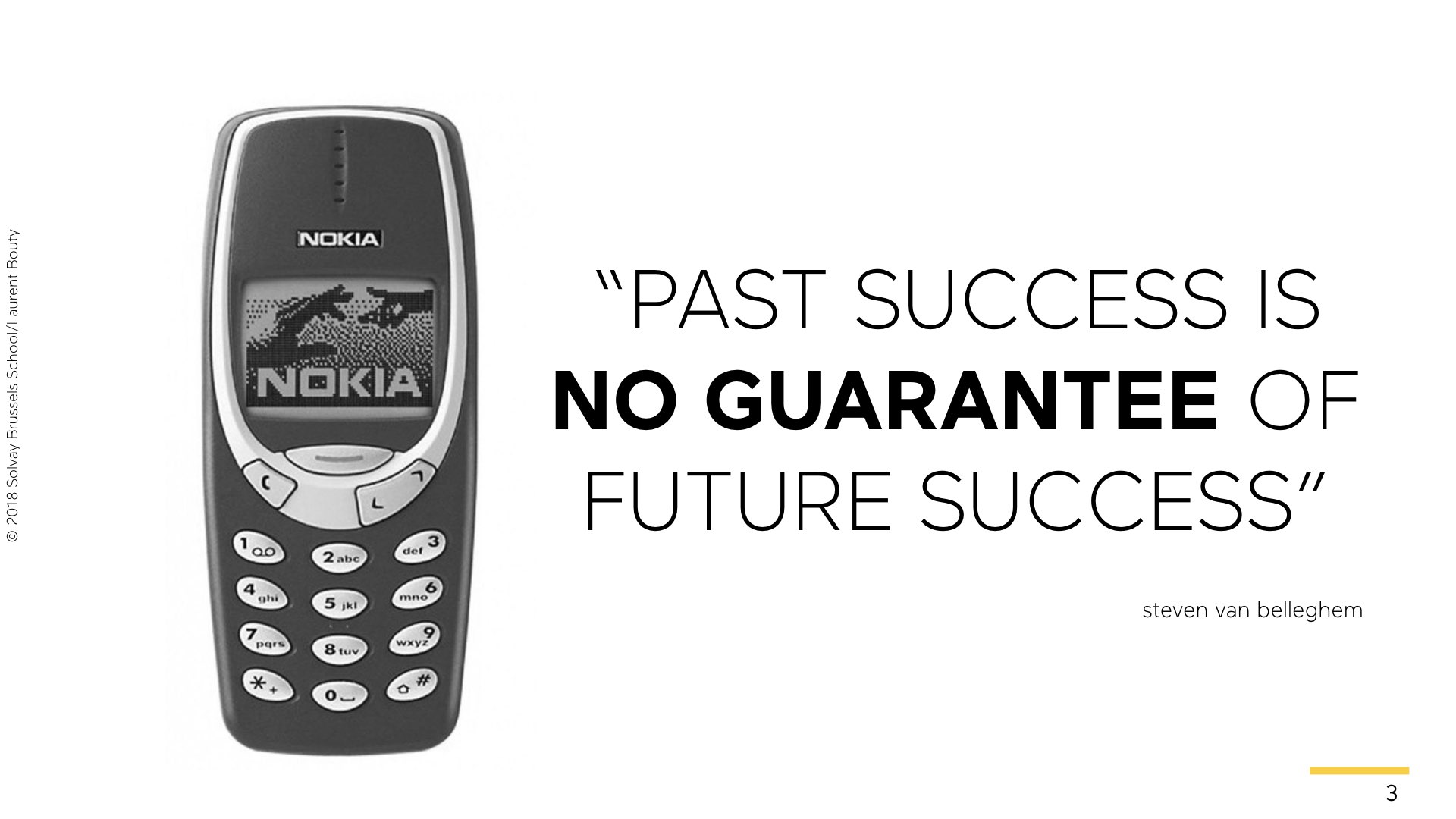
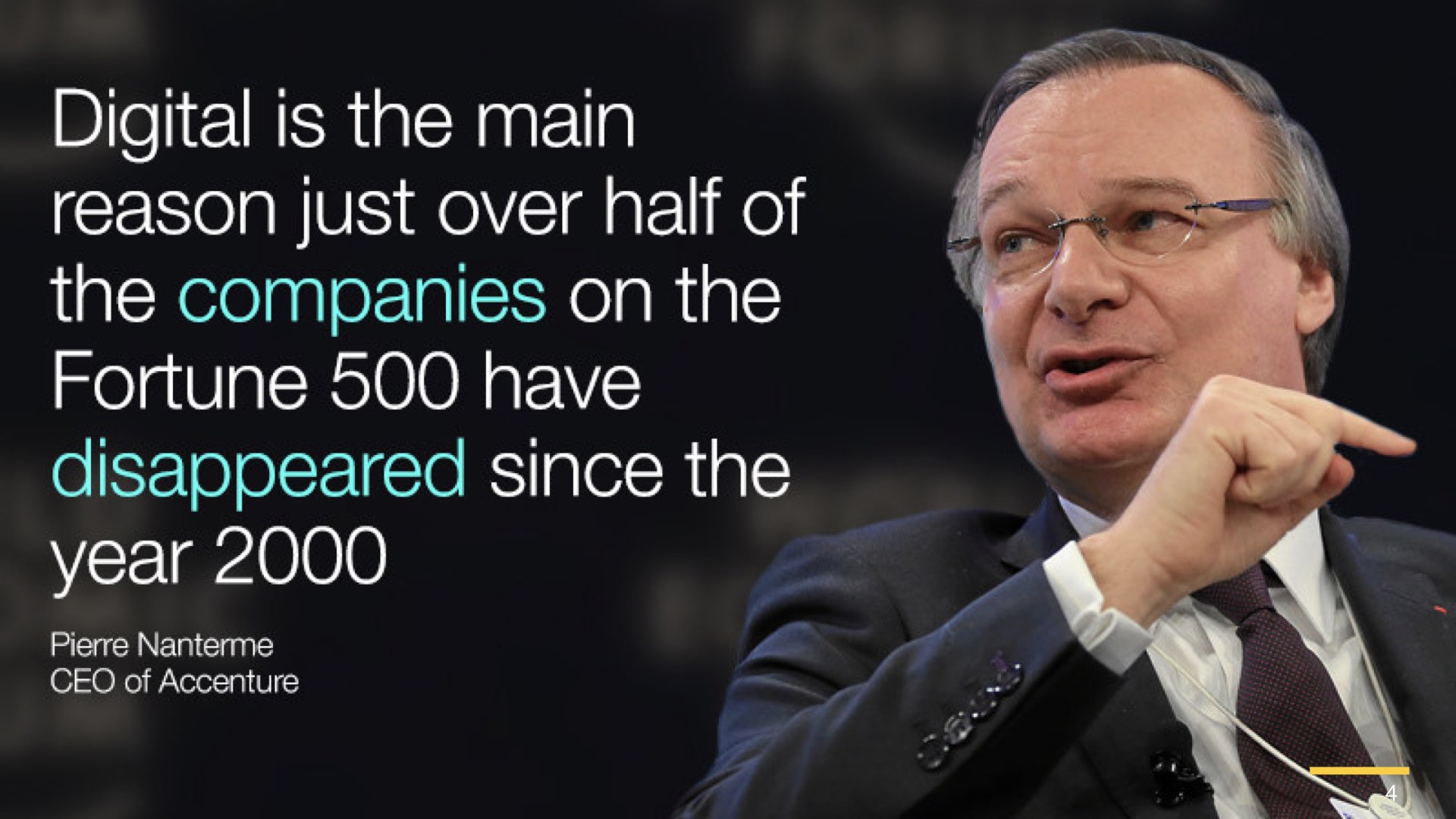
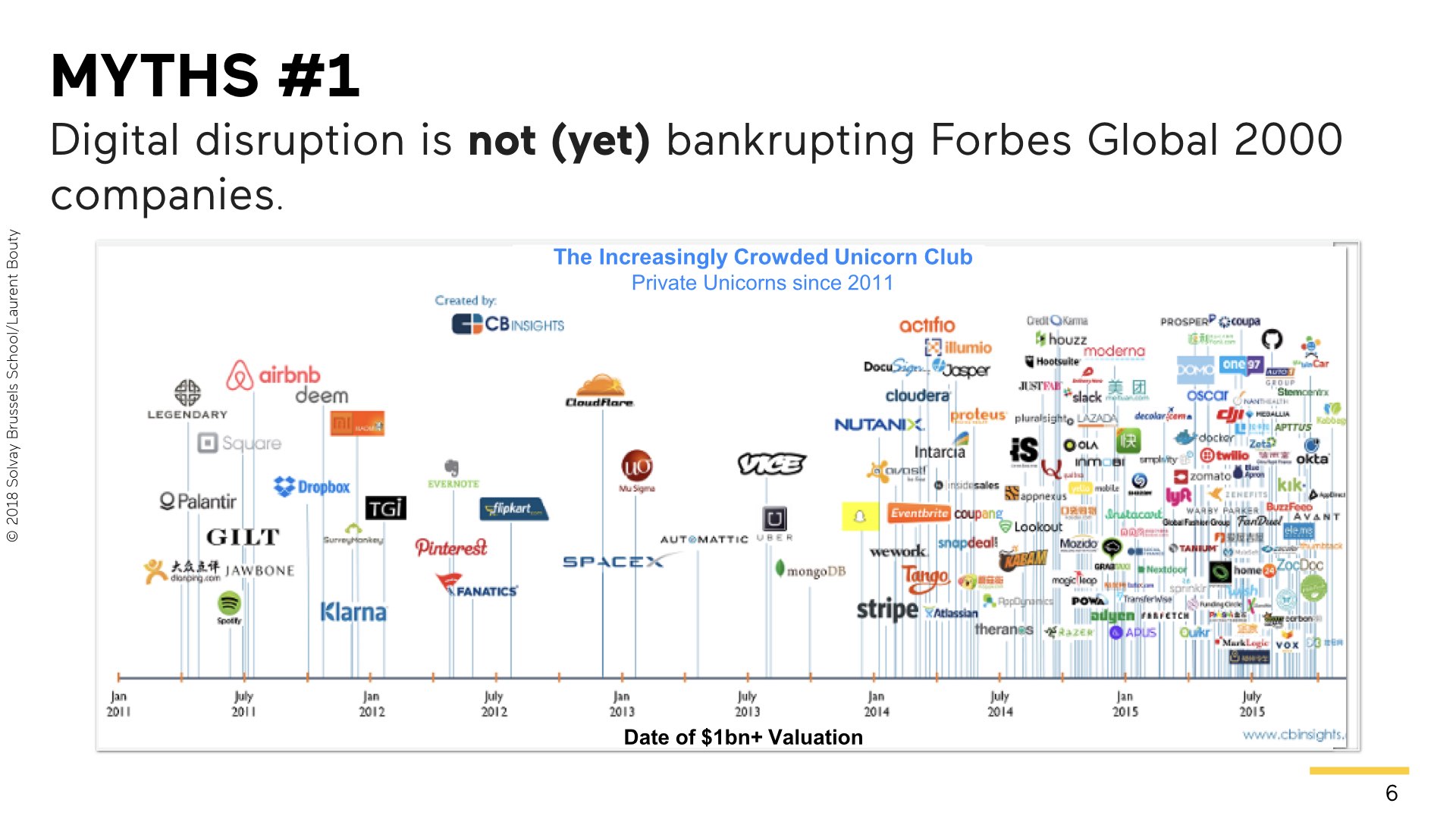
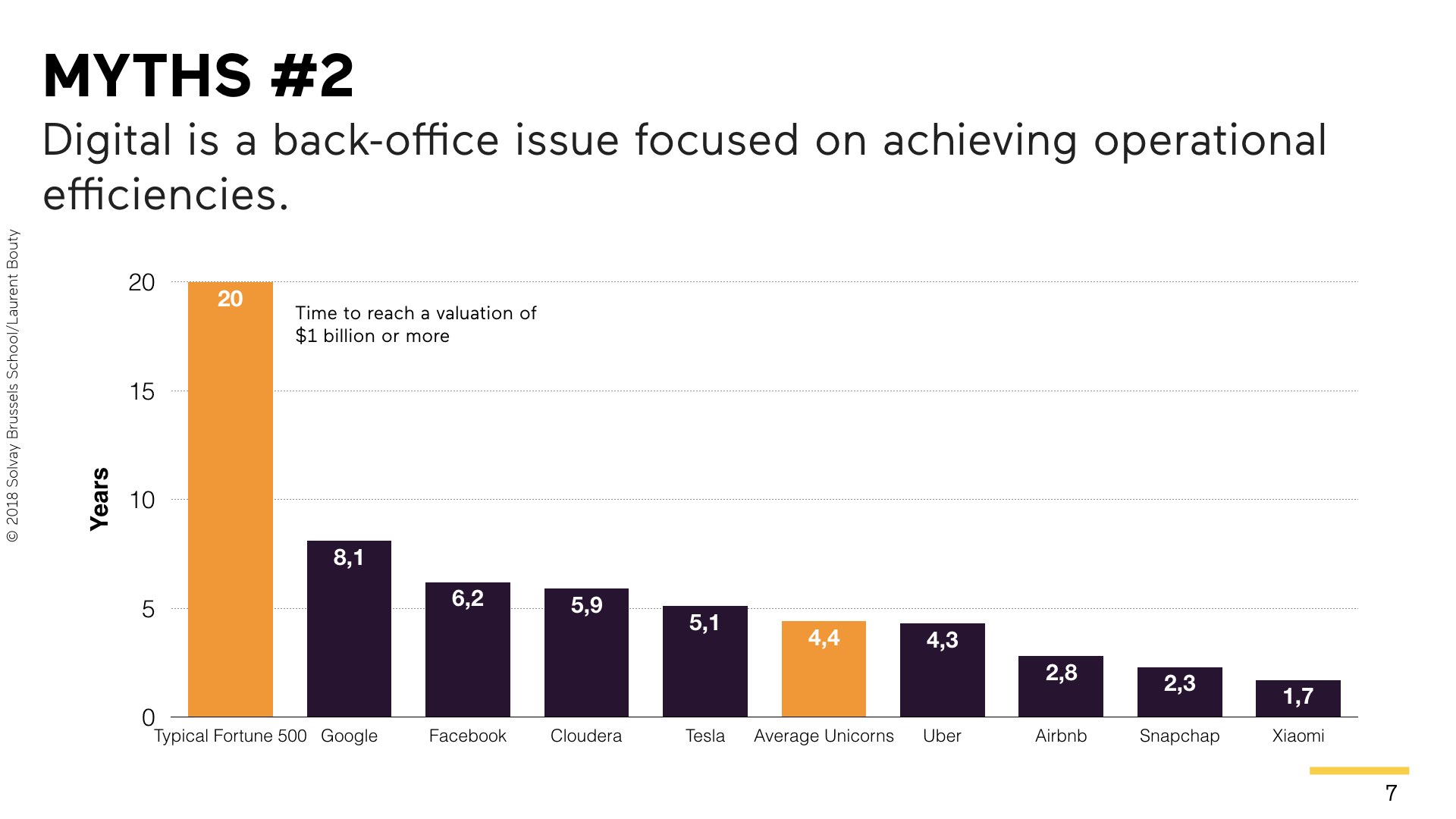
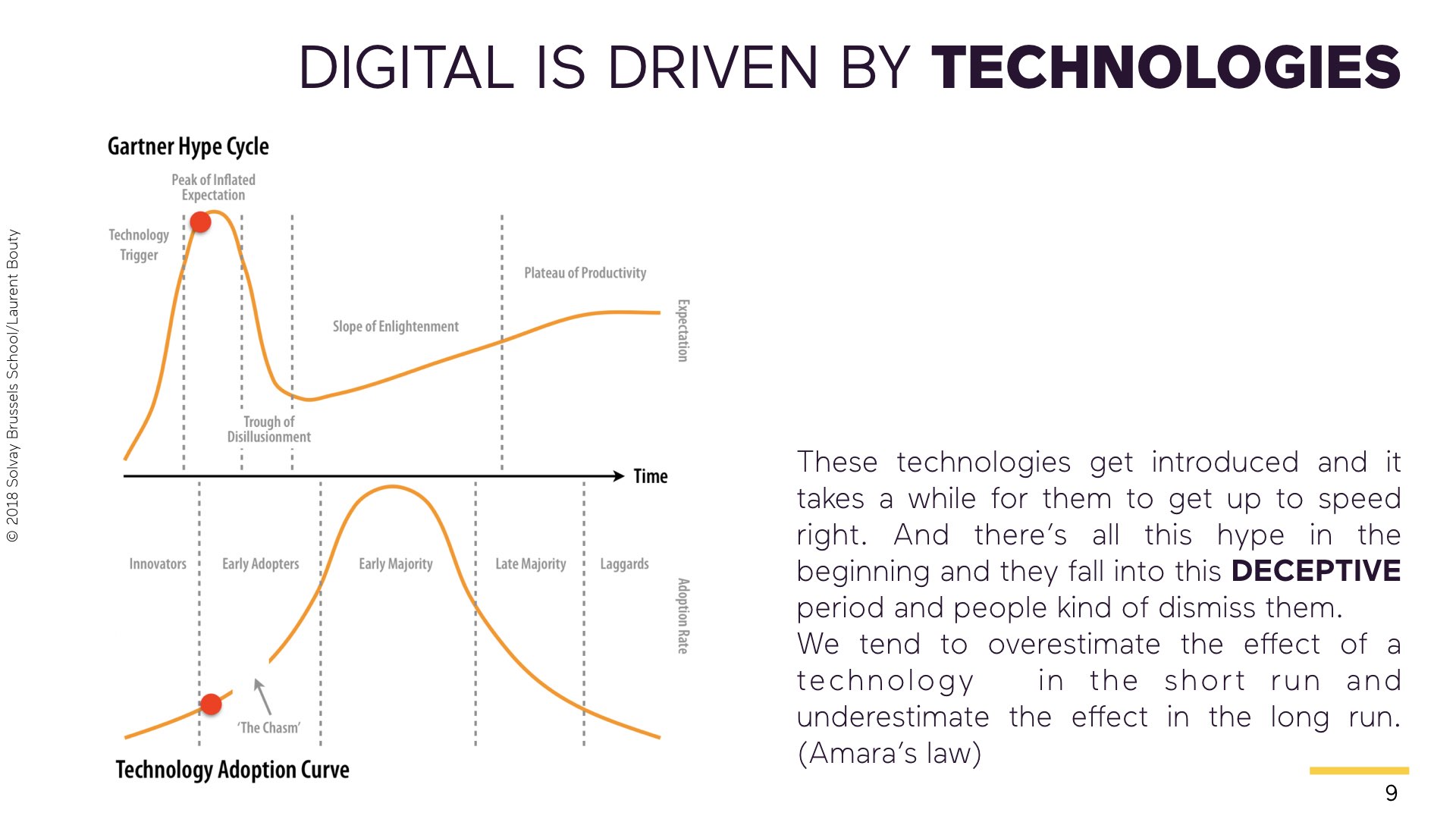
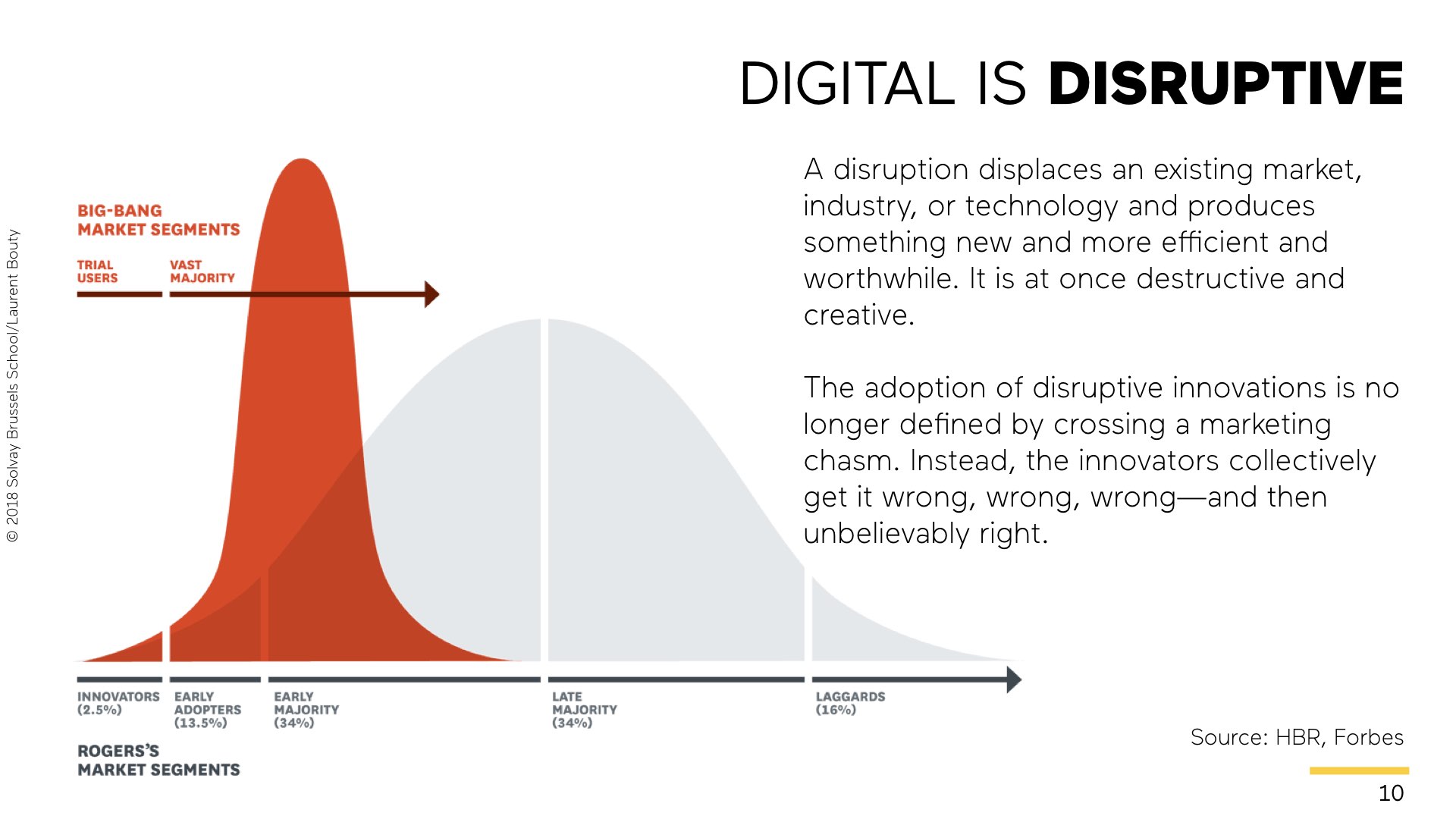
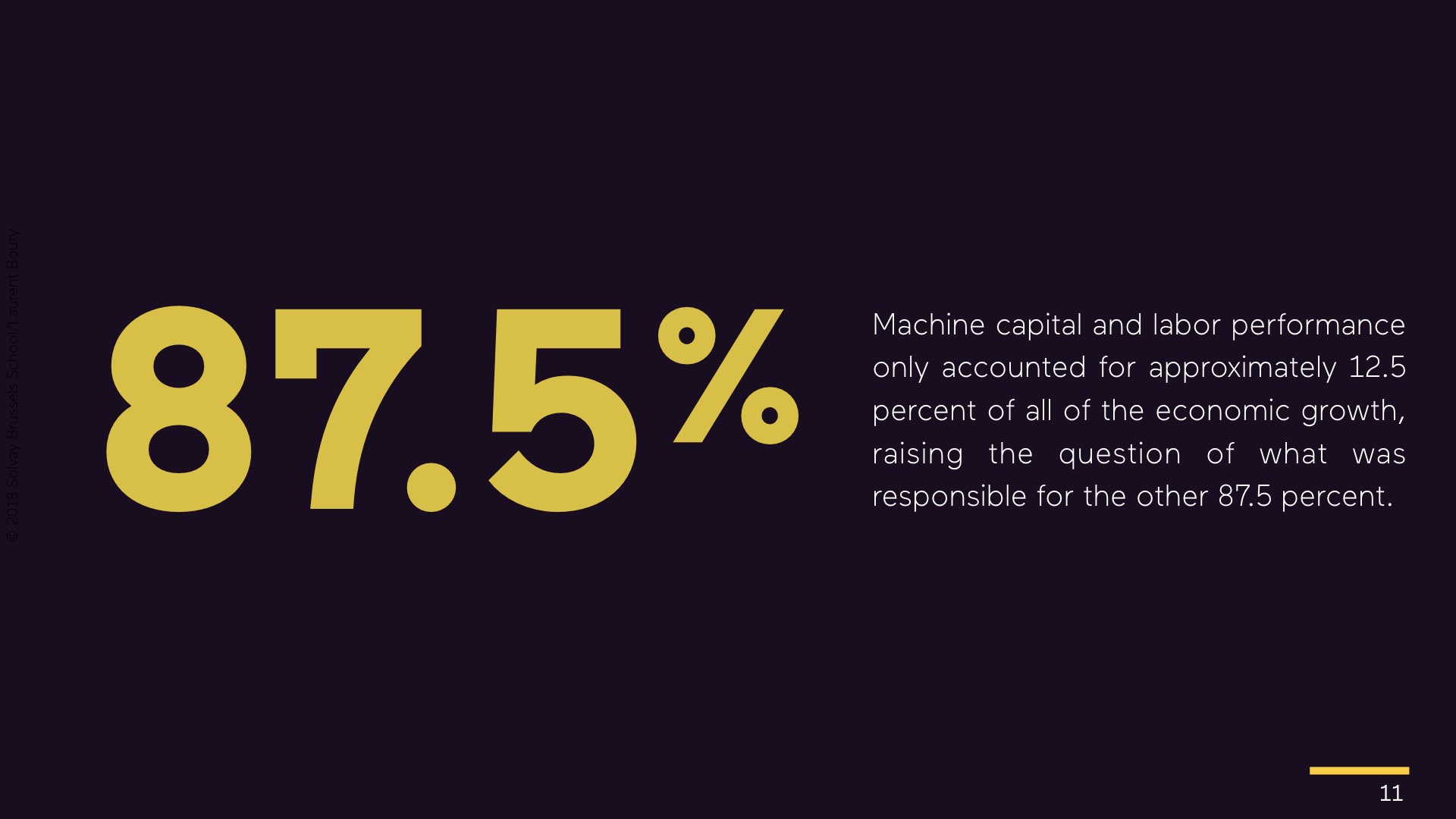
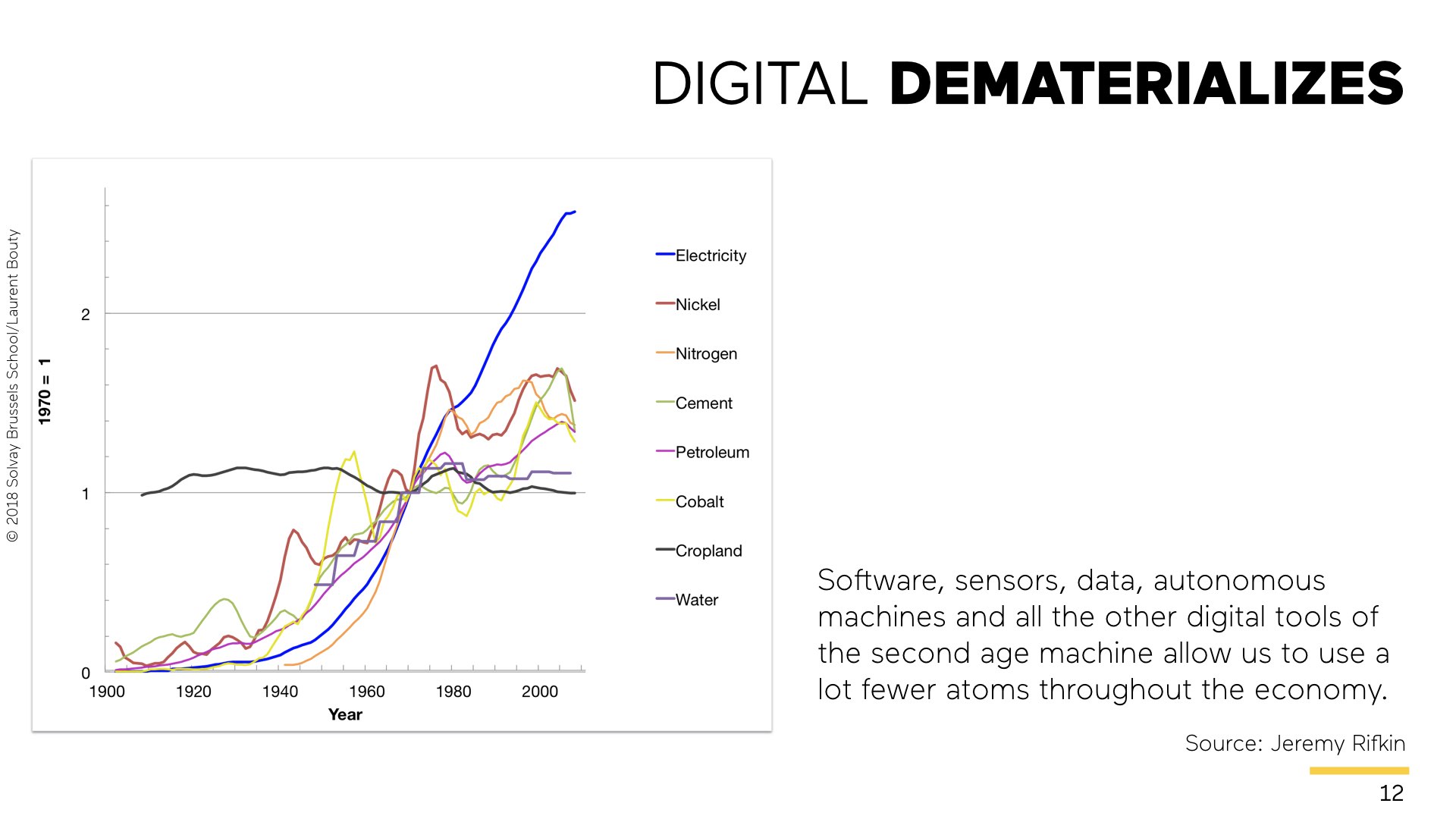
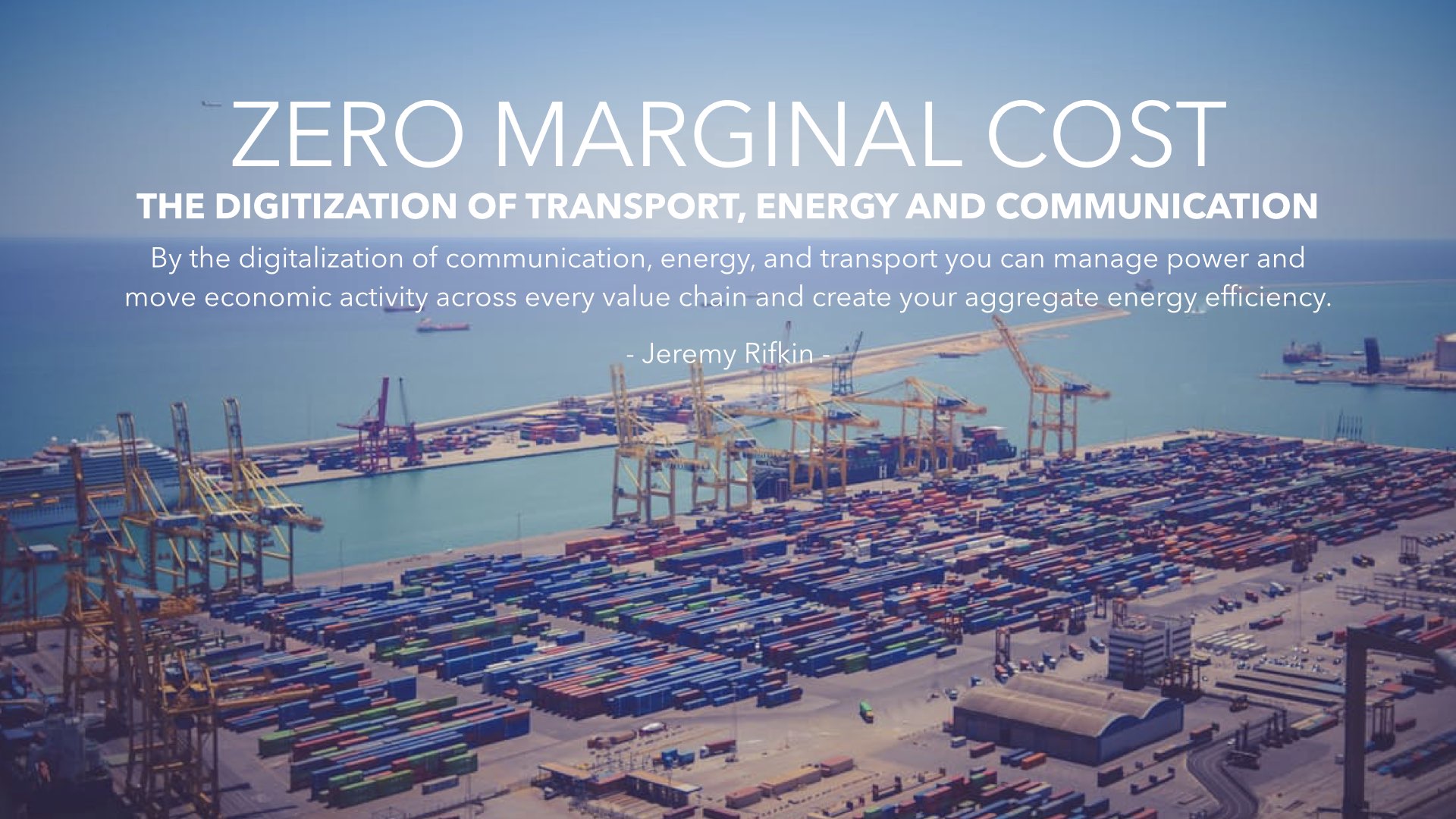
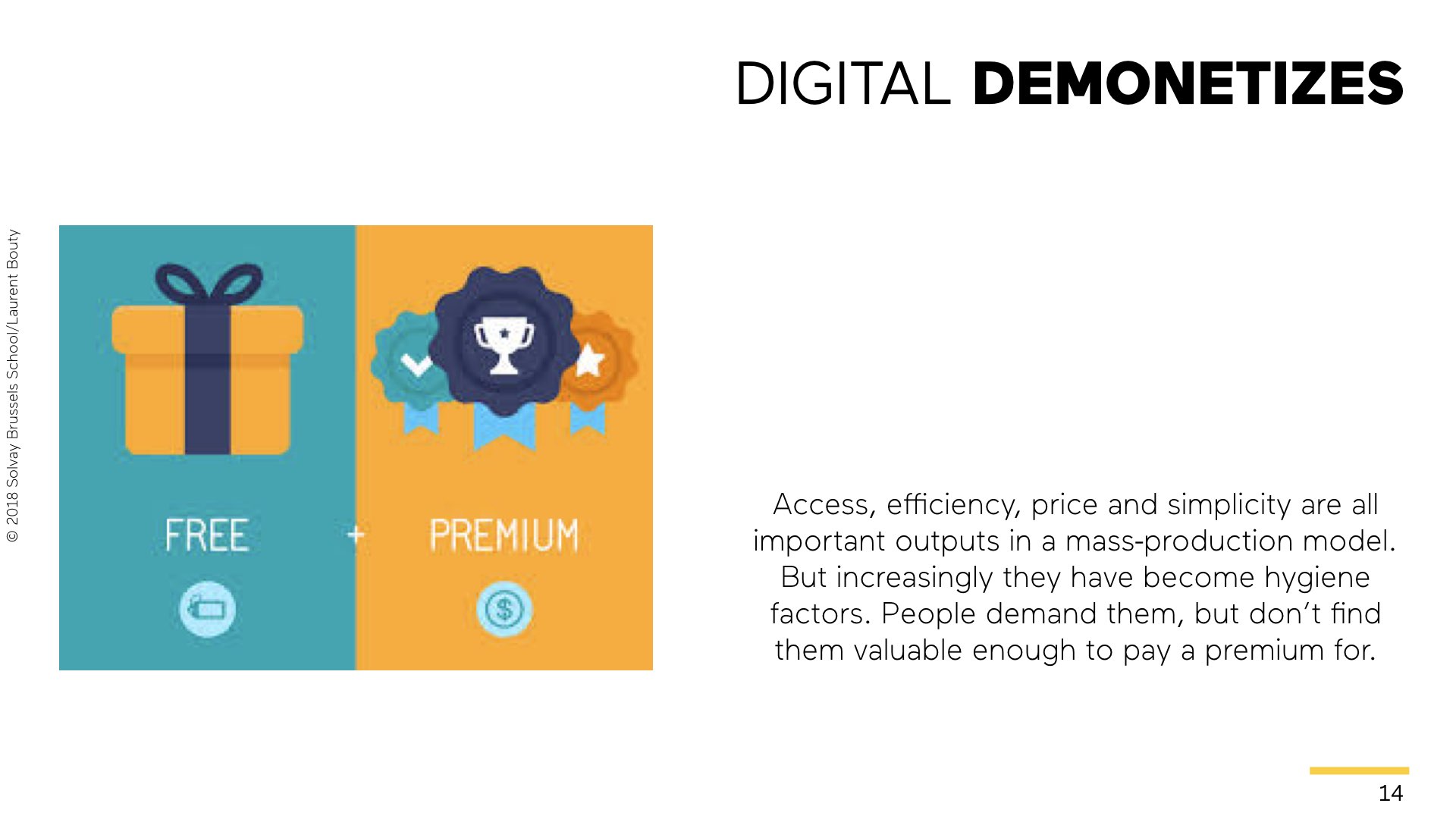
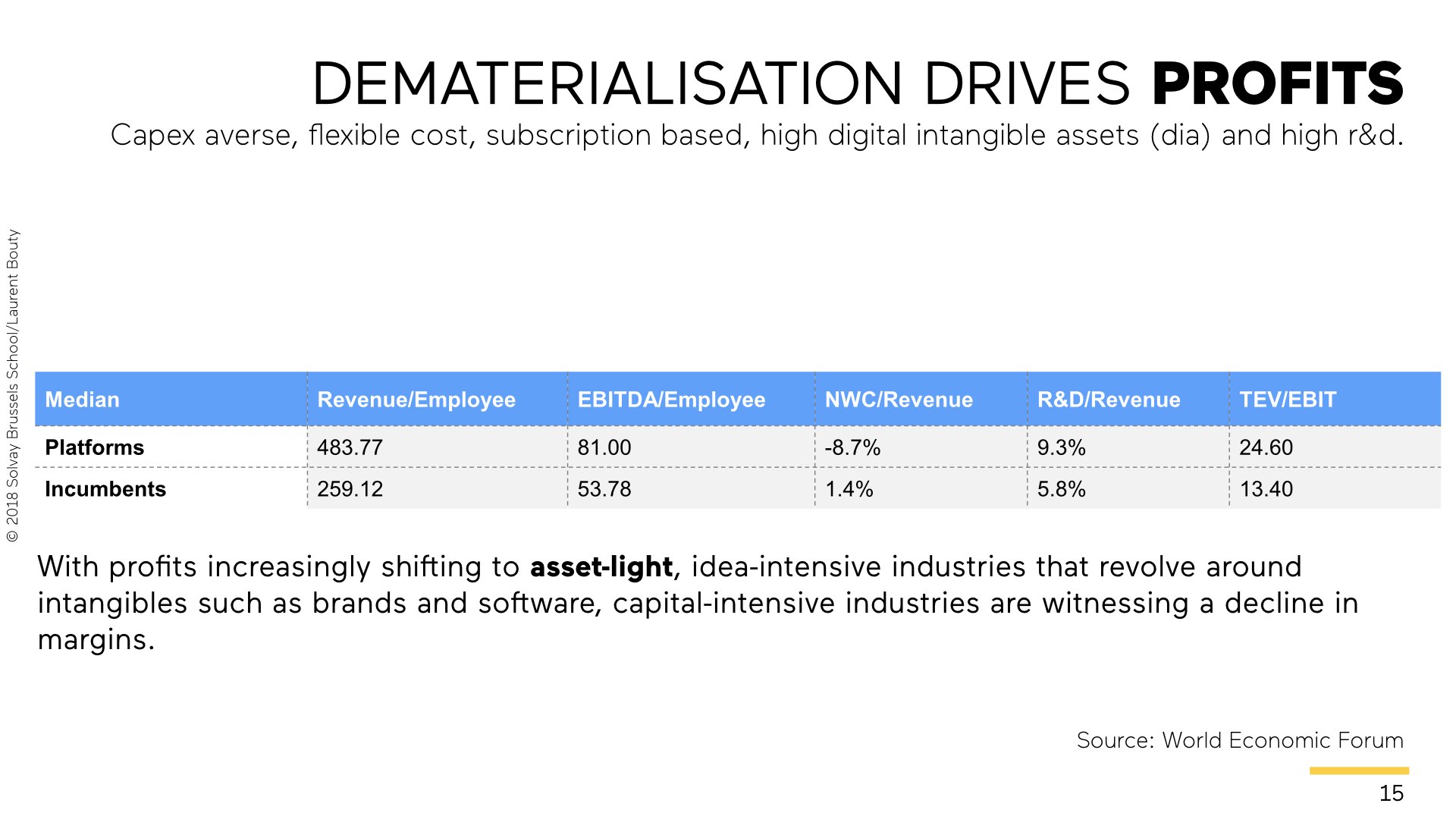
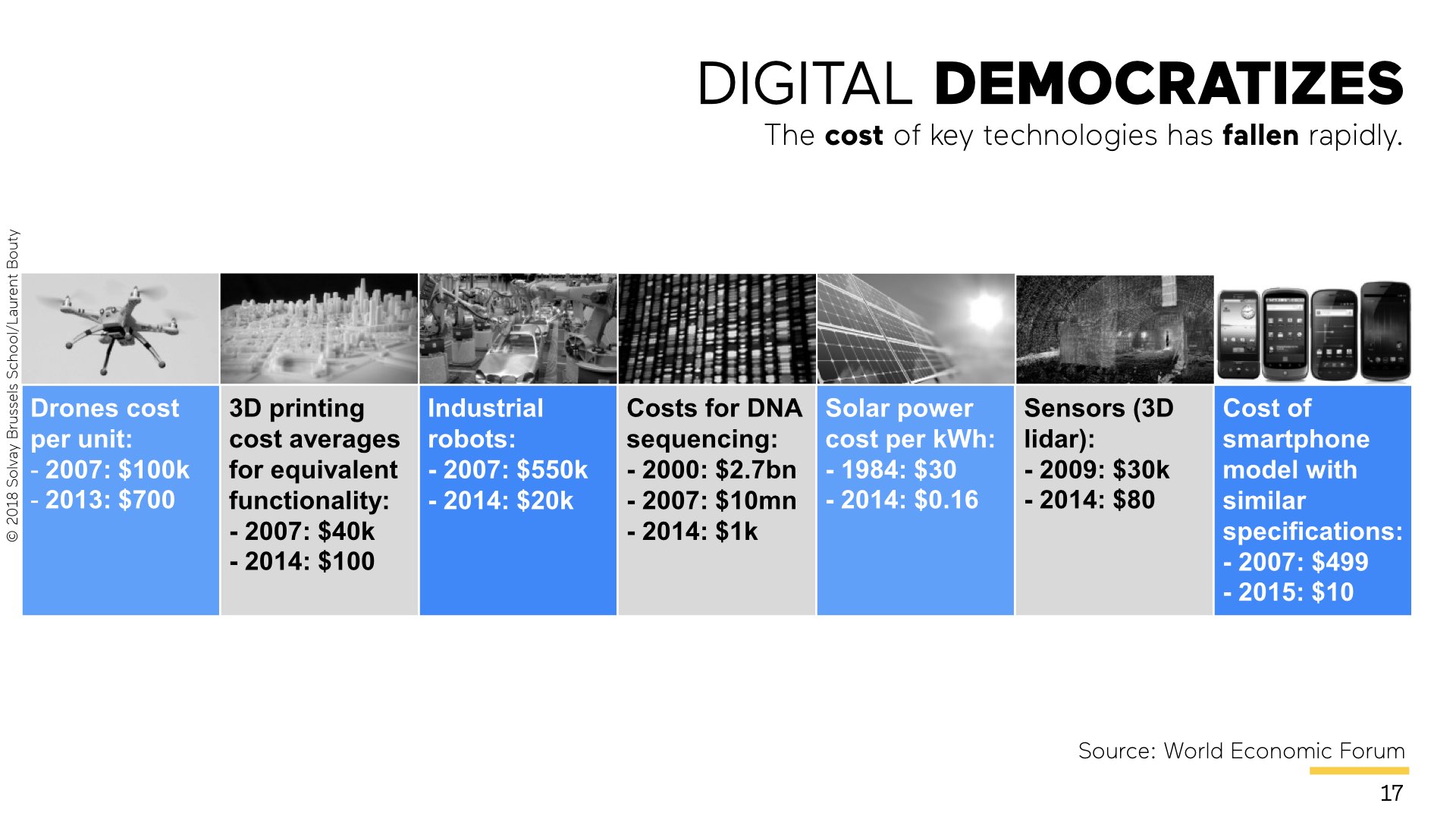
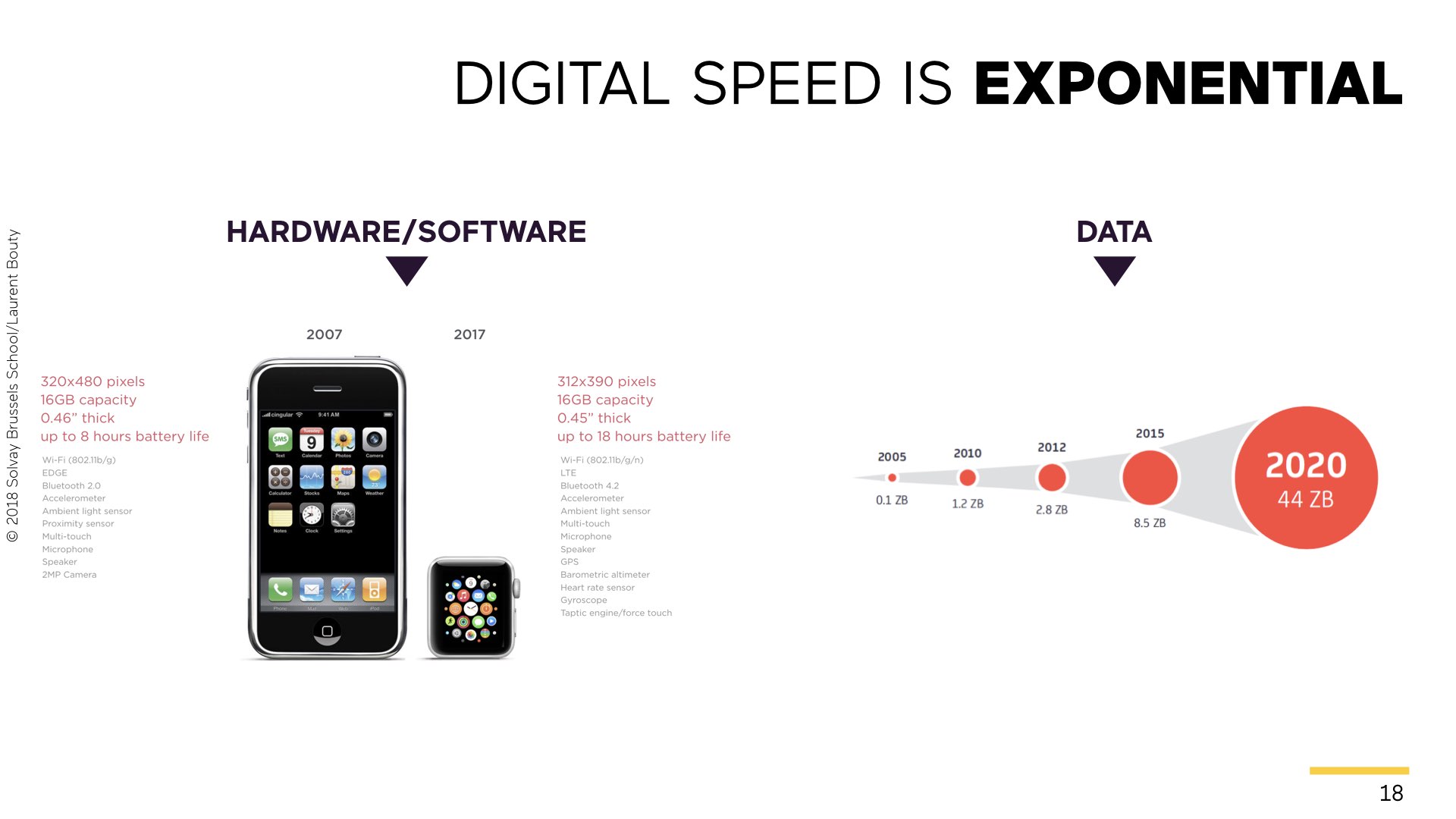
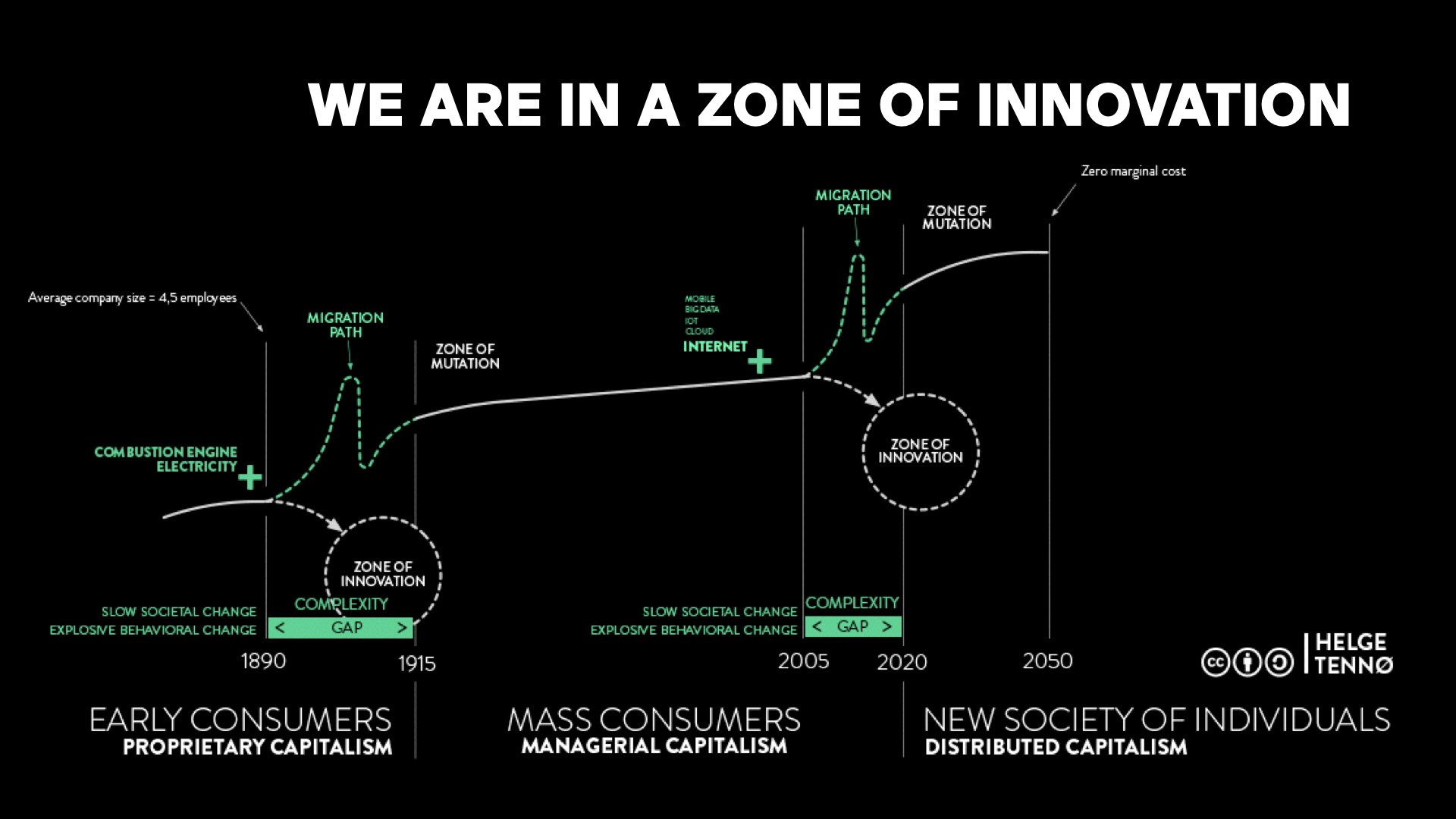
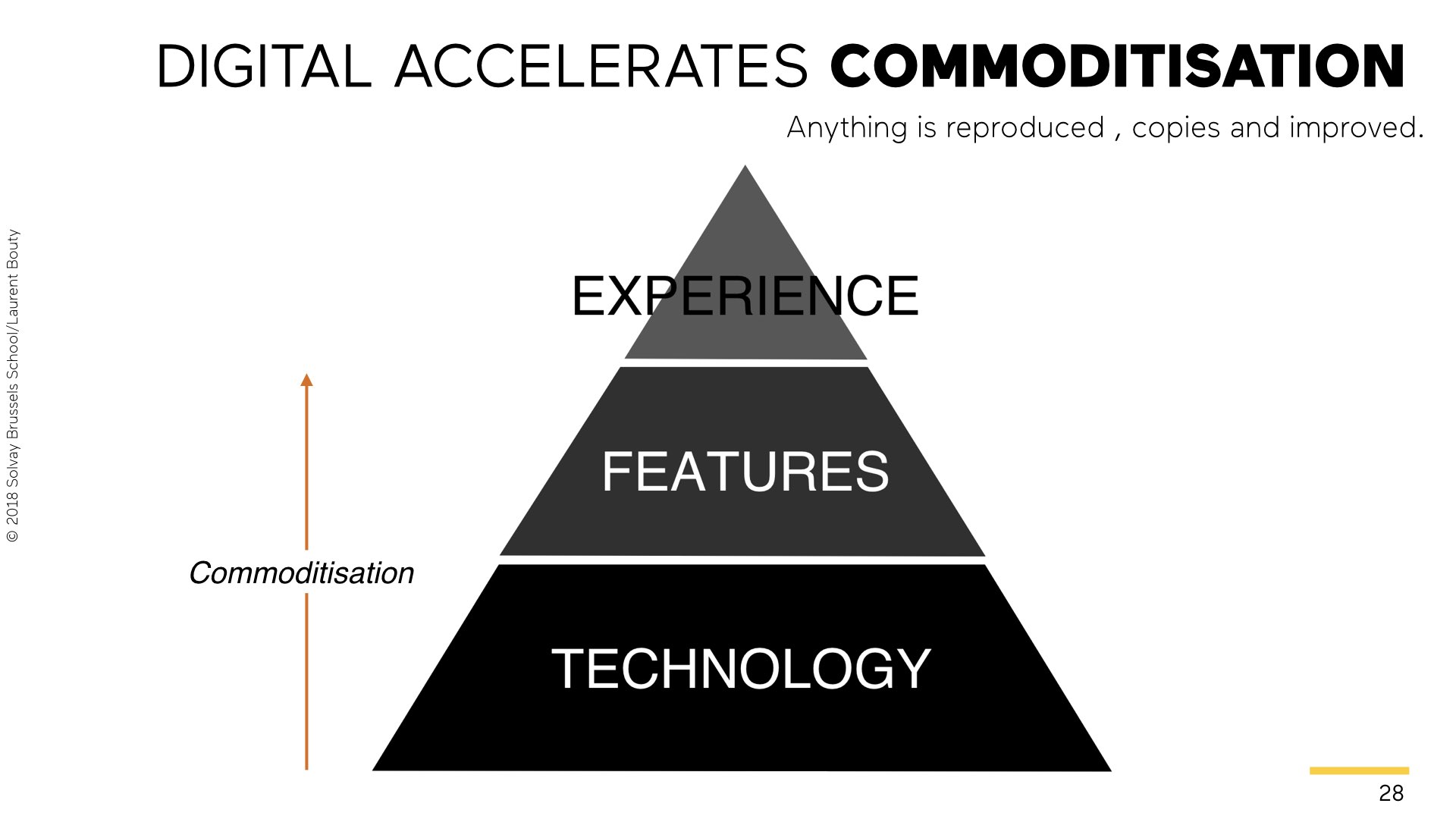
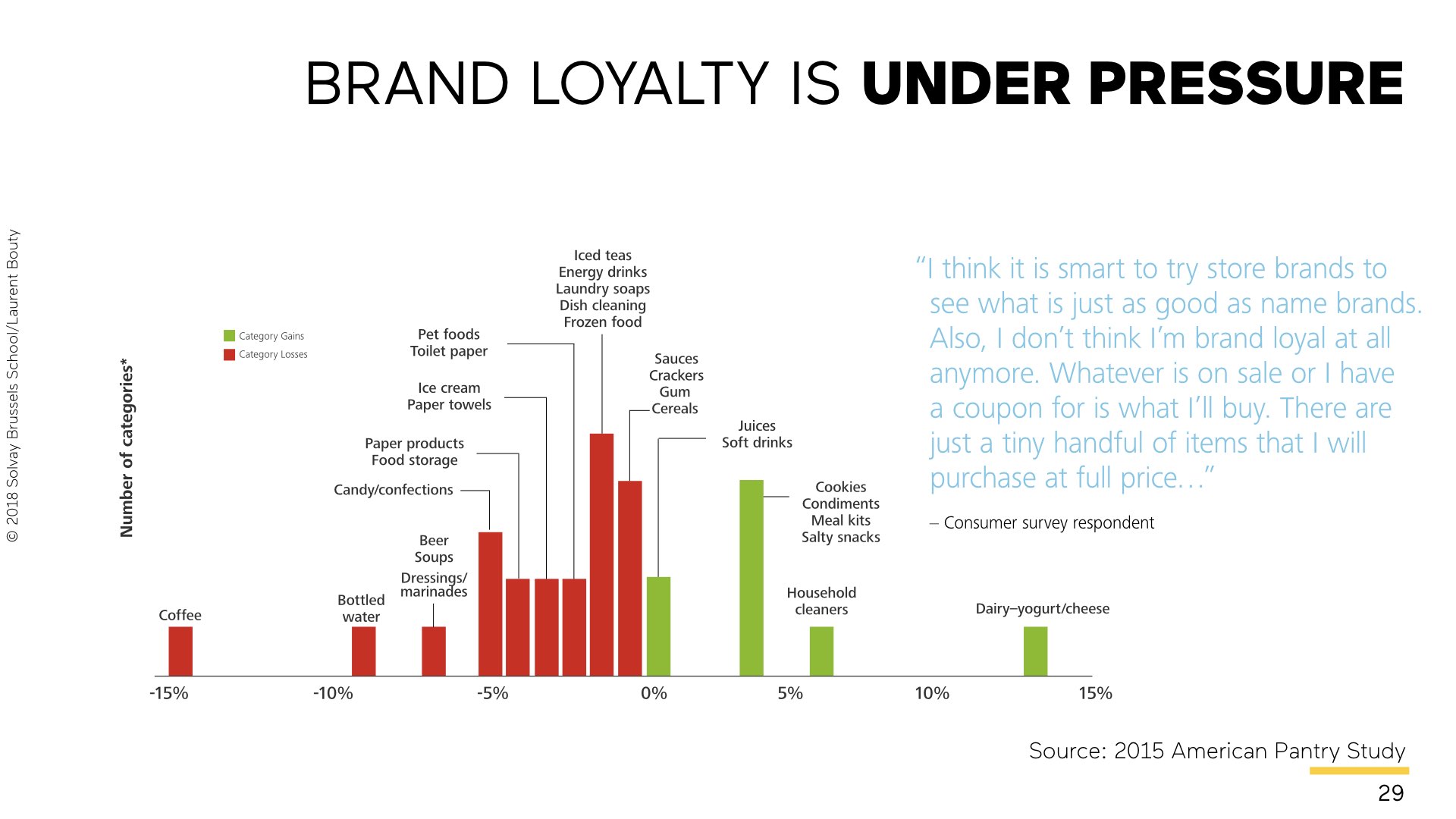
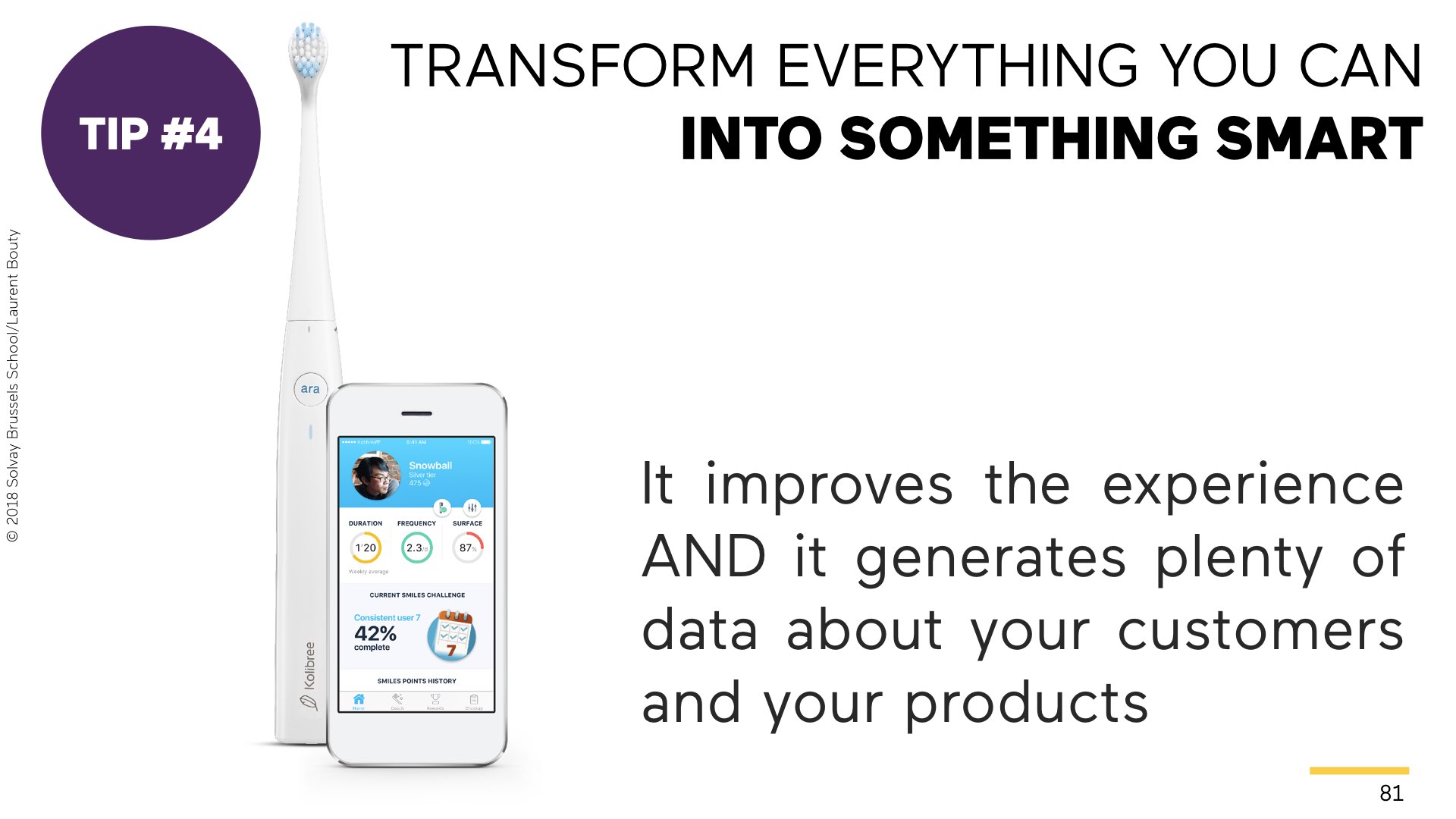
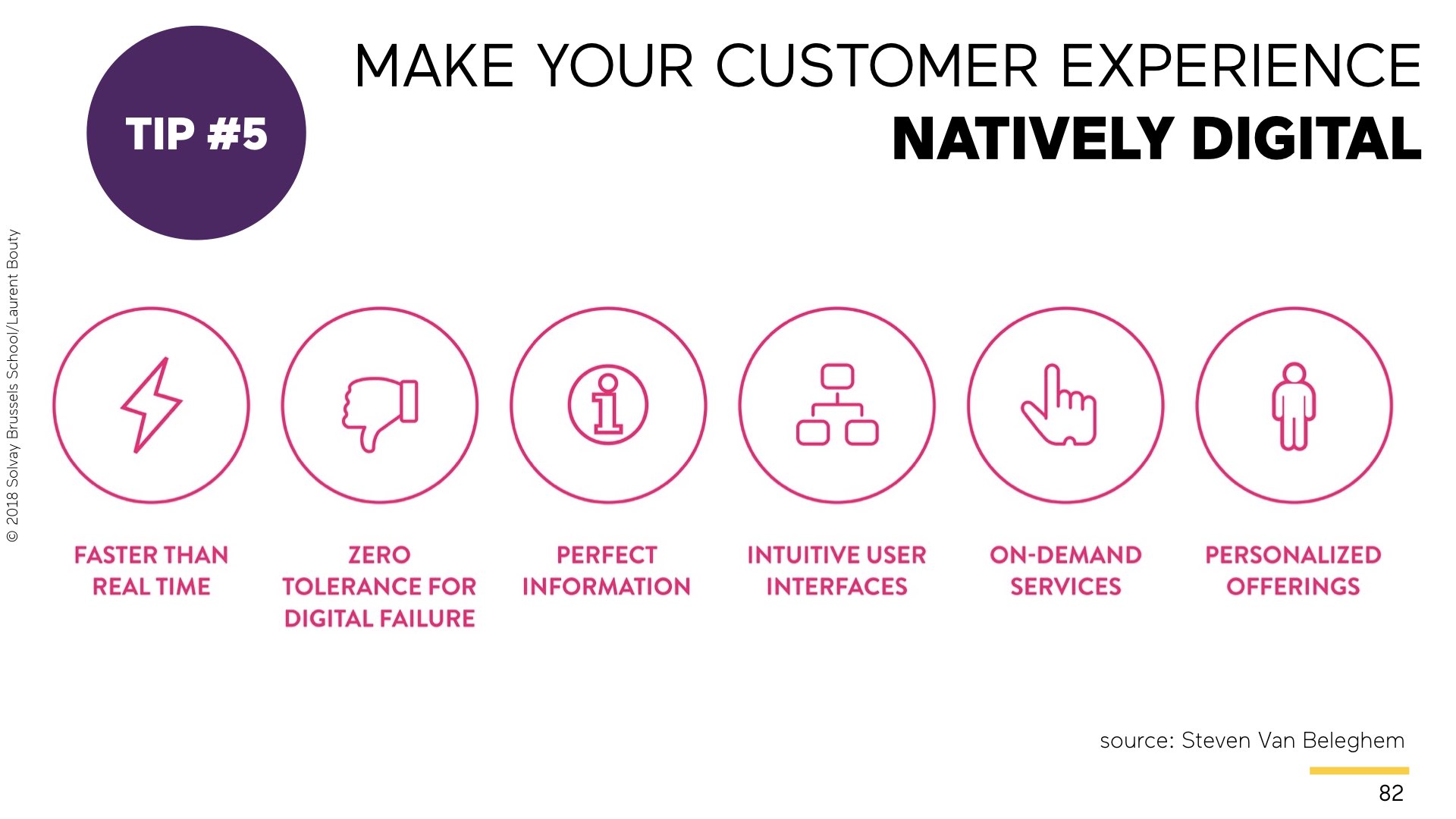
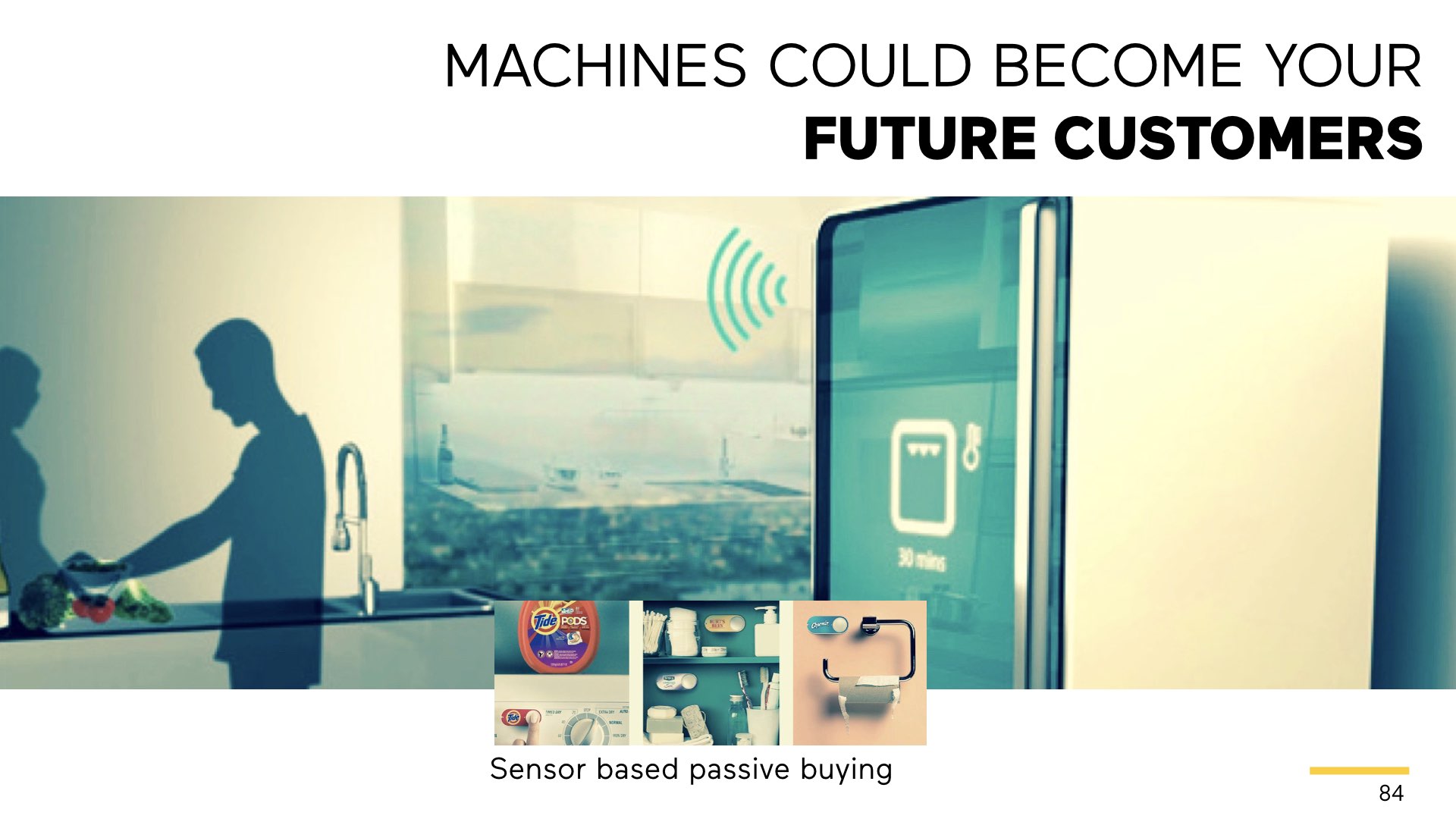
In a world strongly influenced by new technologies, new business models are emerging for brands. We usually defined this new world as a digital world but what digital really means? In this presentation, I explore the impact of digital and propose some recommandations that could help defining new ways of creating and capturing value.
In a world strongly influenced by new technologies, new business models are emerging for brands. We usually defined this new world as a digital world but what digital really means? In this presentation, I explore the impact of digital and propose some recommandations that could help defining new ways of creating and capturing value.

























You need a SHARP Value Proposition
When developing your Value Proposition and Brand Positioning, it has to be S.H.A.R.P. What does it mean?
When developing your Value Proposition and Brand Positioning, it has to be S.H.A.R.P.
What does it mean?
SHARP stands for:
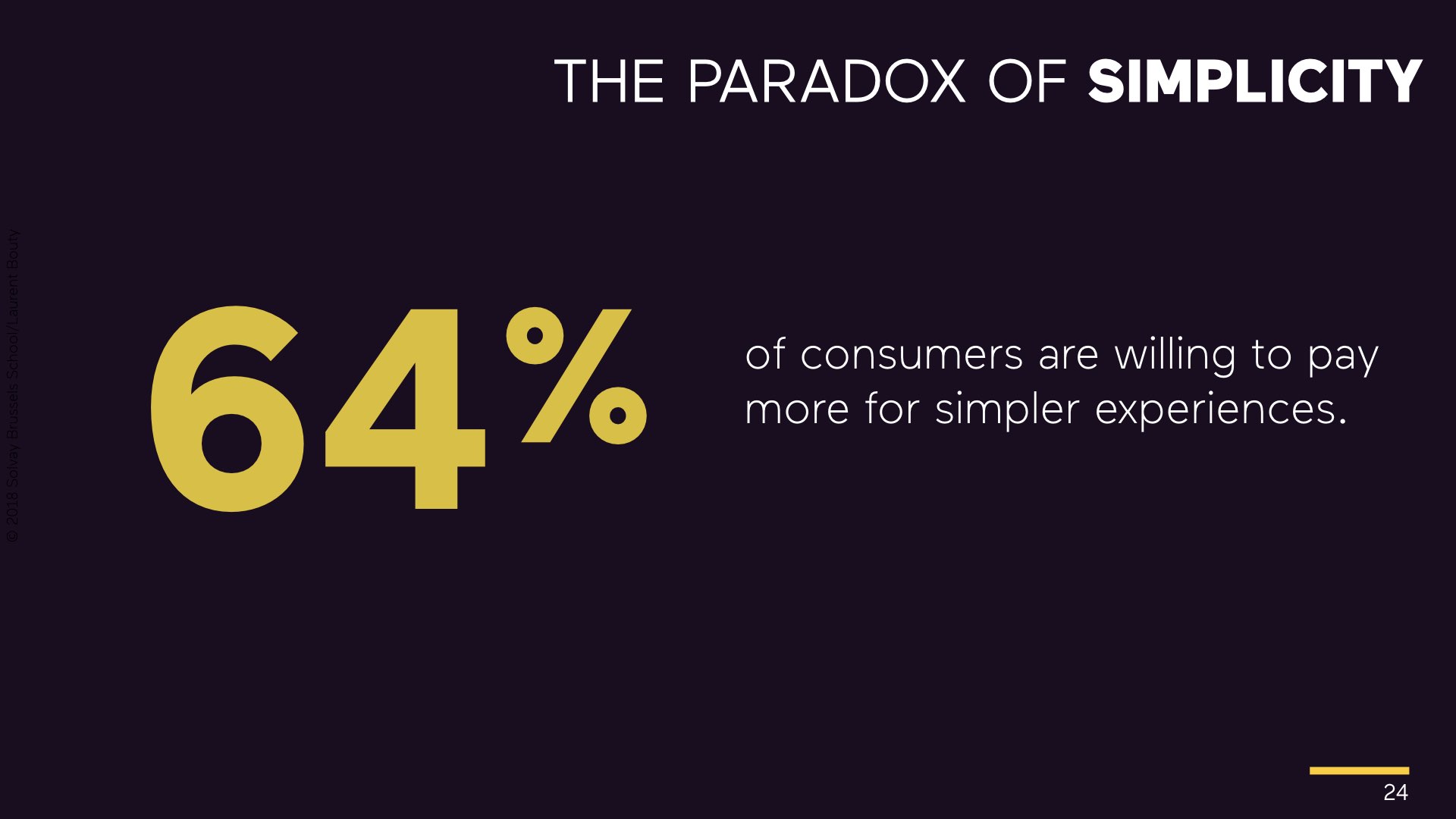
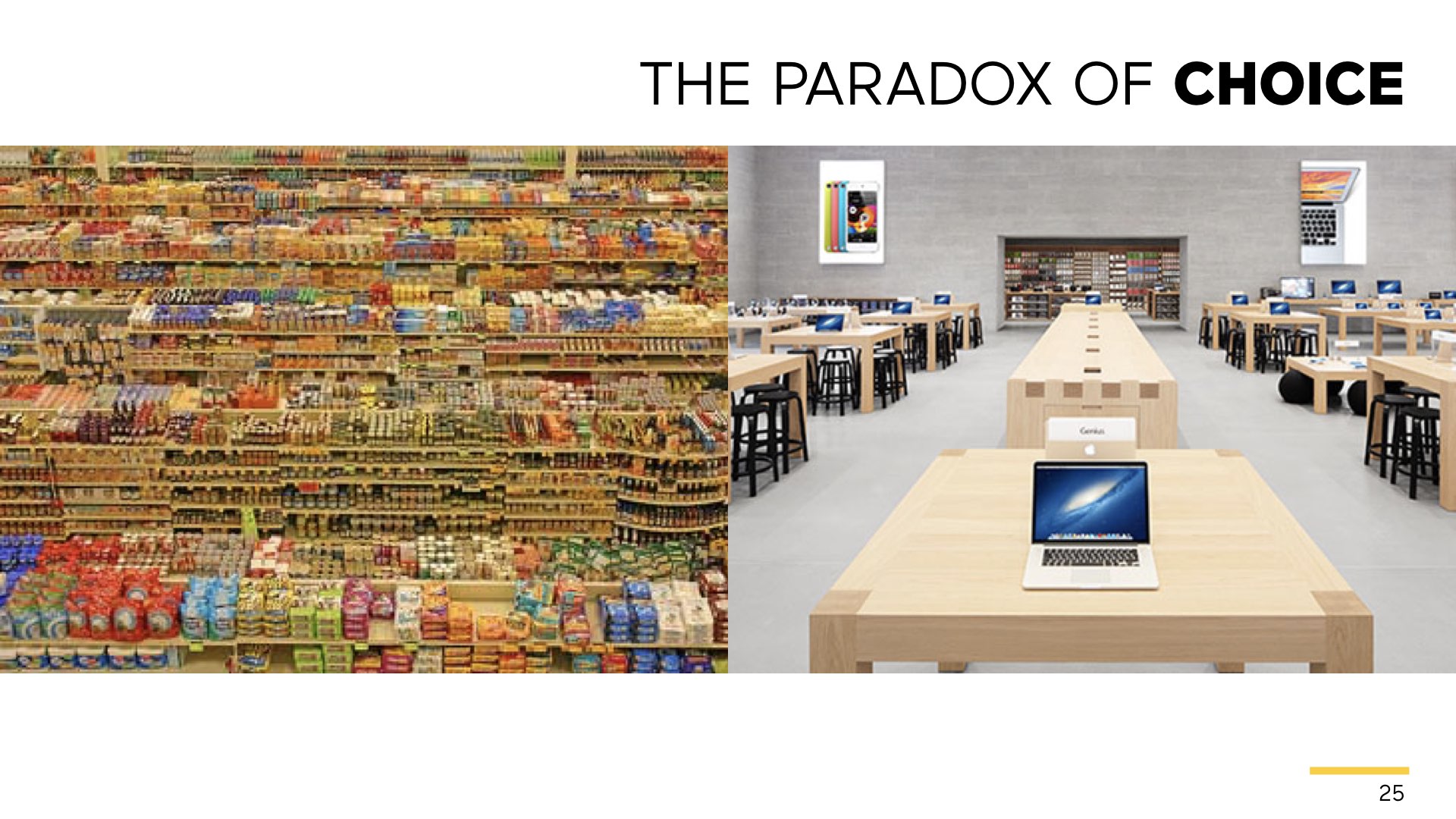
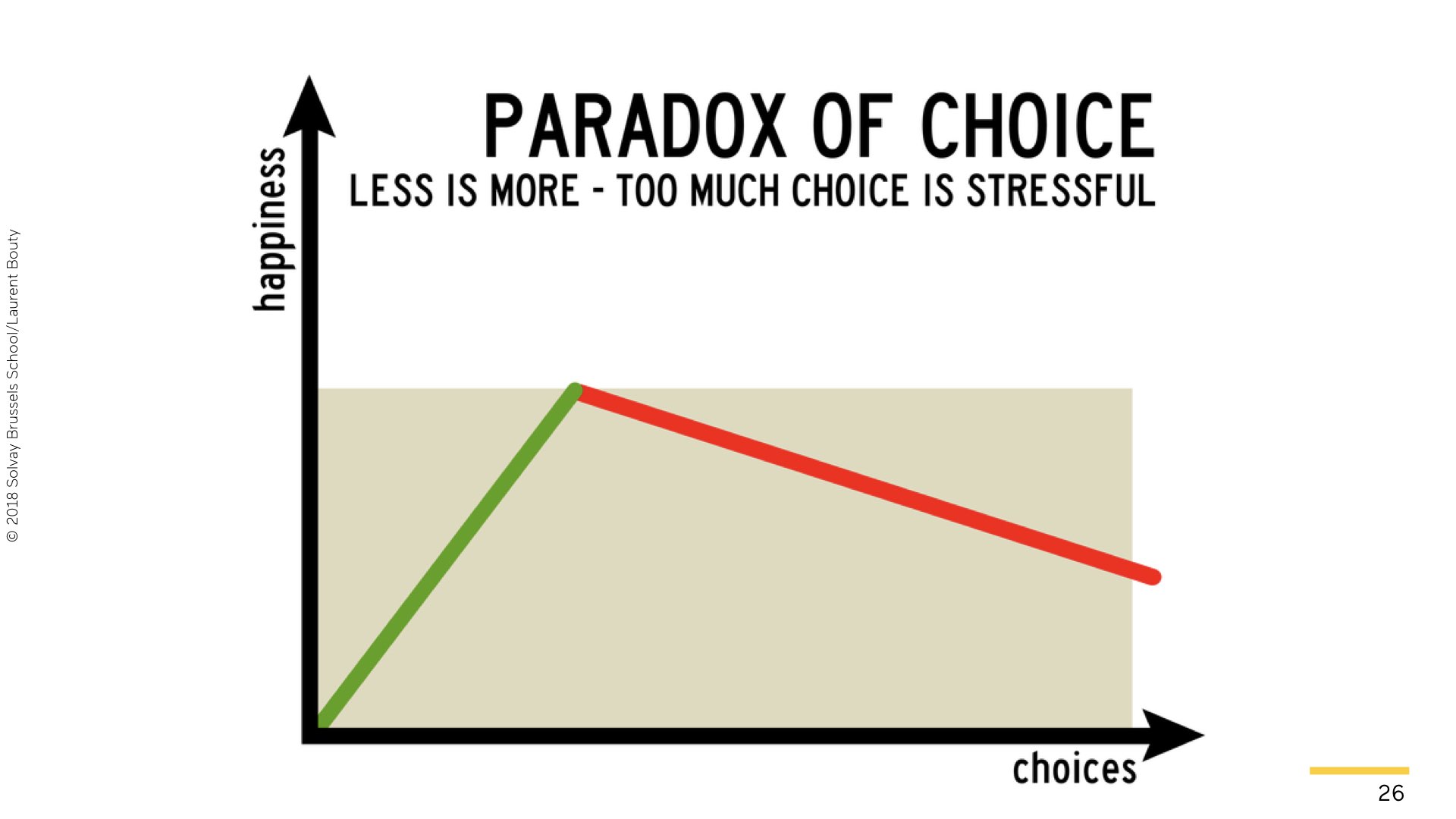
- S for Simple. At the end Simplicity is the winner. You have a doubt, have a look at the Simplicity Index
- H for Human-Centric. Being able to develop your strategy around the human will open new doors and untapped values. Be inspired by Human-Centered Design
- A for Ambitious. Your VP has to be ambitious if you want to stand out from the others.
- R for Relevant. You should build it with competitors and alternatives in mind.
- P for Purposeful. I am a strong believer in purpose driven strategy (reason why I created with friends thebeyonders.agency). Curious what it means, read this article on hbr.
Do you have a S.H.A.R.P. Value Proposition ?
Why you need a bold question for your Marketing Strategy?
What is the best way to start defining the marketing strategy of your company, business or activity? My proposal is to start with a bold strategic question! Why?
What is the best way to start defining the marketing strategy of your company, business or activity? My proposal is to start with a bold strategic question! Why?
Because the objective of your strategy is to achieve an ambition and most probably a financial ambition. Whether you are a startup or a stock listed company, you have to achieve a financial ambition if you want to stay in business. Thus first hypothesis is to have a financial ambition and preferably S.M.A.R.T. one.

Financial Ambition of Your Strategy
Then let's imagine, you don't do any strategy and you let the business in free wheel (no plan). Most probably you will face problems and situations (external or internal) that will block you to achieve your ambition. I suggest that you highlight the biggest problem, your #1 fear for your business. Thus second hypothesis is that you need to define your biggest fear as the context where you will do your strategy.
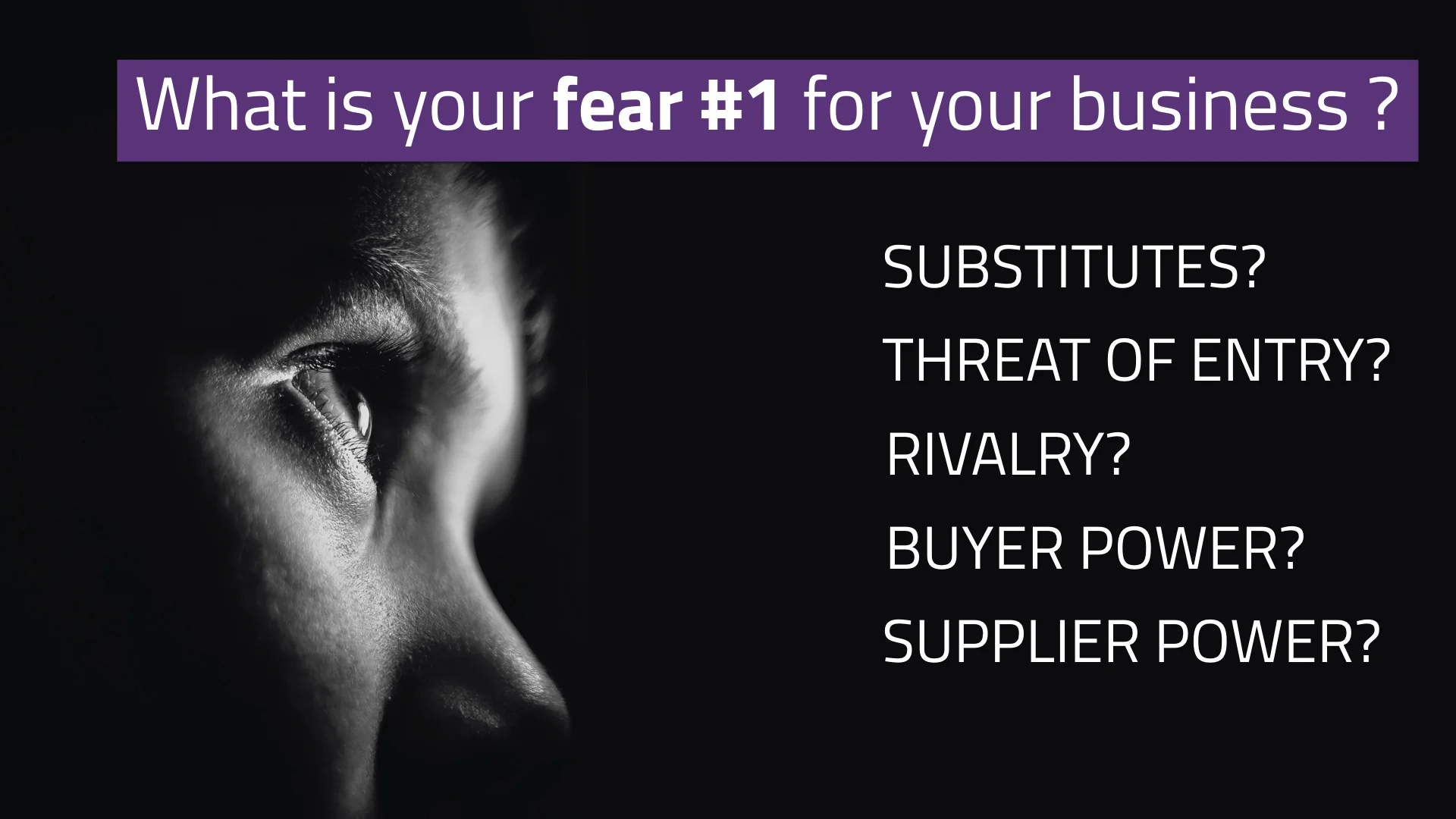
Biggest commercial fear you have
Question
HOW CAN I (FINANCIAL AMBITION) IN (TOP #1 FEAR) ?
Examples
HOW CAN I GROWTH MY REVENUE BY 5% IN AN AUTOMATED AND DIGITAL ENVIRONMENT? (Shoe Store)
HOW CAN I PROTECT MY REVENUE NEXT YEAR IN A MARKET WHERE UBER IS ARRIVING? (Taxi company)
HOW CAN I BE PROFITABLE AFTER 1 YEAR IN A MARKET WHERE NOBODY KNOWS ME YET ? (Startup company)
Quote

Marketing Strategy should start with a bold question

Pricing Sensitivity Drivers From Thomas Nagle
Pricing is a science and it is most of the time not considered as such except by marketing veterans. Below you can find a check-list for assessing sensitivity of pricing changes on customers.
Pricing is a science and it is most of the time not considered as such except by marketing veterans. Below you can find a check-list for assessing sensitivity of pricing changes on customers.
Reference Price Effect – buyer’s price sensitivity for a given product increases the higher the product’s price relative to perceived alternatives. Perceived alternatives can vary by buyer segment, by occasion, and other factors.
How important is the expenditure (portion of income or monetary terms) for the buyer?

Perceived Risk Effect – buyers are less sensitive to the price when it is difficult to compare it to potential alternatives.
How difficult is it for buyers to compare the offers of different suppliers?
Can we compare attributes of products by observation or should we purchase and consume to learn what it offers?
Is the product new or innovative?
Is the product highly complex?
Are the prices of different suppliers easily comparable?
Switching Costs Effect – the higher the product-specific investment a buyer must make to switch suppliers (monetary and non-monetary), the less price sensitive that buyer is when choosing between alternatives.

What would be the cost of changing supplier?
For how long are buyers locked in by those products?
Have customers invested heavily in product related services (like training, customisation, ...) that would have to be repeated if they chose to switch? (example is iphone: you need to change your mp3 library from iTunes to something else or your cover, ...)
Price-Quality Effect – buyers are less sensitive to price the more that higher prices signal higher quality. Products for which this effect is particularly relevant include: image products, exclusive products, and products with minimal cues for quality.
Size of Expenditure Effect – buyers are more price sensitive when the expense, accounts for a large percentage of buyers’ available income or budget.
How important is the expenditure (portion of income or monetary terms) for the buyer?
End-Benefit Effect – the effect refers to the relationship a given purchase has to a larger overall benefit, and is divided into two parts: Derived demand: The more sensitive buyers are to the price of the end benefit, the more sensitive they will be to the prices of those products that contribute to that benefit. Price proportion cost: The price proportion cost refers to the percent of the total cost of the end benefit accounted for by a given component that helps to produce the end benefit (e.g., think CPU and PCs). The smaller the given components share of the total cost of the end benefit, the less sensitive buyers will be to the component's price.
How economically or psychologically important is the end-benefit that buyers seek from the product.
How price sensitive are buyers to the cost of that end-benefit?
What portion of the end-benefit does the price of the product account for?
Shared-cost Effect – the smaller the portion of the purchase price buyers must pay for themselves, the less price sensitive they will be.
Does the buyer pay the full cost of the product?
Perceived fairness Effect– buyers are more sensitive to the price of a product when the price is outside the range they perceive as “fair” or “reasonable” given the purchase context.
How does the product's current price compare with prices people have paid in the past for similar products?
Can any price difference be justified based upon a plausible cost difference?
Price Framing Effect – buyers are more price sensitive when they perceive the price as a loss rather than a forgone gain, and they have greater price sensitivity when the price is paid separately rather than as part of a bundle.
Do customers see the price as something they pay to avoid loss or to achieve gain?
Is the price paid as part of a larger cost or does it stand alone?
Is the price perceived as an out-of-pocket cost or as an opportunity cost?
Extract from The Strategy and Tactics of Pricing, 5th Edition. Thomas Nagle, John Hogan, and Joseph Zale. Chapter 6, Exhibit 6-4, http://en.wikipedia.org/wiki/Pricing_strategies

Marketers, Pricing can often be a confusing topic
How To Define Your Commercial Plan for Your Startup with Marketing Canvas?
When you work on your commercial strategy for your startup, you can facilitate this conversation with using the Marketing Canvas (more on the canvas here). Please find below 10 steps you should follow:

KEY QUESTIONS TO BE ASKED
What is your goal? Big Idea? Define a question that will clarify your projected future like How can we achieve 1M€ after one year of operation? How can we generate 5% growth next year? How can we differentiate our brand in a digital world where predictive technologies driven by AI will become a standard?
What is the problem you are trying to solve? Clarify the job to be done for your customers.
Who is our buyer and user? Define your persona.
If not you who else? Define the category where you are playing and what are the alternatives for your buyer.
How do you want to be remembered? What people will say about you? Your BRAND
What is your answer to the problem your buyer has? What is your value proposition? Do you have USP, ESP, Clear Pricing and Proofs?
What experience people will have with you? Will it generate sales and engagement? JOURNEY
How do you discuss with your buyer? Do you have conversations? Do you listen? Do you have content, stories, influencers? Which media do you use?
Does it make any financial sense? What is your Marketing Budget and Revenue?
If you don't think it all works, iterate one more time
PROCESS FOR ZERO APPROACH
As a startup, you should define your strategic hypothesis. It is slightly different than an existing business because you are starting from a white page.
Part 1- Target, Positioning
Define your key customer target (JTBD, ASPIRATION, PAINS & GAINS). As you are starting your business, you have no information on ENGAGEMENT.
Define your Brand strategy (PURPOSE and POSITIONING) and explain how you will differentiate your brand versus competitors. Explain what could be the VALUES of this brand and your IDENTITY strategy.
Define your Value Proposition (FEATURES, EMOTIONS and PRICING). Describe core, differentiated and unique features/emotions to support your Brand Strategy, matching your customer target and helping you to achieve your financial objectives. Do you have any PROOFS supporting your value proposition?
Part 2- Go To Market
Define your go to market approach and more specifically: Describe funnel journey (pre and post purchase) for your go to market: MOMENTS, EXPERIENCE, CHANNEL and MAGIC. Don't forget to align this with your brand strategy.
Describe your conversation strategy for your go to market. LISTENING, CONTENT, MEDIA and INFLUENCERS if any.
Part 3 - Metrics
Define your hypothesis in terms of metrics for your business: ACQUISITION (speed of acquisition), ARPU (average spending for each customer on the 12 months), LIFETIME (your churn assumption) and BUDGET (amount of € needed for supporting your strategy).

ASSESS YOUR ZERO APPROACH WITH YOUR TEAMS
Use the canvas and answer to these questions using all dimension while asking the same question:
Will my .... help me to achieve my goal?
RED: Not at all; GREEN: Definitely
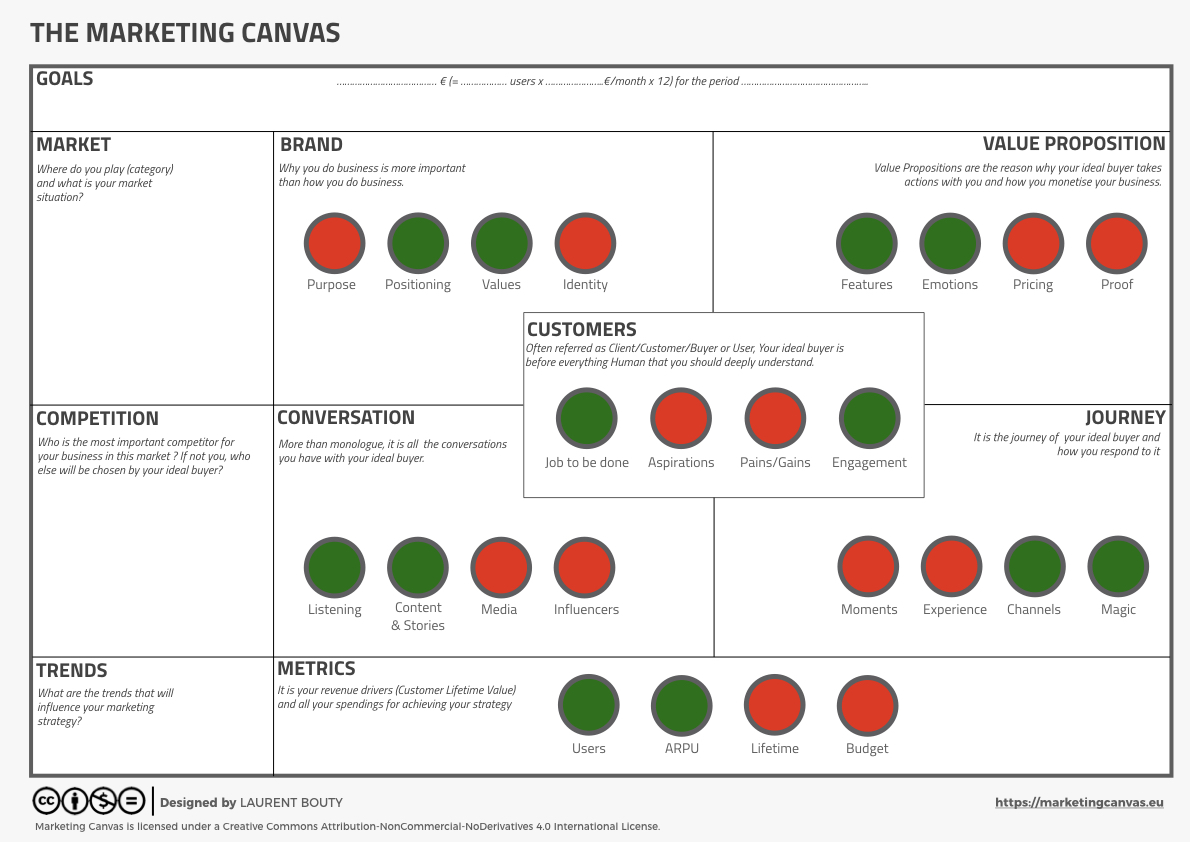
Visualise your Commercial Strategy on Marketing Canvas
RED dimension must be reviewed or mitigated because that are not helping you to achieve your goal.
Interested in the Marketing Canvas, you can find more information here.
Resources
Startup Failure Rate Statistics To Take In [2020] - https://hustlelife.net/startup-failure-rate-statistics/
Steve Blank - Startup Tools - https://steveblank.com/tools-and-blogs-for-entrepreneurs/
MosCOW Rules For Setting Marketing Priorities
Bill Hartman proposes the MoSCoW mode for helping Designers to set creative priorities but it works for all new initiatives basically like requirements, new experiences or new products. MoSCoW is a technique for helping to understand priorities.
Bill Hartman proposes the MoSCoW mode for helping Designers to set creative priorities but it works for all new initiatives basically like requirements, new experiences or new products. MoSCoW is a technique for helping to understand priorities. The letters stand for:
- Must Have
- Should Have
- Could Have
- Won’t Have this time
The reason to use MoSCoW is that the problem with simply saying that requirements are of High, Medium or Low importance is that the definitions of these priorities are missing. Using MoSCoW means that priorities are specific. The specific use of Must, Should, Could or Won’t Have implies the result of failing to deliver that requirement.
Must Have
These provide the Minimum Usable Subset (MUS) of requirements which the project guarantees to deliver. This may be defined using some of the following:
- Cannot deliver on target date without this
- No point in delivering on target date without this; if it were not delivered, there would be no point deploying the solution on the intended date
- Not legal without it
- Unsafe without it
- Cannot deliver the Business Case without it
- Shark bite with mosquito frequency
Ask the question, “what happens if this requirement is not met?” If the answer is “cancel the project – there is no point in implementing a solution that does not meet this requirement” then it is a Must Have requirement. If there is some way round it, even if it is a manual workaround, then it will be a Should Have or a Could Have requirement. Downgrading a requirement to a Should Have or Could Have does not mean it won’t be delivered, simply that delivery is not guaranteed.
Less is more must always be your approach.
Should Have
- Important but not vital
- May be painful to leave out, but the solution is still viable
- May need some kind of workaround, e.g. management of expectations, some inefficiency, an existing solution, paperwork, etc.
A Should Have may be differentiated from a Could Have by reviewing the degree of pain caused by it not being met, in terms of business value or numbers of people affected.
Could Have
- Wanted or desirable but less important
- Less impact if left out (compared with a Should Have)
Won’t Have this time
These are requirements which the project team has agreed it will not deliver. They are recorded in the Prioritised Requirements List where they help clarify the scope of the project and to avoid being reintroduced ‘via the back door’ at a later date. This helps to manage expectations that some requirements will simply not make it into the delivered solution, at least not this time around.
Conclusions
Marketers, if you are not capable to set your priorities, you will probably build what I call a Frankenstein: a mix of everything, most probably ugly and not answering to the core needs of the client/consumer/user.

Future of Marketing is Love (by Mark Schaefer)

Future of Marketing Is Love
Interesting article from Mark Schaefer on Marketing and Love.
In a world of Infinite Segmentation where Brand building is out of control, all you need is love. People want to be acknowledged … and loved … more than anything. The vast technological opportunities at our doorstep are the way we can scale love.
The Marketing Canvas could help you navigating in this hyper-empowered consumer world! Don't know the canvas, discover it here.
How to Assess your Marketing Situation With the Marketing Canvas?
One clear objective of the Marketing Canvas is to facilitate debate and discussion around a clear strategic challenge question. Most of the specialists of the leadership topic agree that one of the key reason why strategy is failing is because the decision that has to be made is unclear! When you do the strategic marketing exercise, you need to be crystal clear about which question you are trying to answer.
One objective of the Marketing Canvas is to facilitate debate and discussion around a clear strategic challenge question. Most of the specialists of the leadership topic agree that one of the key reason why strategy exercise fails is because the decision that has to be made is unclear! When you do the strategic marketing exercise, you need to be crystal clear about which question you are trying to answer.
A second reason why strategy exercise is failing is because there is no alignment neither consensus around the causes and the solutions.
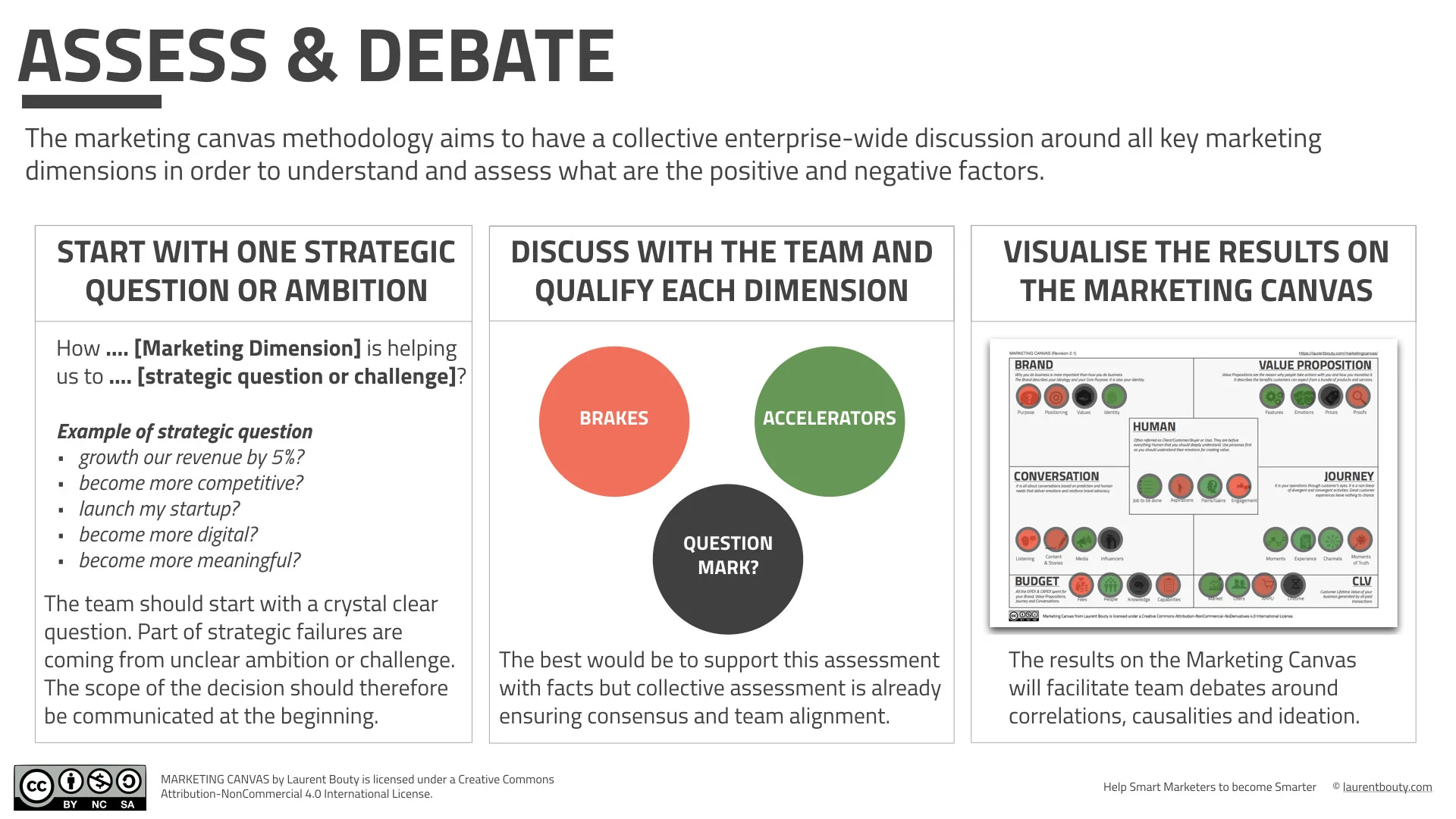
The Marketing Canvas is before everything a framework for facilitating the debate, the co-creation and the alignment of the leadership team. To make it happen, the process for assessing the situation is as follow:
Start with one strategic question or ambition
Start the Marketing Canvas Process with a simple and crystal clear question structured as this:
How …. [Marketing Dimension] is helping us to …. [strategic question or challenge]?
The strategic question or challenge is the trigger for the strategic exercise. Example of strategic question could be:
- Growth our revenue by 5%?
- Become more competitive?
- Launch my startup, my new product or service?
- Increase my market share?
- Improve our ranking in the Meaningful Brand Index?
Having set your Strategic Question, you can systematically discuss each Marketing Dimension with the above question.
Example:
- How our Purpose is helping us to become more competitive?
- How the Job to be done of our customer is helping us to growth our revenue by 5%?
- How our Brand Experience is helping us to increase our Market Share?
- How our Brand identity is helping us to launch our startup?
Discuss with the team and qualify each dimension
For each question, you should assess the situation. Ideally, you have facts and analysis helping you to do this exercise however with a team of internal expert, the consensus and alignment provide usually a rather good qualitative assessment (we should only be careful about not being biased. This could be solved with an external facilitator challenging the obvious).
When asking the question (How …. [Marketing Dimension] is helping us to …. [strategic question or challenge]?), you can have 3 answers:
- RED: This dimension is definitely not helping you. It is a strong negative factor that you will certainly have to tackle in your potential solution. It is a negative factor and might play against your ambition. You will have also to mitigate it.
- GREEN: This dimension is helping you. It is a positive factor and you should leverage it more. This dimension is one of your core asset for this challenge. You should definitely leverage it and it is a key positive factor for your ambition.
- BLACK: You don't know. You have not enough information for answering this question.
Negative factors are referred as Brakes and positive factors are referred as Accelerators.
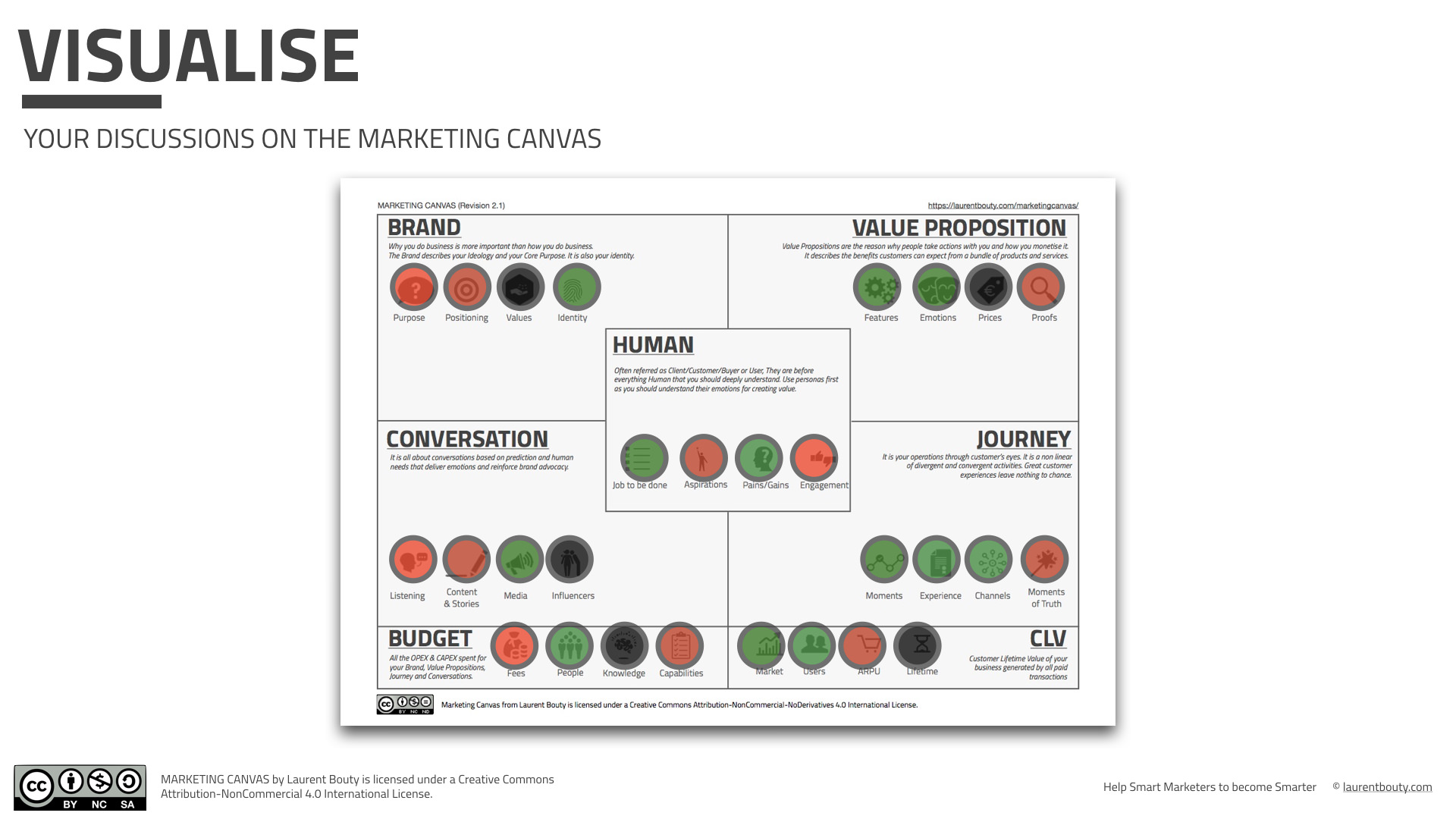
Visualise the results on the Marketing Canvas
Having answered all questions, you can visualise your results on the Marketing Canvas. The results on the Marketing Canvas will facilitate team debates around correlations, causalities and ideation.
Summary

Assessment methodology with the Marketing Canvas

Interview by Scott King
In this episode, Laurent and Scott talk about overcoming marketing complexities and the risks involved in growth marketing. We touch on influencer marketing, artificial intelligence and questions his students ask him about marketing evolution.
In this episode, Laurent and Scott talk about overcoming marketing complexities and the risks involved in growth marketing. We touch on influencer marketing, artificial intelligence and questions his students ask him about marketing evolution.
Growth is like chocolate, the more you have. the more you want – Laurent Bouty [ Click to Tweet ]
Questions During Episode
- What do you consider the biggest challenge for CMOs today?
- Why is complexity the biggest challenge?
- How would you advise marketers to grow in the right niche?
- Why don’t brands use the same strategy as Nike’s “Just Do It”?
- What is your view on influencer marketing?
- What do your students ask you about marketing?
- How do you teach your students to be relevant?
- What is one of your most successful campaigns?
- Did you refurbish the family stores with the marketing budget?
- What are some of the things the marketing team was worried about when refurbishing the stores?
- Do you have a project that did not go well?
- What do you read or listen to for inspiration?
- What do you do in your free time?
Listen to the interview here: https://thescottking.com/podcast/cmo/growth-marketing-risk-laurent-bouty/
Infographic on the Marketing Canvas Process
The tool has been designed for facilitating the discussion when designing your strategy.
High-level process is:
- You start from an ambition/question (like increase revenue by 5%, have more digital transactions, be more meaningful, ...)
- You discuss using the 28 dimensions asking:
- What's blocking you to achieve your ambition? (brakes)
- What's helping you (Accelerator)?
- You can support this rating using any information, knowledge you have but it works also if you only rely on qualitative information.
- Then you map your answer on the Canvas. Red are brakes; Green are accelerators.
- Then you try to analyse these brakes/accelerators and understands what cause them, what are the correlation.
- Then you start ideating (brain-writing, co-create, ...), find crazy or impossible ideas) on what you could do (magic diamond, do things better, do different things).
- Then you prioritise your ideas.
- If you can you test it.
- Then you have your action plan.

Infographic Marketing Canvas
AI is Changing Marketing
Excellent article from Andrew Stephen on Forbes about Artificial Intelligence and how it is changing Marketing. 4 main highlights (extracted from the article I invite you to read)
Excellent article from Andrew Stephen on Forbes about Artificial Intelligence and how it is changing Marketing.
4 main highlights (extracted from the article I invite you to read):
- Marketers have more insights-related tools at their disposal that facilitate true data-driven decision making but AI is needed to help integrate across tools, datasets and platforms.
- The nature of marketing work is changing, but not necessarily becoming completely technical and focused on data science. Instead, the infusion of AI into marketing work can aid decision making and automation can free up valuable executive time.
- Consumers are changing due to AI-powered tools and devices being involved in consumer search, choice set construction and purchase decision making, and as this becomes more widespread and feels normal to consumers, AI will start to automate certain consumer decisions.
- Visionary marketing leaders need to understand AI and how it impacts both marketers and consumers. Moreover, they must think broadly and creatively about the AI-powered future of marketing and take proactive steps to ready themselves and their organizations for the future that they (and their customers) are creating.

AI is changing Marketing
While I fully agree with everything said by Andrew, I believe this acceleration of Marketing smart digitalisation will create somehow a tsunami in Marketing departments and jobs because most of the "classical marketers" are not trained neither skilled for facing the complexity of AI. When AI will be fully in place, then marketers will be able to concentrate on more creative tasks while others will be working on Marketing Technologies.
Are you ready? If yes, what have you done? If not, what do you plan to do?
Full article on Forbes: here

Marketing Budget in the Marketing Canvas
Long story short, you should as a marketing leader be mastering the budgeting exercise. I am saying Mastering on purpose because it has a tremendous impact on your professional daily life! Not easy! Scared! Don't know where to start. This article might help you.
When interviewing a marketer for a job, I usually asked him (or her) what he would do the first day of the job. This simple question is nicely helping you to understand personal and professional skills and behaviours of the person. If the interviewee is not coming quickly with the word budget, I will probably not hire him. Why? because at the end, you should start from your budget and finish with it.
Long story short, you should as a marketing leader be mastering the budgeting exercise. I am saying Mastering on purpose because it has a tremendous impact on your professional daily life! Not easy! Scared! Don't know where to start. This article might help you.

Marketing Budget in Marketing Canvas
Some facts
Marketing expense budget is 7% of revenue in 2017.
In 79% of companies, marketing has a budget for capital expenditures — primarily, for infrastructure and software
Marketers are managing a P&L and generating revenue from digital advertising, digital commerce and sale of data

Some Guidelines
Please find some guidelines that could help you when you are working on your budget:
The budget is your main Tool for managing your activities and your team. Each action of your Marketing Plan is linked with your budget which is linked with the company financial plan. If the link is wrong or worst if there is no link, you have a high risk of not delivering what you should (and it could cost you your job).
The budget is your Story! You will have to explain it, justify it, defend it! Thus be ready to make it solid-proofed and robust! Some questions like where can we cut? why do we need this? will certainly be asked.
The budget is supporting your Strategy. You should keep and magnify what contributes to your objectives and eliminate what is not effective. You might receive a budget based on historical trends (like we always spent 25% of our OPEX on TV, thus we have planned 25% for TV next year). While history is important, future will probably be different, therefore you should challenge each line. As said in the WSJ article:
It’s time to retire the age-old process of building marketing budgets by tweaking last year’s plan up or down a few points. Start with clear objectives, an aggregate affordable investment number and a blank sheet of paper. Challenge your team to create channel-agnostic budget allocations that give you the best chance of hitting goals while challenging assumptions of causation that rely on historical models of customer behavior. Be careful that this process is used for optimizing marketing investment allocation rather than as merely a cost-cutting exercise, which has happened at more than a few corporations.
The total budget is based on Real market assumptions. The simple test is MKT OPEX/REV and compare this ratio with industry and competitive benchmarks. The starting point for this ratio could be 3% but you should really check your case.
The budget is Organised. Why did you put this amount for this campaign and that amount for that one? One way to do that is to create categories of action having each a specific budget and allocate each action under the right category. Have a look below (Some definitions) and you will see that you should organised your budget in Paid, Owned and Earned Media for each action.
The budget is Seasonal. If there is 28 days in the month, it is not the same as 31 days. July is not March!
The budget is Managed. Each spending has to be tracked and compared to your plan. If you underspent, you should decide what you will do with the extra OPEX.
The budget is Communicated. Each corporate culture is different but my advice is to start with aggregate numbers (like total advertising) and not giving all the tiny details at the start. Why? The more you give, the more questions you get!!!
The budget is Finalised. If your target date is September 24 at 8 PM, Deliver it September 24 at 7.59 PM Why? If you deliver it before, most probably you will have to adapt it because you will receive questions ;-). This is assuming that you have fully respected the original guidances and that your budget is respecting all previous points.
AND FINAL RECOMMENDATION: You should SPEND all your budget! unless a budget revision asked you not to do so.

Nice Marketing Budget Infographic from Nuanced Media
source: http://www.wordstream.com/blog/ws/2016/10/26/marketing-budget
Some Questions
Fees - Budget for Media, Content and Discount
Do you know how much you have to spend on Paid non-digital media (off-line)?
Do you know how much you have to spend on Paid digital media (on-line)?
Do you know how much you have to spend on Earned media?
Do you know how much you have to spend on Content?
Do you know how much have to spend on Acquisition Costs, Stimulation Costs and Retention Costs (Promotion, Discount on Price, Giveaways) ?
PEOPLE - BUDGET FOR PEOPLE
Do you know how much employees you need in your team for delivering your revenues objectives (short-term, long-term)?
Do you know how much you plan to spend for outsourcing your strategic & creative work?
Do you know how much you plan to spend for outsourcing your product development?
Do you know how much you plan to spend for outsourcing your operations?
Do you know how much you plan to spend on rewarding your staff ?
KNOWLEDGE - BUDGET YOU SPEND FOR INCREASING YOUR KNOWLEDGE
Do you plan to invest in Marketing Training ? How much?
Do you plan to invest in Marketing Research & Intelligence (User testing, Survey, Focus Group, Reports, Seminars, Competitive analysis)? How much?
Do you plan to spend on creative exploration (Workshop, ideation lab , Fab lab)? How much?
CAPABILITIES - BUDGET YOU SPEND ON MARKETING TECHNOLOGIES
How much do you plan to invest in Data and Analytic tools?
How much do you plan to invest in Customer relationship tools?
How much do you plan to spend in Commerce & Sales management tools?
How much do you plan to invest in Content and Experience management tools?
How much do you plan to invest in Adtech & Social tools?
Some definitions
Paid media
Quite simply, it’s all the advertising you pay for. Basically anything that you’ve paid for in order to drive traffic to your ‘owned media’ properties. The audience for paid media is generally made up of strangers to brand and its services. This includes amongst other things:
Print ads
TV ads
Display ads
Paid search
Promoted posts on Facebook
Sponsored tweets
Owned media
All the cool properties that belong to your brand which you control. It’s down to the strength (quality, persuasiveness, relevance) of these properties to determine whether the strangers driven to your owned media by paid media will become customers. This includes amongst other things::
Your website
Mobile site
Retail stores (online and offline)
Blogs
Social media channels
Apps
Magazines
Brochures
The strength of these owned media experiences will also determine whether your customers will then become fans of yours. Fans drive ‘earned media’.
Earned media
It’s the free publicity generated by your fans. You didn’t pay for it, because you earned it… Good work! Either your hilarious online video, your superior ecommerce experience or your constantly engaging Twitter account has been good enough for someone to create a positive piece of content for you or share your original content further. This can include:
Retweets
Facebook Likes
YouTube comments
Shares
Revines
Bloggers writing about your product
Online reviews
Word of mouth
If a video ad that you paid to make is shared by someone on social media this ‘sharing’ is still called earned media.
Unlike paid or owned media, you can’t really control the above examples (no matter how hard you wish to try). It’s in the hands of your ‘fans’. However earned media is how your brand may become wildly popular, so if you trust your own brand and products than you should trust in earned media.
Some readings
Facts, Gartner, CMO Spend Survey 2016-2017: https://www.gartner.com/smarterwithgartner/gartner-cmo-spend-survey-2016-2017-shows-marketing-budgets-continue-to-climb/
The CMO Survey, August 2017, https://cmosurvey.org/results/august-2017/
Forbes, Three Steps To A Solid Marketing Budget, http://www.forbes.com/sites/davelavinsky/2013/06/07/three-steps-to-a-solid-marketing-budget/
HBR, How CMOs Can Get CFOs on Their Side, https://hbr.org/2013/11/how-cmos-can-get-cfos-on-their-side/
WSJ, Outside Voices: Marketers Need To Modernize, Not Just Switch Their Agencies, http://blogs.wsj.com/cmo/2015/08/21/outside-voices-marketers-need-to-modernize-not-just-switch-their-agencies/
Forrester, Defining Earned, Owned And Paid Media, http://blogs.forrester.com/interactive_marketing/2009/12/defining-earned-owned-and-paid-media.html
Budget-Friendly Ideas to Promote Your Small Business and How to do it (2019 Guide) https://www.customlogocases.com/blog/budget-friendly-business-promotion/
Listening in the Marketing Canvas
Listening is the first and certainly the most important component of the Conversation in the Marketing Canvas. Before talking, you should first systematically listen to your customers and prospects? Are you doing it? Actively?
Listening is one of the four key dimensions of CONVERSATION in the Marketing Canvas.
Interesting article from Interbrand about listening: Why listening and understanding people is so important
“There’s a missing element that marketers and advertisers aren’t thinking about when it comes to technology: the human element. Achieving true brand and business growth in our ever-evolving digital world will come down to better understanding people. This requires business leaders to adopt a culture that is based on listening to the communities they aspire to reach.
Ryan Holmes, CEO of social publishing tool Hootsuite, made the important point in a recent op-ed that the future of online content and brand engagement is authenticity. Right now is the moment in which brands must decide to establish ongoing and more personal relationships with their customers and fans.
While marketing has always aimed to speak to audiences, the tides are now changing. The Best Global Brands do more listening than talking.
What people have to say about you, themselves, their needs, your industry, and your competitors, offers a deeper look at the customers and brand loyalists we’re looking for. This information provides a qualitative case study into how brands can nurture the necessary relationships with the right people.
Businesses need to utilize this information in more imaginative ways if they intend on growing their customer bases.”

Listening in the Marketing Canvas (CONVERSATION)